Follow Us on Google
From Juliana Taiwo-Obalonye, Abuja
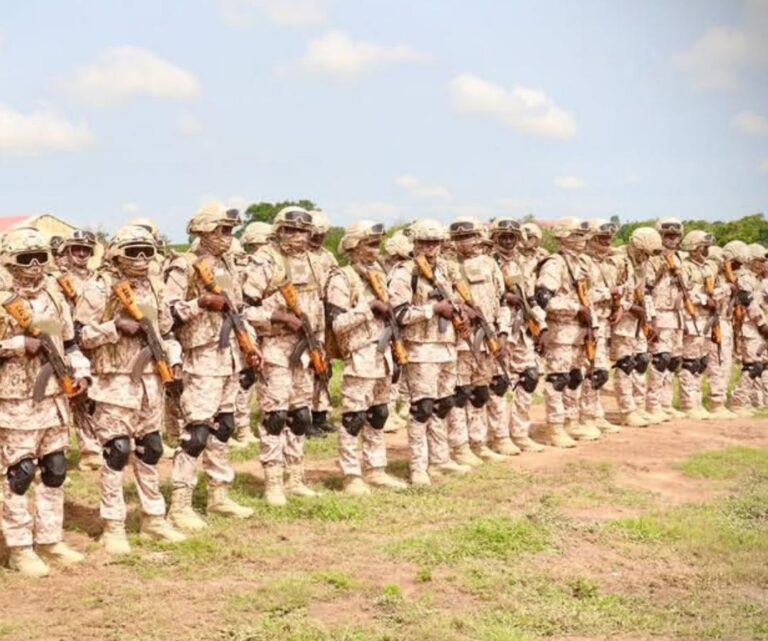
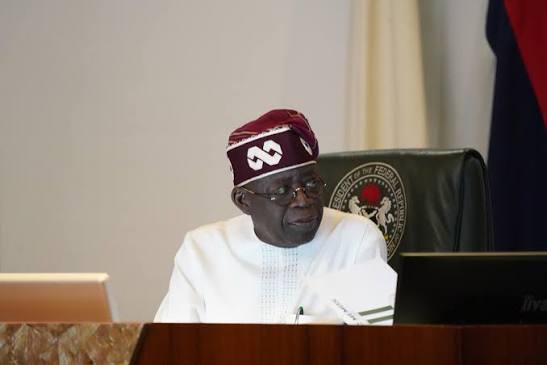
President Bola Tinubu has given Nigeria’s defence, intelligence and security chiefs 90 days to produce a comprehensive National Threat Assessment and a Five-Year Strategic Defence Operations Plan aimed at transforming the country’s response to evolving security threats.
The directive comes amid persistent security challenges across the country, including kidnapping for ransom, banditry and insurgent attacks, and barely 24 hours after Tinubu ordered security agencies to launch an immediate coordinated operation to rescue victims of the latest mass abduction in Niger State.
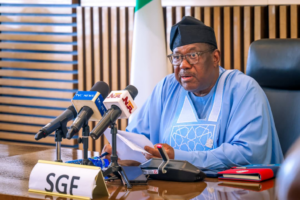
Secretary to the Government of the Federation (SGF), George Akume, disclosed the 90-day deadline on Wednesday while inaugurating the Presidential Committee on National Threat Assessment and Five-Year Strategic Defence Operations Plan on behalf of the President.
The committee, comprising the National Security Adviser (NSA), ministers of defence, service chiefs and heads of major security and intelligence agencies, is expected to move Nigeria’s security architecture from reacting to individual threats to anticipating them, prioritising risks and aligning resources with clearly defined national security objectives.
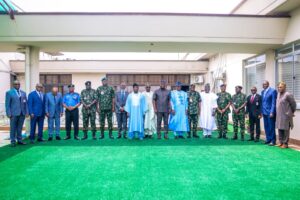
Charging members to approach the assignment with professionalism, objectivity, urgency and patriotism, Akume said the two documents must be submitted within 90 days for Tinubu’s consideration and approval.
The SGF, however, did not indicate whether there would be sanctions or other consequences should the committee fail to complete and submit the documents within the stipulated period.
The inauguration came a day after Tinubu expressed outrage over the latest mass abduction and killing of residents in Niger State and ordered the Armed Forces, Nigeria Police Force, Department of State Services (DSS) and other security and intelligence agencies to immediately launch a coordinated rescue operation.
In a statement by his Special Adviser on Information and Strategy, Bayo Onanuga, the President also directed the service chiefs to provide him with regular updates on the rescue operation until all those abducted were accounted for.
Tinubu described the perpetrators as “enemies of peace and enemies of humanity” and vowed that they would not go unpunished.
The Niger incident added to concerns over recurring kidnappings and violent attacks in parts of the country, particularly the North-West and North-Central, where armed groups have attacked communities, highways and places of worship and abducted residents for ransom.
Insurgency has also remained a security challenge in the North-East, despite years of military operations against terrorist groups.
The continuing attacks have intensified questions over the country’s capacity to move beyond responding to individual security breaches to anticipating and preventing them, an issue at the heart of the National Threat Assessment and Five-Year Strategic Defence Operations Plan.
Akume said the initiative had become necessary because of the increasingly complex and interconnected nature of contemporary security threats, which could exploit gaps between institutions, jurisdictions and operational theatres.
While acknowledging recent successes recorded by the Armed Forces and other security agencies, the SGF said the country could no longer afford an approach focused largely on responding to threats after they had emerged.
Other News
According to him, Nigeria needs a system capable of anticipating threats, setting priorities, allocating scarce resources rationally and sustaining operational momentum, while ensuring that national security objectives translate into measurable outcomes.
He said operational responses by defence, intelligence and security agencies must be anchored on a shared national understanding of the security environment and coherent short-, medium- and long-term strategies.
Akume expressed concern that operational requirements were sometimes considered independently without sufficient reference to an agreed national threat assessment, clearly prioritised objectives or a unified capability plan.
He said such an approach could complicate coordination and undermine the efficient deployment of scarce resources.
The committee, he explained, is expected to establish a clear link between identified threats, operational objectives, military capabilities, available resources and measurable outcomes.
“In simple terms, we must establish a clear path from threat to objective, from objective to capability, from capability to resource, and from resource to measurable outcome,” he said.
Under the new framework, the National Threat Assessment will provide an objective evaluation of Nigeria’s security environment, identifying existing and emerging threats, their strategic implications, how they could evolve and the appropriate government response.
It is also expected to enable security agencies to distinguish between immediate threats requiring urgent action and emerging risks requiring early investment in intelligence, technology, infrastructure, training and other capabilities.
The Five-Year Strategic Defence Operations Plan will translate the threat assessment into prioritised operational requirements, including the forces, equipment, intelligence, infrastructure, logistics, technology and personnel needed across different theatres of operation.
It will also identify capability gaps and establish procurement priorities based on assessed threats and operational requirements rather than institutional preferences.
Akume said the five-year framework would provide the medium-term horizon required for force development, capability acquisition, infrastructure, training, maintenance, research and development, as well as the strengthening of Nigeria’s defence industrial base.
He, however, explained that the plan would operate on a rolling basis and be reviewed annually to reflect emerging threats, changing operational realities, technological developments and lessons from ongoing operations.
The committee is also mandated to establish implementation timelines, assign responsibilities, develop monitoring mechanisms and recommend measures for assessing outcomes.
The SGF said Nigerian troops and other security personnel, who continue to demonstrate courage and commitment in defending the country, deserved a strategic framework that clearly defines their objectives and provides the capabilities, resources and support required to accomplish their missions.
The committee will be coordinated and supported by the Office of the President’s Special Adviser on Homeland Security, Major General Adeyinka Famadewa (retd).
Its members include NSA, Nuhu Ribadu; Minister of Defence, General Christopher Musa (retd); Minister of State for Defence, Bello Matawalle; Chief of Defence Staff, General Olufemi Oluyede; Chief of Army Staff, Lt. General Waidi Shaibu; Chief of Air Staff, Air Marshal Sunday Kelvin Aneke; and Chief of Naval Staff, Vice Admiral Idi Abbas.
Others are the Inspector-General of Police, Olatunji Rilwan Disu; Director-General of the DSS, Tosin Ajayi; and Director-General of the National Intelligence Agency, Ambassador Muhammed Muhammed.
Famadewa, in his closing remarks, described the assignment as a shared national responsibility, assuring members that his role would be to facilitate collaboration and harness their collective expertise rather than command the committee.
He said subcommittees would be established to handle specialised areas and facilitate completion of the assignment within the 90-day deadline.