Follow Us on Google

President Bola Tinubu, the Federal Character Commission (FCC) and the Progressive Governors’ Forum (PGF) have challenged chairmen of Nigeria’s 774 Local Government Areas to make fairness, inclusion and equitable development the foundation of grassroots governance.
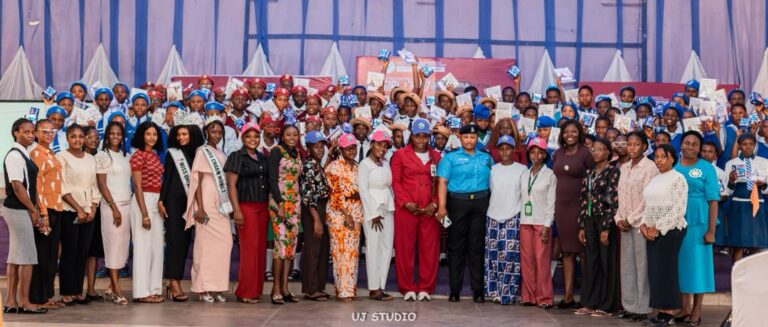
The charge came at the end of a two-day National Workshop for Local Government Executive Chairmen held in Abuja with the theme, “Deepening National Unity Through Grassroots Implementation of the Federal Character Principle.”
The workshop brought together council chairmen from across the 36 states and the Federal Capital Territory, alongside senior government officials, academics, development experts, security stakeholders and other professionals.
Representing President Tinubu, Secretary to the Government of the Federation, Senator George Akume, urged the chairmen to move beyond rhetoric and translate the Federal Character Principle into practical governance.
According to the President, local governments are closest to the people and must therefore ensure that government policies, programmes and opportunities produce tangible benefits for citizens.
He charged the chairmen to put sectional interests aside and promote fairness, equity, inclusion and national cohesion in their councils.
FCC Chairman, Hon. Hulayat Motunrayo Omidiran, said the workshop represented a major step towards taking the Federal Character Principle directly to the grassroots.
She urged council leaders to ensure that appointments, development projects, social amenities and economic opportunities are distributed fairly, stressing that Nigeria’s diversity should be seen as an asset rather than a source of division.
In his keynote address, University of Ilorin Vice-Chancellor, Prof. Wahab O. Egbewole, SAN, said effective grassroots governance was indispensable to national development.
He described Federal Character as a constitutional principle designed to give citizens a sense of belonging and urged council chairmen to apply it through justice, transparency and accountability.
Egbewole stressed that the principle should cover more than political appointments, extending to access to education, healthcare, infrastructure and economic opportunities.
Prof. Umaru Pate, in his contribution, focused on equitable healthcare and human development, urging local governments to strengthen primary healthcare delivery and community-based interventions.
He also called for closer cooperation among the three tiers of government and greater use of data in identifying communities most in need.
On security, Defence Minister General Christopher Musa (rtd.) urged local government leaders to strengthen cooperation with communities, traditional institutions, religious leaders and security agencies.
Other News
He said council chairmen were uniquely positioned to support early warning, intelligence gathering, conflict prevention and community engagement because of their knowledge of local communities.
The PGF Director-General, Mr Folorunso S. Aluko, representing PGF Chairman Senator Hope Uzodimma, said local government autonomy must come with accountability.
He urged chairmen to embrace transparent budgeting, prudent financial management, merit-based appointments, procurement integrity, audit compliance and citizen engagement.
National Orientation Agency Director-General, Mallam Lanre Issa-Onilu, equally stressed that Federal Character was about much more than appointment sharing.
He said the principle should promote fairness, inclusion and a strong sense of belonging among Nigerians.
Other speakers included Dr. Muyi Aina, Director-General of the National Primary Health Care Development Agency; Mr Adeyemi Adeniran, Director-General of the National Bureau of Statistics; Dr Ogbona Chime, National President of the Nigerian Institute of Town Planners; Dr Aminu Muazu-Maifata, President of ALGON; Mr Akinola Odeyemi, Managing Director of NBET; and Kano State Commissioner for Local Government, Hon. Tajudeen Usman.
The workshop also featured discussions on healthcare, data, urban and rural planning, electricity, local administration and socio-economic development.
Chairman of the Planning Committee and Oyo State Federal Commissioner of the FCC, Prince Ayodeji Abass-Aleshinloye, MDII, said the success of the workshop should ultimately be measured by its impact on ordinary Nigerians.
Aleshinloye urged the 774 chairmen to take the lessons and resolutions of the workshop back to their councils and convert them into practical programmes that promote equitable development.
He said local governments had the capacity to identify community-specific needs and ensure that infrastructure, social amenities and opportunities reached citizens fairly.
The FCC, at the close of the workshop, reaffirmed its commitment to using the Federal Character Principle to promote inclusive governance, equitable development, peaceful coexistence and sustainable national unity.
The Commission stressed that if national unity is to endure, it must begin at the grassroots, where citizens interact most directly with government.