Follow Us on Google
By Beifoh Osewele
Dozens of politicians, both current and former officials, including President Bola Tinubu and 21 others have been pre-selected as nominees for the premier edition of the Book of Records.
According to OrderPaper Nigeria, organiser of the epoch event, Initiative for Celebrating Outstanding National Statespersons (ICONS) is a prestigious, legacy-driven programme created to celebrate exceptional individuals, whose service in both the legislature and executive arms of government has significantly shaped the country’s governance landscape and democratic trajectory in its 26 years of unbroken democratic governance.
It entails the publication of the Book of Records, a premier legacy publication profiling confirmed ICONS with data-driven documentation of their journeys, legislative contributions, and executive footprints; and a historic digital archive capturing 25 years of impactful governance transitions and democratic service across both arms of government.
The book of records and digital archive will be presented at an exclusive award and gala night scheduled for August 2025 to celebrate the inductees and their legacies.
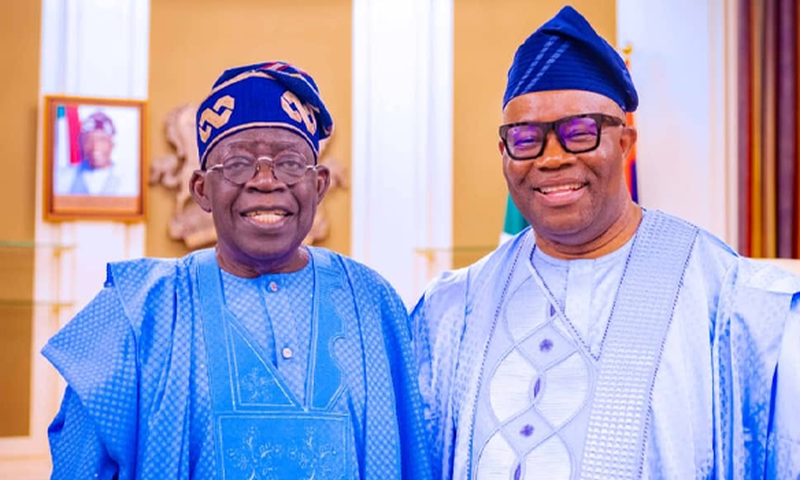
Top on the list is President Bola Tinubu, Vice President Kashim Shettima, Senate President Godswill Akpabio and First Lady, Remi Tinubu. Also on the list are 11 governors, namely, Ahmadu Fintiri of Adamawa State, Bassey Otu of Cross River State, Mohammed Bago of Niger State, Sheriff Oborevwori of Delta State, Bala Mohammed of Bauchi State, Douye Diri of Bayelsa State, Hope Uzodimma of Imo State, Ademola Adeleke of Osun State, Uba Sani of Kaduna State, Francis Nwifuru of Ebonyi State, and Monday Okpebholo of Edo State.
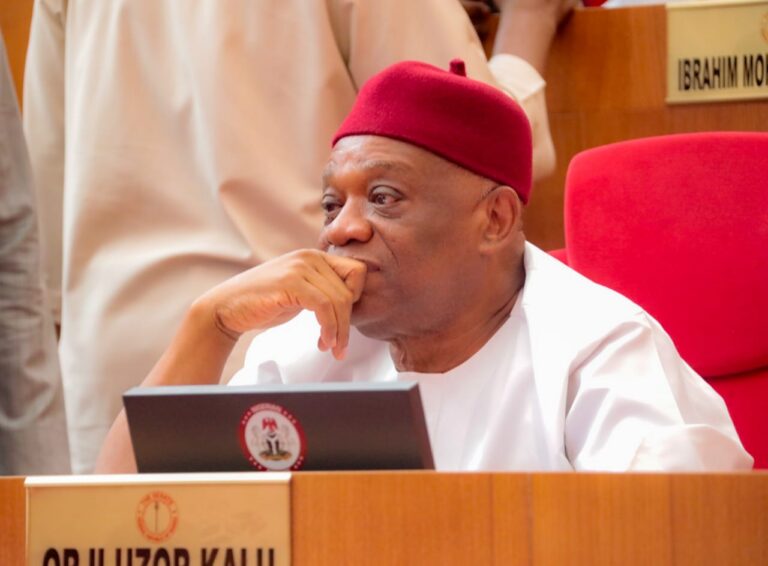
Also named are 21 incumbent senators, including Orji Uzor Kalu, Ibrahim Dankwambo, Yahaya Abdullahi, Simon Lalong, Aminu Tambuwal, Adams Oshiomhole, Seriake Dickson, Aliyu Wamakko, Mohammed Goje, Adamu Aliero, Enyinnaya Abaribe, Abdulaziz Yari, Gbenga Daniel, Haruna Manu, Idiat Adebule, Ikra Bilbis, Abdulhamid Madori, Abubakar Bello, Abba Moro, and Ipalibo Harry. Leader of the House of Representatives, Prof. Julius Ihonvbere joins the list from the 10th National Assembly.
Twenty-two members of the Tinubu cabinet, including Femi Gbajabiamila, Chief of Staff to the President; and Secretary to the Government of the Federation, George Akume; Minister of State for Labour & Employment, Nkeiruka Onyejeocha; Minister of Interior, Olubunmi Tunji-Ojo; Minister of Works, Sen. David Umahi; Minister of Foreign Affairs, Yusuf Tuggar; Minister for Regional Development, Abubakar Momoh; Minister of State for Agriculture & Food Security, Sen. Aliyu Abdullahi; Minister of State for Petroleum Resources (Gas), Ekperikpe Ekpo; Minister of State for Defence, Bello Matawalle; Minister of Police Affairs, Ibrahim Gaidam; Minister of Agriculture & Food Security, Sen. Abubakar Kyari; Minister of State for Petroleum Resources (Oil), Sen. Heineken Lokpobiri; Minister of State for Trade and Investment, Sen. John Owan Enoh; Minister of Transportation, Sen. Saidu Alkali; Minister of Budget and Economic Planning, Sen. Abubakar Bagudu; Minister of State for Labour & Employment, Bitrus Jalo; Minister of State for Water Resources and Sanitation, Bello Goronyo, and Minister of State for Education, Yusuf Sununu.
Some heads of parastatals and board chairs of statutory agencies also made the list. They include Sen. Ajibola Bashiru, Sen Ibrahim Yahaya Oloriegbe, Oyetunde Oladimeji Ojo, Toby Okechukwu, Sen. Adedayo Adeyeye, Sen. Magnus Abe, Sen. Tokunbo Afikuyomi, Samuel Onuigbo, Dr. Samson Raphael Osagie, Abike Dabiri-Erewa, Sen. Ken Nnamani, Philip Shaibu and Yakubu Dogara.
Former senior public officials on the list include Chibuike Rotimi Amaechi, Sen. Ifeanyi Okowa, Sen. Benedict Ayade, Emeka Ihedioha, Sen. Gabriel Suswam, Sen. Liyel Imoke, Sen. Anyim Pius Anyim, Hon. Dakuku Peterside, Victor Onyekachi Ochei, Sen. Ibikunle Amosu, Sen. Bukola Saraki, Sen. Rabiu Kwankwaso, Sen. Ibrahim Hadeija, Nwawuba, Ibrahim Bio, Sen. Udo Udoma, Aminu Masari, Sen. Rochas Okorocha, and Ifeanyi Ugwuanyi.
Over the past two and a half decades, Nigeria has witnessed a unique phenomenon: the transition of hundreds of political leaders between the national and state legislatures to executive offices as governors, ministers and heads of statutory agencies.
Other News
Likewise, many others have moved from the executive into legislative roles. This cross-sectoral experience between the legislative and executive arms gives rise to a distinct category of political actors whose influence on Nigeria’s democratic trajectory deserves proper curation and documentation but has yet to be holistically curated, recognised or preserved.
This milestone initiative is a spin-off from a 2024 report by OrderPaper, which focused on political transitions from the legislature to the executive (FLEX), which the policy think tank now styles as the Facility for Legislative Executive Exchange (FLEX).
The report outlined, among other things, the character and composition of President Bola Tinubu’s administration. It has 22 cabinet members who are former legislators, including the president and vice president, both of whom served in the senate.
President Tinubu holds the record of transitioning the highest number of politicians from the legislature to the executive in a single administration.
Some of the ICONS featured in this programme reflect the depth and evolution of the FLEX phenomenon. For instance, Sen. Godswill Akpabio moved from serving as commissioner in Akwa Ibom State (2002–2006) to Governor of Akwa Ibom State (2007–2015), then senator representing Akwa Ibom North-West and minority leader (2015–2018), minister of Niger Delta Affairs (2019–2022), and currently serves as President of the Senate.
Sen. Rabiu Musa Kwankwaso is a former Governor of Kano State, a former deputy speaker of the House of Representatives, and a former minister. Sen. Aminu Tambuwal is a former Speaker of the House of Representatives, a two-term Governor of Sokoto state, and now a serving senator. Similarly, Hope Uzodinma transitioned from senator representing Imo-West to Governor of Imo State.
Others include Sen. Orji Kalu, former Governor of Abia State, who now represents Abia North in the senate and served as Senate Majority Whip; and Bukola Saraki, who moved from being Special Assistant to the President on Budget (2000–2003) to Governor of Kwara State (2003–2011), senator for Kwara Central (2011–2019), and President of the 8th Senate (2015–2019), among others.
Speaking on the initiative, Oke Epia, Chief Executive Officer of OrderPaper Nigeria and Convener of the ICONS programme, said: “The ICONS of the Fourth Republic honours the best of the best—leaders whose work has deepened our democratic experience and strengthened national development. These are individuals whose service must not only be celebrated but preserved for future generations.”
He explained that each nominee has been pre-selected through a rigorous, non-partisan, evidence-based vetting process, rooted in OrderPaper’s decade-long commitment to legislative accountability and civic engagement.
“ICONS of the Fourth Republic is more than a celebration, it is a national chronicle of excellence, service and leadership,” he stressed.