Follow Us on Google
…As FDIs, FX inflows rise
By Kehinde Aderemi
Deposit Money Banks (DMBs) are raising the limit naira cardholders can spend abroad following rising dollar liquidity in the financial system. Following financial sector reforms and $7 billion backlog clearance by the Olayemi Cardoso-led Central Bank of Nigeria (CBN), FX inflows into the economy continues to rise, closing 2025 at $112 billion. The surge in autonomous FX inflows, foreign portfolio investment and non-oil export proceeds, is enabling local banks to expand naira card spending limits abroad and supporting Foreign Direct Investment (FDIs) into the domestic economy.
Clearly, before the Olayemi Cardoso-led management team of the Central Bank of Nigeria (CBN) assumed office in October 2023, one of the biggest challenges that the country’s economy was grappling with was forex scarcity.
To deal with the challenge, businesses and travellers had to resort to the parallel FX market to source for funds, a situation which allowed FX speculation to thrive. Thus, one of the first key major steps that the CBN, led by its Governor, Cardoso, took in 2023, was to embark on a series of bold reforms to attract more foreign capital to the economy, achieve price and exchange rate stability.
Specifically, the apex bank liberalised the foreign exchange market, stopped central bank financing of the fiscal deficit, resulting in increased investor confidence in the Nigerian economy and allowing the country to successfully return to international capital markets last December and being upgraded by rating agencies.
Also, the implementation of the reforms has significantly boosted the nation’s FX reserves as well as liquidity in the Fx market. Banks resume use of naira debit cards for international transactions Indeed, reflecting the rising dollar liquidity, Nigerian banks recently started lifting the over three-year moratorium on the use of naira-funded debit cards abroad.
For instance, Guaranty Trust Bank (GTB) last week raised quarterly dollar spending limit on naira cards to $20,000 to enable cardholders have greater dollar spending power when travelling abroad.
In emailed note to customers titled: “Important Update on Your GTBank Naira Card” the bank said cardholders can now spend up to $20,000 quarterly.
“The Dollar Limit on your GTBank Naira Card is now $20,000 quarterly. The funds are reliably available on Point of Sale (POS) and online transactions.”
The bank had earlier pegged its quarterly transaction limits across different channels at $1,000 for online and PoS transactions while ATM transactions are limited to $500.
Also, two other Tier-1 banks and a mid-tier bank, United Bank for Africa (UBA) Plc and FirstBank and Wema Bank Plc respectively, are also allowing international transactions on naira debit cards for their customers.
Thus, in earlier notice to customers, UBA said the resumption aligns with its continued commitment to providing clients with seamless and enhanced banking experiences.
“In line with our continued commitment to providing you with seamless and enhanced banking experiences, we are pleased to inform you that all UBA Premium Naira Cards, including Gold, Platinum, and World variants are now enabled for international transactions,” the bank said.
“This means you can now use your Premium Naira Card for everyday payments, online shopping, POS, and ATM transactions across the world, with more ease and flexibility. “If you haven’t used your card recently, now’s a great time to rediscover the convenience and prestige that comes with being a UBA premium cardholder.
Also in a recent statement, Wema Bank said customers can now “pay in dollars” with their naira cards. “Your Wema Naira Mastercard just went global! Now you can pay in dollars on all your favourite international platforms; Amazon, eBay, AliExpress? Netflix, Spotify, YouTube,” the bank said.
Similarly, in an emailed note to its customers, FirstBank said its Naira Mastercard can now be used for international transactions. “Shop online or spend up to $500 every month on your preferred channel seamlessly,” the bank said.
To make offshore transactions easier for its customers, FirstBank in partnership with Visa, inaugurated Visa Signature, a premium card offering designed for Nigeria’s affluent segment.
Visa Signature targets Nigeria’s top executives, business owners, and frequent international travellers who expect more from their financial products.
Commenting on FirstBank’s ambition for its premium cardholders, Chuma Ezirim, Group Executive, eBusiness & Retail Products, FirstBank, said: “At FirstBank, we are dedicated to creating financial solutions that reflect the evolving lifestyles of our customers.
Highlighting the strategic importance of the FirstBank partnership, Andrew Uaboi, Vice President and Cluster Head, West Africa, Visa, noted: “Nigeria’s affluent consumers are among the most active and globally connected spenders on the continent. Visa Signature is designed to serve that profile with the depth of benefits and the breadth of acceptance they deserve. We are delighted to work with FirstBank in making this available to the Nigerian market.”
Head of financial institutions ratings at Agusto & Co, Ayokunle Olubunmi, said the improved liquidity in the FX market supported banks’ decision to reactivate their naira cards for global transactions. “The moderating premium on the parallel market transactions and the reduced arbitrage opportunities is also responsible for the decision,” he said.
Managing Director, Financial Derivatives Company Limited, Bismarck Rewane, attributed rising FX inflows to a surge in oil prices and multiple inflow channels created by the CBN.
He said the apex bank also activated multiple FX sources to increase dollar inflows, boost dollar access to manufacturers and retail end users and support naira recovery across markets.
From measures to improve diaspora remittances through new product development, the granting of licences to new International Money Transfer Operators (IMTOs), implementing a willing buyer-willing seller FX model, and enabling timely access to naira liquidity for IMTOs, the CBN has simplified dollar inflow channels for authorized dealers and other players in the value chain.
Policies driving market confidence
Other News
Prof Abiodun Adedipe, founder and Chief Consultant of B. Adedipe Associates Limited (BAA Consult), listed major policy shifts yielding positive results for the economy.
He said that the CBN has eliminated strange arbitraging and round tripping opportunity through the forex market reforms; through petrol subsidy removal, the Federal Government removed crippling annual waste of US$10.7 billion and created environment for competition; bank recapitalisation is creating stronger and more capable banks to fund US$1 trillion economy while fiscal consolidation is plugging leakages, deploying technology and making government agencies more accountable and expanding fiscal space at sub-national.
Adedipe said the real game changer remains the tax reforms, capable of igniting regional competition (the secret behind Chinese economic renaissance) while the Nigerian Education Loan Fund, Consumer Credit Corporation, Recapitalised Bank of Agriculture, National Credit Guarantee Company Ltd, Single digit interest rate mortgage loans are major steps that should be taken to support sustainable economic growth.
How the economy benefits
Adedipe said that Nigeria’s economy is supported by large, youthful and rapidly growing population (estimated at 237.53 million in July 2025 and sixth largest in the world, median age at 18.1 years).
The country, he said, also benefits from rapid urbanisation with 54.28 per cent in December 2023, up from 46.12 per cent in 2013 and 51.96 per cent in 2020, deepening internet penetration which is at 48.15 per cent in April 2025, up from 45.57 per cent in August 2023 and 31.48 per cent in December 2018.
Nigeria’s tele-density at 79.65 per cent in May 2025, from 76.08 per cent in December 2024 and 102.97 per cent in Dec 2023, due to data cleanup at end of April 2024.
“On global internet users, shows that Nigeria with 123 million ranks 11th and 7th with over 84 per cent on mobile devices. Local oil refining continues to expand and prospects of new refineries, manufacturing is reviving and there is expanding interest in non-oil exports. Improvement in infrastructure will begin to positively impact the cost of doing business,” he said.
He added that sustained deep reforms will enhance global competitiveness and Ease of Doing Business, plug leakages and shrink the space for economic rent.
Collaboration between fiscal, monetary policies
The CBN explained that monetary reform cannot be effective in a vacuum. Alignment with fiscal policy has strengthened Nigeria’s macro stability and yielded tangible results including reduced domestic borrowing costs, improved liquidity conditions, and more predictable fiscal operations.
For instance, the discontinuation of direct deficit financing signals one prong in our commitment to discipline.
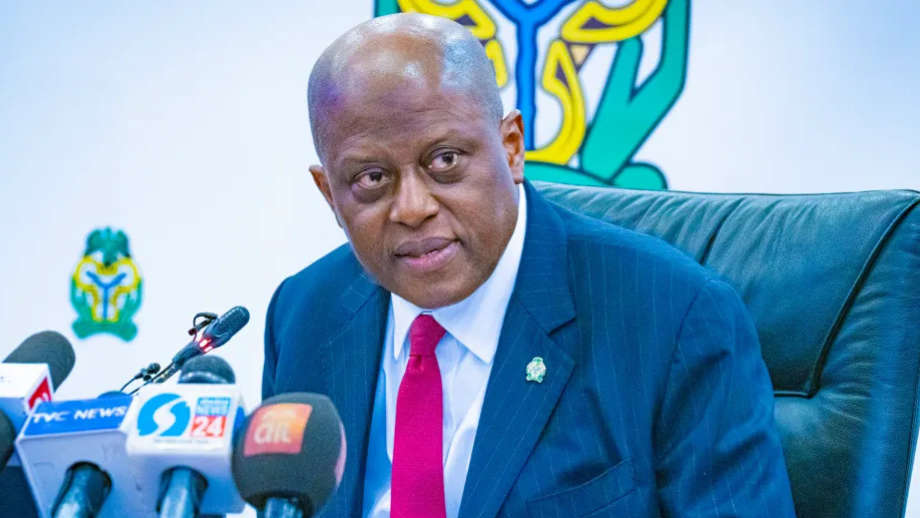
“This stance is unequivocal as there will be no return to the practice of financing fiscal deficits by the Central Bank. In parallel, the fiscal authorities have embarked on key institutional reforms – including the implementation of a Revenue Optimisation (RevOp) framework, the establishment of a new National Revenue Agency, and upgrades to the Treasury Single Account (TSA) – to strengthen revenue mobilisation and public financial management,” Cardoso said.
“As we transition towards a full‑fledged inflation‑targeting framework, this partnership will deepen, ensuring fiscal and monetary policies reinforce each other in delivering durable price stability,” he added.
Journey so far
The CBN had embarked on a series of bold reforms to attract more foreign capital to the economy, achieve price and exchange rate stability.
In 2023, the new administration and the CBN-led by its Governor, Olayemi Cardoso liberalised the foreign exchange market, stopped central bank financing of the fiscal deficit, and reformed fuel subsidies. The government also strengthened revenue collection and took strategic steps to reduce surging inflation rate.
Since these reforms were implemented, international reserves have increased, and people can now access foreign exchange in the official market.
Besides, Nigeria successfully returned to international capital markets last December and was recently upgraded by rating agencies. A new domestic, private refinery is positioning Nigeria up the value chain in a fully deregulated market.
CBN’s policies, including the currency reforms, led to investment inflows from abroad, and reduced interventions in the domestic forex market.
The unification of exchange rates and the clearing of over $7 billion FX backlog raised the country’s investment outlook, with multilateral organisations, like the World Bank describing it as bold intervention to improve the economy’s sustainability in the long run.
Also, Nigeria’s sovereign risk spread has fallen to the lowest level since January 2020, erasing the premium accumulated during the pandemic and subsequent strain on its economy. All these are deliberate efforts to woo investors and sustain capital inflows to the economy.
In its efforts to tame inflation, the CBN recently hosted the Monetary Policy Forum, featuring fiscal authorities, legislative, private sector, development partners, subject-matter experts, and scholars with the theme: “Managing the Disinflation Process.” The forum is a major push to improve monetary policy communication, foster dialogue, and collaborate on critical issues shaping monetary policy.
During the event, Cardoso explained that the apex bank’s focus is to sustain price stability, the planned transition to an inflation-targeting framework, and strategies to restore purchasing power and ease economic hardship. He said the apex bank is continuing its disciplined approach to monetary policy, aimed at curbing inflation and stabilising the economy. Cardoso reiterated that the goal of the CBN is to ensure that monetary policy remains forward-looking, adaptive, and resilient.
In addressing our economic challenges, collaboration is key: “Managing disinflation amidst persistent shocks requires not only robust policies but also coordination between fiscal and monetary authorities to anchor expectations and maintain investor confidence. Our focus must remain on price stability, the planned transition to an inflation-targeting framework, and strategies to restore purchasing power and ease economic hardship,” Cardoso said.