Follow Us on Google
By 2023, 24 years after transition from military to civil democratic rule in 1999, Nigeria once again became a debt-burdened country of the world’s most impoverished, pauperized, traumatized and terrorized people, as, in addition to socio-economic problems, the country became challenged with multi-dimensional security crises. Described as the Golden Era of the 4th republic, the Olusegun Obasanjo administration [1999-2007] carried out far-reaching reforms that indeed repositioned Nigeria on a path of peace, prosperity and security but, as a result of acute leadership failure of some of his successors, it has become abundantly clear to Nigerians that democracy as practiced in Nigeria has failed to yield the much promised dividends in the form of improved welfare and security of lives and properties of the Nigerian people.
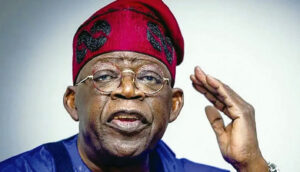
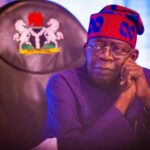
The keenly contested presidential election of 2023 was an attempt by the Nigerian people to take back their country from what they considered a corrupt and incompetent political establishment as represented by the PDP and its better half, the APC, when they massively rallied behind a fringe Labour Party and Peter Obi, its candidate. That President Ahmed Bola Tinubu of the ruling APC emerged victorious with a minority of the total votes cast while winning in only 12 states out of 36 and the FCT is clearly indicative of the people’s resolve of “enough is enough” of broken promises of the dividends of democracy. But, three years after, did President Tinubu learn a lesson or more about the historic 2023 election enough to administer a shock therapy on him to make a detour from the status quo that was massively rejected by the Nigerian people?
Three years after assuming office, it is manifestly clear that President Tinubu has not only been unable to improve the welfare and security of the Nigerian people but has made it worse through his actions and inactions. His removal of energy subsidies [electricity and petrol] and floatation of the naira have had the combined effect of throwing the majority of the Nigerian people into an unprecedented level of cost of existence crisis characterised by mass hunger, misery, deprivation and abject poverty. This is because his elimination of petrol and electricity subsidies shot up the cost of production of food, goods and services through the roof, thereby triggering a devastating form of cost-push inflation that was compounded by a floated national currency that lost more than 300% of its value. For an importdependent economy with a weak manufacturing base, the removal of energy subsidies and floatation of the naira was double jeopardy for the Nigerian economy that has left a permanent scar in the socio-economic lives of the people.
While the people are reeling from the agonising pains of what the Tinubu administration has dubbed “necessary economic reforms,” rather than reflect on the ruination his policies have caused the Nigerian people and change course, President Tinubu is doubling down on his policy decisions and describing them as “bold and courageous.” Even when different parts of Nigeria erupted in “end hunger” protests, President Tinubu could not be bothered because, as far as he was concerned, he has taken the best decision despite it having the worst socio-economic impact on the people in the history of Nigeria. And the misery of the Nigerian people continues as it will seem that President Tinubu has thrown them into a hell hole of economic hopelessness but is still digging.
While it is a fact the Tinubu administration inherited a hydra-headed monster of insecurity, it appears to have worsened under his watch. Despite his initial efforts at combating insecurity, the situation appears to have degenerated to a level where resurgence of Boko Haram insurgency in the North East, attacks in the farming belt in central Nigerian states like Plateau and Benue and banditry in the North West are now posing existential threat to the Nigerian state while constituted authority appear helpless. This heightening insecurity that has resulted in the mass killings of the Nigerian people while President Tinubu appears to have lost the initiative on how to defeat terror, banditry and general insecurity.
While former President Muhammadu Buhari could be accused of ethnicizing national security, President Tinubu can be accused of politicizing it in order not to offend some sensibilities in Nigeria’s largest voting demography: the Hausa-speaking, Fulani-ruled Muslim North, or so it seems. From the North East to the North West and from central to southern Nigeria, terrorists, bandits and criminals appear to be running the Nigerian state to failure, while our political leaders are behaving like drunken sailors in charge of a sinking ship.
However, while President Tinubu can be said to have underperformed in the area of security and welfare, even his worst critic would agree that President Tinubu has been a better diversity manager as clearly seen in his delicate balancing act of inclusion, fairness and equity in the administration of the Nigerian state.
Other News
In the build-up to the 2023 presidential election, President Tinubu, a Muslim, ran with Kashim Shettima, another Muslim, to the chagrin of Nigeria’s Christian half. The fear of Muslim domination of a multi-religious country like Nigeria resulted in a Christian revolt against the APC Muslim/Muslim ticket.
It is noteworthy, that President Tinubu has proven to be a true Omoluabi and a Yoruba gentleman with the full attributes of religious tolerance, accommodation and love for all, irrespective of creed, that the Yoruba people are known for. In President Tinubu’s Nigeria, not only have Muslims not dominated the country, his religiously fair, equitable and inclusive administration has significantly doused religious tension and the fear of Muslim domination completely dissipated. As a well groomed Omoluabi Yoruba gentleman, President Tinubu is as Muslim as he is Christian and must be credited for raising the bar of broad and liberal-minded leadership of a plural nation state like Nigeria.
Despite being accused of appointing a disproportionate number of his Yoruba kinsmen in positions of authority, a closer look at his total appointments clearly indicates a delicate balancing act that carries along every section of the country. While strengthening his home base in the Yoruba-speaking South West, President Tinubu is consolidating on his alliances in the North, just as he is cultivating new alliances in the South East and South South. Whereas, President Tinubu has compensated and is still compensating the North for their massive support for him in the 2023 presidential election, he has extended a hand of friendship to the South East, a region where he was totally rejected, by appointing one of their own, Admiral Ikechukwu Ogalla, as Chief of Naval Staff, for the first time in eight years, just as he appointed Dave Umahi to the powerful portfolio of Minister of Works. Even when he appointed a new set of service chiefs, the South East was once again included, when Air Marshal Kelvin Aneke was appointed Chief of Air Staff.
President Tinubu’s leadership style has forged a broad-based elite consensus in a manner that has restored some measure of national unity and social cohesion across ethno-geographic and religious lines.
This in itself is a significant achievement because social cohesion and national unity are necessary conditions for national development and security. President Tinubu may not have delivered yet, but his politics of inclusion is healing Nigeria’s ethno-geographic and religious fault lines, allowing for issues-based public discourse on the state of the Nigerian state.
Therefore, Nigerians must now take advantage of the prevailing atmosphere of fraternal comaraderie to begin to organise a coalition of the willing to chart a way out of our current sorry state of affairs. This coalition of the willing must be made up of men and women that are Nigerians in mind, body and soul, and who are willing to subsume their sectional interest for national interest. The immediate challenge to overcome is moving Nigeria away from an identity-driven political culture to one that is motivated by common economic, security and environmental concerns. This has become expedient because the reward system for identity politics is corruption in the mould of state patronage for a privileged few while the reward system of issues-based politics is good governance for all. This coalition of the willing must also be able to come up with clear-cut, ideologically clarified and pragmatic alternatives to the current neo-liberal economic orthodoxy from whose playbook, President Tinubu and his predecessors have been reading and adapting but which created out of Nigeria a country of the richest man in Africa and the poorest people in the world.