Follow Us on Google
By Fred Itua, Abuja
Within the space of three weeks in late March and mid-April 2026, Nigeria’s three most consequential political parties held their national conventions that, taken together, constitute the most instructive political theatre this country has witnessed outside of an election cycle.
APC convention
The All Progressives Congress (APC) convened at the Eagles Square from March 27 to 28, drawing 8,453 delegates. The Peoples Democratic Party (PDP) followed at the MKO Abiola Stadium Velodrome from March 29 to 30; and the African Democratic Congress (ADC) staged its own gathering on April 14 at the Rainbow Events Centre in Abuja, with over 3,000 delegates in attendance. What each party signalled, and whether those signals are credible will do much to determine the shape of 2027.
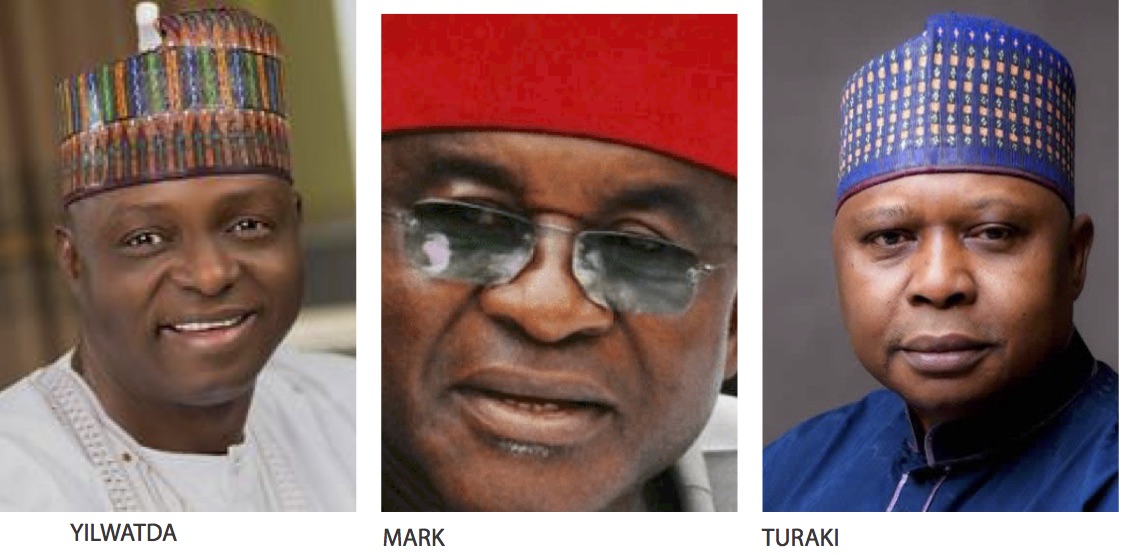
The ruling APC emerged from its convention looking, by far, the most purposeful. The party reconstituted its National Working Committee (NWC) at the 2026 convention, reaffirming Prof. Nentawe Yilwatda as the national chairman and Senator Ajibola Basiru as national secretary. The absence of a contest and the studied deployment of consensus was entirely deliberate. For keen observers, the decision to proceed by consensus, returning Yilwatda and Basiru, was not the path of least resistance; it was the path of wisdom.
President Bola Ahmed Tinubu, appearing in full command of the proceedings, went down memory lane about the vision of the founding fathers of the APC, lashed out at opposition parties for condemning the Electoral Act 2026, reeled out a scorecard of his administration, and gave a charge to the newly elected NWC.
His message to the convention floor was one of controlled confidence. “The party has recorded unprecedented growth in the last two years, with governors, senators, and representatives from other parties joining in a wave of defections that demonstrates Nigerians’ trust in the ruling party.”
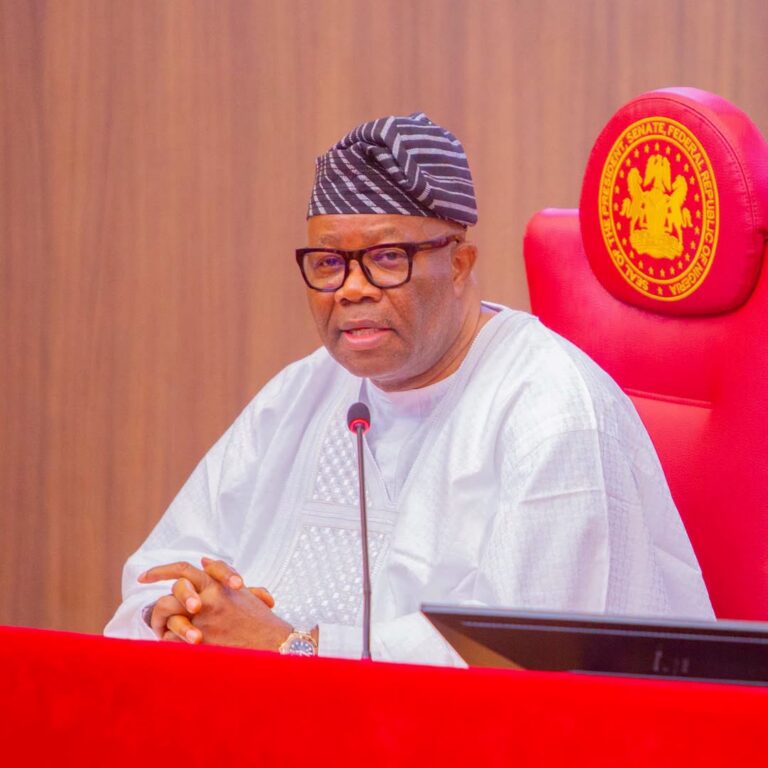
The South-South dimension was especially telling. Senate President Godswill Akpabio declared that with all six South-South states now under APC control, the zone is set to return the highest votes cast for President Tinubu’s re-election bid in 2027, a remarkable boast, and one that illustrates how dramatically the APC has redrawn the regional map since 2023.
Political pundits have asked, what is next for the APC?
The party must now pivot from internal consolidation to electoral mobilisation. The membership register deadline, extended to May 10, 2026, following INEC’s revision of its timetable, is an immediate administrative priority,” a public commentator, Dr. Austine Eigbe noted.
“The Ekiti and Osun governorship elections are the first live tests of the new NWC’s operational effectiveness. Beyond those, the machinery of presidential primaries must eventually be activated.”
Speaking on the pending issues, Dr Eigbe noted: “The APC’s challenges are more structural than organisational. While the convention projected seamless unity, a fresh political storm erupted shortly after when Alhaja Hafsatu Danladi publicly declared herself the “true and authentic Chairperson” of the party, threatening legal action and seeking to challenge the legitimacy of the Yilwatda-led NWC.
“The claim is widely regarded as fringe, but it is symptomatic of the sub-surface tensions that consensus politics can suppress but not eliminate. More seriously, the APC must also contend with the rising cost of living as its central electoral liability. Tinubu acknowledged that the country is experiencing fresh economic strain from what he described as an unanticipated blowout arising from the US-Israeli-Iranian War, a global disruption that is compounding the effects of domestic reforms.
“The party that sold ‘Renewed Hope’ in 2023 will need to show, by ballot time, that hope has become tangible for the ordinary Nigerian.”
PDP convention
The PDP’s convention story is not really a convention story. It is a crisis story, and the convention was merely the latest chapter. For the better part of three years, the party has been in the grip of a leadership dispute so ferocious that it has spawned parallel NWCs, contradictory court orders, and physical confrontations at the party secretariat.
The March 29-30 convention, convened by the Nyesom Wike-aligned faction, produced a new 19-member National Working Committee, with Abdulrahman Mohammed emerging as national chairman and Samuel Anyanwu as national secretary, with more than 2,000 delegates from across the country participating.
The problem, according to notable observers, is that the governors’ faction, backed by Oyo State Governor, Seyi Makinde and Bauchi State Governor, Bala Mohammed, refuses to accept the legitimacy of this outcome. The Turaki group approached the Supreme Court, seeking a stay of execution of the appellate judgment, including a request to halt the Wike-backed convention.
The PDP is therefore in the extraordinary position of having held a convention whose legality is currently before the apex court. INEC updated its website to list Mohammed as national chairman and Anyanwu as national secretary, a development that the Wike faction treats as de facto recognition, and the Turaki faction treats as a provocation.
The symbolism of where this crisis has now landed is difficult to overstate. The Wike-backed NWC commenced renovation work at the PDP’s national secretariat at Wadata Plaza, changing locks, replacing air conditioners, and reallocating offices to new NWC members. Changing the locks on Wadata Plaza is an act loaded with political meaning; it is a declaration that one faction considers the battle won. But battles declared won before the Supreme Court has spoken have a habit of being re-opened.
Also speaking on what is next for the PDP, Dr. Eigbe noted: “The party faces a fork in the road that is, in truth, also a cliff edge. If the Supreme Court rules in favour of the Turaki faction, the Wike-led convention and everything produced from it, the NWC, the secretariat renovations, the INEC recognition, could be unwound. If the Supreme Court upholds the Wike faction, the governors’ bloc faces the choice of submission or desertion. Either outcome has the potential to permanently fracture what was, for 16 years, Nigeria’s ruling party.
“A reconciliation and strategy committee, under the leadership of Governor Bala Mohammed, was mandated to resolve all lingering disputes within one week and position the party for smooth participation in the 2027 general elections, but that mandate was issued weeks ago and the dispute persists.
Other News
“What are the pending issues? The critical unresolved issue for the PDP is not which faction prevails, but whether the party can survive whichever answer the Supreme Court provides. Even if unity is formally achieved, the PDP faces a deeper structural problem; it has no nationally credible presidential candidate around whom both factions could cohere.
“The Wike-Makinde-Bala Mohammed triangle is one of governing interests, not ideology. Whatever they produce in the way of a presidential ticket will carry the weight of that perception. The party’s challenge is existential in a way that has not been true since 2015.”
ADC convention
The ADC convention of April 14 was, in theatrical terms, the most spectacular of the three. Held at Rainbow Events Centre in Abuja with over 3,000 delegates, the convention drew Peter Obi, Atiku Abubakar, and Rabiu Kwankwaso, three men who ran against one another in 2023 now occupying the same tent, as well as Rotimi Amaechi, and Rauf Aregbesola, among others.
For students of Nigerian political history, the image was remarkable; the three principal opposition candidates of the last election, assembled under one roof, on the platform of a party that did not exist as a credible force when they each ran separately and lost.
The ADC was formally adopted as an opposition coalition platform in July 2025, bringing together forces from the APC, Labour Party, PDP, NNPP, and independent politicians who had grown frustrated with their respective parties. The ambition is clear and, in principle, compelling. Nigeria has not had a unified, credible opposition coalition since the APC itself performed that role in 2015. The ADC is attempting to replay that script.
But the script has a central problem. The convention proceeded despite a live and unresolved leadership dispute that has split the party into factions. INEC, watching courts still deliberating, suspended recognition of both factions, maintaining the status quo until the matter is judicially resolved.
Former Governor Rauf Aregbesola, speaking during the convention, admitted that the party suffered from poor funding and an unprepared structure in the FCT local council and Anambra State elections, though he expressed readiness for the forthcoming Ekiti and Osun governorship contests. The candour was refreshing. The underlying reality was sobering.
What is next for the ADC? Another public analyst, Dr. Lemmy Ughegbe, said: “Three things must happen before the party becomes a genuine electoral force. First, the Supreme Court must provide a definitive resolution of the Mark-Bala leadership dispute. Without judicial clarity, INEC cannot formally recognise a single ADC leadership, and a party that INEC does not fully recognise cannot properly conduct primaries or present candidates.
“Second, the coalition’s formidable personalities must translate their shared presence on a convention floor into a shared presidential ticket; a far more demanding exercise.
“Third, the party must develop the financial and structural backbone to contest elections across a country of 200 million people.”
The most dangerous pending issue for the ADC is the gap between its narrative and its reality. The narrative is of a unified opposition renaissance. The reality is of a party that could not secure a convention venue until the night before, whose chairman an appeals court has effectively questioned, and whose own House of Representatives caucus called for the INEC chairman to be prosecuted in the build-up to the convention. For observers, these are not the hallmarks of a party in full operational health.
A third splinter, aligned with Dumebi Kachikwu, has openly rejected the Mark-led convention process and is charting an entirely separate course, deepening uncertainty over the party’s cohesion. Each competing faction weakens the credibility of the coalition story the ADC is trying to tell.
Three parties, three fates
The question of who is best positioned for new alliances has a clear answer, though it may not be the expected one. The APC, paradoxically, enters 2027 with the most formidable alliance infrastructure; not because it needs opposition allies, but because defectors continue to flow toward it from every direction. The consensus model of its convention was designed partly to signal to potential defectors that the APC is a house with rooms. The South-South consolidation, in particular, is an alliance achievement of the first order.
The ADC, by design, is the most openly coalition-oriented of the three parties. It was reconstituted specifically to be a coalition vehicle. The gathering of Obi, Atiku, and Kwankwaso is the clearest signal in recent Nigerian political history that at least some serious political actors are willing to subordinate ego to arithmetic. Whether that willingness survives the pressure of a presidential primary, where only one of them can emerge, remains the question. The ADC convention has done the symbolic work of showing that co-habitation is possible. It has not yet done the harder work of designing a mechanism that produces a single candidate without fracturing the coalition.
The PDP, consumed by its internal war, is perceived as the least equipped to pursue external alliances. A party that cannot agree on who runs its own secretariat is not a party that can extend a credible hand to potential partners.
Nine months is both a long time and no time at all in Nigerian politics. The APC begins those nine months from a position of institutional strength, incumbency, a reconstituted and tested NWC, a wave of defections, and a president who, whatever his critics say, commands an extraordinary political machine.
The PDP’s clock is set to the rhythm of crisis, urgent, unpredictable, and dependent on external events, specifically, a Supreme Court verdict that are entirely outside the party’s control. Its convention, far from resolving its internal war, has intensified it. Every day that the Supreme Court remains silent is a day the PDP cannot fully organise.
The ADC’s clock is set to the rhythm of coalition politics, aspirational, energetic, and vulnerable to the moment when ambition collides with arithmetic. The convention has proved that the room can be filled. The primaries will prove whether the coalition can produce a candidate and whether that candidate can win.
The conventions have not merely set the stage for next year’s general elections. They have revealed the character of each party more honestly than any manifesto could. The APC has shown discipline. The PDP has shown division. The ADC has shown determination, alongside the structural fragility that makes determination alone insufficient.
Nigeria is watching. History, as always, will record what happens next.