Follow Us on Google

In a world filled with modern fashion, luxury is increasingly being redefined. This is done not by excessive embellishment, of course, but by radical authenticity and material truth.
At the forefront of this movement sits one brand that has had people talking ever since its very first collection. That brand is This Is US.
This is a brand that has continued to challenge the luxury fashion style the general market is known for. And they have done that through their research-driven approach to African textile heritage.

With their Ivory collection, the brand claims to turn its lens to cotton in its purest unbleached form, which is technically known as greige.
And with a brand like This Is Us, that keeps rising in the fashion landscape, the public wants to know if this collection can really transform unbleached cotton into a modern, sustainable and, of course, elevated design.
This critique will answer that.
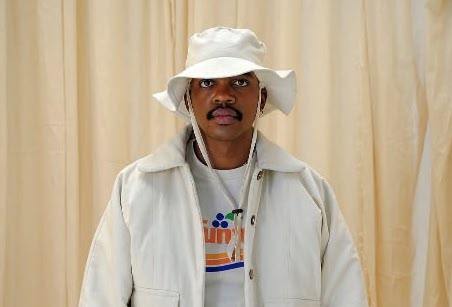
For this first outfit, it is clear that This Is Us utilises 100% unbleached cotton (greige). Now, this seems to be harvested and woven locally in Northern Nigeria.
The fabric itself has this warm, clean-toned off-white shade that is characterised by organic slubbing from preserved cotton plant remnants.
The tailored jacket and inner hooded layer feature this soft yet durable matte weave. This, on its own, is quite eye-catching. The matte weave is paired with contrasting natural brown earthy buttons that somehow do justice to highlighting the raw, unfiltered character of the textile itself.
Let’s move to the things that stand out for me in this piece.
I’ll start with the thoughtful cultural contrast in the headwear. The deep indigo coloured patterned cap gives an immediate striking visual contrast. This contrast does justice to the monochromatic ivory layers.
Another thing I love about this cap is how easily one could tell where the designer got their inspiration. This is one styling that nods to Northern Nigeria’s historic cotton farming belt. Places that can easily come to mind are places like Funtua in Katsina State.
It honours the agricultural legacy of domestic textile production by stripping away industrial bleaching and synthetic processing, showcasing the material in its true, unrefined state.
Also, I can’t move to the next outfit without bringing the spotlight to the subtle textile layering.
Layering an unbleached hooded garment beneath a notch-label tailored jacket was a good choice of styling. It seamlessly blends utilitarian streetwear silhouettes with soft tailoring. This, on its own, adds depth without cluttering the monochromatic colour the piece is set to give.
Despite these praises, there are things the designer needs to look out for to turn this almost perfect piece into one of perfection.
I’d buttress my point with the bulk around the neck and label line.
The truth is that layering a thick hoodie underneath a structured jacket like this one creates excess fabric bunching along the collarbone and lapels. And nobody wants that. Why? It is because it obscures the clean line of tailoring.
What can the designer do here, then?
The designer can choose to swap the thick hooded base layer for a collarless crewneck tee or maybe a fine-knit mock-neck top in the same raw cotton. Doing this can allow the jacket lapels and neck area to lay flat and structured.
Despite these suggestions, I can see how relevant this piece can be in the fashion industry. There was a time when global consumers and luxury markets demanded authentic sustainability. This Is Us sets a benchmark by building an entire collection that is around that same hyper-local raw material.
It also taps into a major global luxury trend where luxury is defined by origin and material integrity, rather than the usual chemical perfection or bulky embellishments.
Despite this being a brand based in Nigeria, it can be compared to international brands like Story Mfg. This is a brand that came to mind when looking at this first piece. Story Mfg is a UK-based brand. This brand is similar because it also focuses on zero-bleach and raw or organic textiles with deep respect for craftsmanship.
But of course, we have This Is Us, which does theirs without failing to infuse African heritage into their craftsmanship.
This first piece has done a little justice to the collection. It’s time to see if the second outfit does the same too.
Just like the first outfit, this also uses 100% greige sourced from Northern Nigeria.
Its semi-fluid drape allows for the wide, sweeping caftan sleeves. Not just that, the subtle, natural slubbing also gives the weave an organic tactile texture.
What I can see stand out with this piece is the regal afro-minimalist silhouette here.
The floor-length, high-collared tunic drape kind of honours classic West African Kaftan and even the Buba lines. Now, this is where I feel the designer got their inspiration from. It translates the traditional modest silhouette heritage into a modern luxury dress.
Another standout point with this piece is how effortless it looks. It gives that breathable fluidity. The wide, elbow-length draped sleeve creates this airy, unrestrictive drape. This is the kind of style that highlights the comfortable, lightweight quality of processed cotton.
However, there are some things the designer needs to watch out for. One could be the unstructured collar and placket sagging.
This is because of the high-collared quarter-zip. It lacks sufficient inner interfacing. This makes the fabric around the throat pucker slightly and lose its crispness and even its regal structure.
The designer can easily make this better by reinforcing the inner placket and collar seams. They can do this with some lightweight organic interfacing or even topstitching. This can make the high neck hold a sharp and clean vertical line, whether worn zipped up or slightly opened.
Another thing the designer needs to watch out for is the excess midsection volume.
This part can throw potential buyers off because the kaftan cut drops from the shoulders without tailored waist darts or even side gatherings. This makes the folds of raw fabric bunch up around the stomach area. This isn’t a flattering look because it can make the torso look bulky rather than fluidly draped.
The designer can make this better by introducing subtle interior stay-tapes.
This can help in many ways. It allows the wearer to gently cinch the waist from within. So, nothing is lost even with this recommendation.
Speaking of the relevance of this second piece, I’d say that as global consumers grow weary of overly processed, synthetic fabrics, the industry is witnessing a strong trajectory towards unrefined luxury. And while West African luxury has historically been celebrated for things like high-octane embellishment and laces, this piece represents the rising wave of Afro-minimalism. Why? It is because it proves that African luxury can command presence through pure silhouette and unadulterated textile quality.
That is something to be proud of, but not the only thing to be proud of.
Ever heard of the brand Lemaire? That is what this piece reminds me of. Lemaire is a famous brand that is known for its monochromatic silhouettes, their voluminous drapes, and, of course, their well-known high necklines that are crafted from organic fabrics designed for daily wear.
Other News
This is what This Is Us did with this piece. But unlike Lemaire, This Is Us made theirs unique by adding Nigerian northern and western elements to their style in this piece.
Things are slowly getting more interesting here, which is leading to the next piece of the collection.
For this third piece, we’ve got a three-piece ensemble that consists of an oversized bomber-style jacket. With it are exaggerated double-flap patch pockets and elasticated, gathered cuffs.
This is worn open over a graphic crewneck top that is paired with relaxed, wide-leg matching trousers in unbleached greige.
This look is accessorised with a wide-brimmed, wide-stitched bucket hat that features an upper-chin tie strap.
If there is something that stands out with this piece, it is the oversized bomber jacket that is paired with the structured, dual front flap pockets, which elevates classic workwear into a statement piece.
This also provides a modern street-ready volume while retaining utility.
Another positive thing I can point out from this piece is how the layering of the raw greige jacket and trousers over a top featuring a vintage-inspired pop-art graphic breaks up the solid ivory wall. And this adds an energetic focal point to the chest area.
Still, the designer needs to take note of the tight elastic gathering of the cuffs. Having this on the heavy raw cotton sleeves creates excessive fabric bunching around the wrist.
Not many would like this because, of course, it gives the jacket sleeves an inflated, slightly disproportionate appearance. This can be seen in the body length.
I’d recommend that the designer replace the elastic gather on the jacket sleeve with a tailored wrist strap. This is essential because it gives the sleeves a streamlined fall.
This outfit seems to be drawing inspiration from traditional West African headwear. There is the bucket hat that resembles the protective wide-brimmed sun hats that are worn across agricultural communities in Northern Nigeria.
Also, outfits with functional pockets, bucket hats and even durable jackets like these are relevant in today’s fashion industry. And that is because they refine urban daily wear.
And just like the second outfit, I can say that this reminds me so much of Story Mfg, because they also specialise in graphic tees and bucket hats that are also crafted from unbleached textile. But for This Is Us, one can easily see the African touch in this piece, and that is why I could easily tell where the inspiration came from.
Moving on to the fourth outfit of this collection
This next piece seems to be one that is, of course, drawn from the inspiration of traditional West African body-adornment techniques. Not just that alone; I could also see the regional draping in it too.
The designer chose to reinterpret the classic waist wraps and woven sashes through a minimalist lens. In Nigeria, especially among the West or Yorubas, this kind of style is usually seen in Gele, or headwraps, as most people would want to call it.
With this piece, and by layering a crocheted waist wrap over the high-collared band-neck shirt and fluid trousers, I’d say that the outfit also pays homage to indigenous woven traditions.
Styles like this one can be compared to Jacquemus. This particular brand is well known because of how they integrate natural accessories like fringe over neutral tailoring.
Now, that description also fits perfectly with this fourth look; that’s why it can’t be helped when being compared to international brands like this.
Despite what has been said, there is an awkward waist-wrap button placement that I think the designer needs to watch out for.
The button on the left side of the waist wrap kind of creates a slightly bulky seam gap. This makes the woven panel look like it is resting loosely on the hip rather than hugging the waistline. No one wants to have that feel when putting on such a beautiful piece.
This can be resolved by just replacing the bulky button closure. The designer can do this with an internal hidden button. If that doesn’t work, they can try adjusting the wrap-around tie strap. This can help allow the textured piece to wrap smoothly and also contour the waist cleanly without gaping.
Either way, this is a good piece. It is relevant for the fashion industry because the texture of styling within a single monochromatic greige aligns directly with modern luxury’s shift towards material-led sophistication.
Down to the final piece. But with what I am seeing, it is definitely not the least.
Let’s talk about this fifth look right here.
This is a style with a boxy vest and a round neck. It is also paired with what we Nigerians call Shokoto.
It is clear that the designer got inspired by West African culture here.
I also love how ‘This Is Us’ is boldly written on the chest area. It shows how to stand out as a brand, just like Prada and Chanel.
Still, many people might hesitate because the torso looks flat.
The vest here falls straight down. The funny thing is that it falls without waist definition.
People won’t like that because it makes the midsection look wide.
The designer should introduce a slit in the vest. At the hemline, to be precise. It can help give it an artistic look.
Also, this is something that is needed in the fashion industry, so the relevance is clearly there.
A lot of people these days are looking for high-quality modern wear that has been reinterpreted with urban styles.
Also, a famous brand this reminds me of is Fear of God. This brand is one that also deals with boxy shirts and wide trousers. But of course, someone can differentiate that international brand from This Is Us because, based on the inspiration alone, This Is Us has African elements in their work.
This brings me to the end of this collection. I must say that the 2025 collection delivers a body of work that exceeds expectations.
Based on this Ivory Collection alone, This Is Us is truly redefining African culture.
Looking across the 2025 collection, I will say that the brand has delivered a body of work that vastly exceeds expectations. Based on this collection, This Is Us is truly redefining African culture.
By Seun Emmanuel