Follow Us on Google
PROLOGUE
How a mother’s hustle built a billionaire’s mind
Every year, February 19 comes quietly and passes quietly for most people. It is just another date on the calendar. But in the story of Mike Adenuga’s extraordinary rise, it is a sacred marker of origin and meaning. It is the birthday of Mrs. Oyin Adenuga—the woman whose discipline, foresight, and unbreakable work ethic laid the foundation for one of Africa’s greatest business empires. Long before oil wells, telecom towers, and boardroom victories, there was a mother whose daily sacrifices shaped a destiny. To understand the man, one must first understand the woman who raised him.
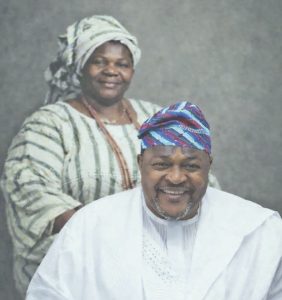
This piece, which is a chapter from my forthcoming business-oriented book, is therefore, not merely a tribute to motherhood. It is an exploration of how character is formed before success arrives, how habits are planted before wealth appears, and how greatness is cultivated long before it is celebrated. It tells the story of how a mother’s hustle became a son’s mindset, how street lessons became boardroom strategies, and how quiet discipline became global dominance. It is the story of how Mrs. Oyin Adenuga built, with her hands and her heart, the billionaire’s mind:
***
Greatness rarely begins in comfort. More often, it is born in sweat, in struggle, and in small, unnoticed acts of discipline repeated day after day. In the case of Dr. Mike Adenuga, one of Africa’s most successful businessmen, greatness did not begin in glass towers or air-conditioned offices. It began on the dusty streets of Ibadan, where a young boy and his brother and sisters hawked goat feed on behalf of their mother.
Long before the billions. Long before the boardrooms. Long before the global empire. There was hawking. And behind the hawking stood a woman of uncommon vision and quiet strength—Mrs. Oyin Adenuga whose posthumous birthday was Thursday, February 19. Contrary to popular assumptions, Mike Adenuga did not grow up in poverty. Money was not absent in his home. What was absent was indulgence. His mother did not send her children into the streets because she was desperate. She did so because she was deliberate. She wanted them to understand life early: the value of effort, the meaning of money, and the realities of survival. She wanted them prepared for the hustle and bustle of business long before adulthood. As his sister, Mrs Bunmi Adegbola, the former chairman of the board of the then Equitorial Trust Bank owned by her brother Mike Adenuga, once recalled in an interview with me: “We were not spoiled with money. The money was there, but you didn’t have full access to it. You had to work.” That simple philosophy would later define Mike Adenuga’s entire career and his relationship with his children.
One of Mama Oyin Adenuga’s early businesses involved supplying ogi—pap—to St. Luke’s College in Ibadan. Every morning, her children carried heavy containers on their heads to the school. After delivery, they returned home with the waste product—the corn chaff known as eri—waiting. Rather than discard it, their mother turned it into another source of income. The eri was packaged and sold as goat feed. There was no waste in her household. No laziness. No excuses.
Mike’s elder brother, Chief Demola Adenuga recalls: “Once you prepare ogi, there is a by-product called eri. Mama would distribute it to all of us to go and sell.” Each child carried ten or twenty small packs. They sold them for half a penny. On those streets, they learned arithmetic without textbooks, negotiation without classrooms, and patience without lectures. They were learning business before they even knew what the word meant. Yet Mike was still a boy. And boys love to play. According to his sister, young Mike sometimes preferred football to hawking. “He was a very good footballer,” she recalled. “He liked being a goalkeeper. His nickname was Goalkeeper.” While others sold their wares, he sometimes chose the football field. On such days, his sister quietly helped him sell his packs.
Other News
Even in these moments of youthful distraction, something important was forming: confidence, teamwork, resilience, and courage. These were qualities that would later serve him well in boardrooms and negotiations across continents.
On another occasion, Mama travelled to London to study fashion design. When she returned, she brought back several ladies’ designer bags. Instead of storing them for personal use, she transformed them into another lesson in enterprise. She distributed the bags among her children and asked them to sell. It was, in many ways, an experiment. And Mike passed it brilliantly. Chief Demola later recalled: “Mike sold more bags than any of us. And he sold them at a higher margin.” Even as a child, he understood profit. He adjusted prices, created his own margins, and outsold his siblings. It was instinct sharpened by training. It was talent refined by discipline. It was inheritance shaped by mentorship.
Mrs Oyin Adenuga lived by a Yoruba proverb: Ona kan o woja—one road does not lead to the market. In simple terms, it meant never depending on a single source of income. Try many paths. Create multiple streams. Multiply options. She did not merely preach this philosophy; she practised it daily. At different times, she was a dressmaker, a medicine seller, a Coca-Cola distributor, a beer merchant, and a Cadbury agent. From tailoring to trading, from Bournvita to beverages, she followed opportunity wherever it appeared. Wherever honest money could be made, she was there—and she took her children with her.
Beyond trading, she also taught ownership. She understood early that wealth without assets was fragile. She built her first house in Oredein, Ibadan, then another in Challenge, and later more properties in Ibadan and Lagos. To her, property was security. Property was legacy. Long before oil blocks, telecom towers, and multinational investments entered Mike’s life, he had already learned the basics: buy land, build houses, think long-term.
Today, business schools teach diversification as a sophisticated strategy. Mrs. Adenuga practised it decades earlier. She taught her children never to put all their eggs in one basket, to create multiple income channels, and to spread risk wisely. These lessons, absorbed at home, later became Mike Adenuga’s professional signature—spanning telecommunications, oil and gas, banking, real estate, and logistics.
Every Christmas in the Adenuga household came with special excitement. Not because of toys or clothes, but because of what the children called “the big envelope.” It was Mama’s reward for discipline and hard work. Through it, she taught her children to work hard, wait patiently, and enjoy responsibly. In that household, every child was a trader. There were no exceptions and no escapes. They hawked, carried loads, sold goods, and counted money. They learned about risk and loss, profit and patience, customer relations and credibility. That was their informal MBA—earned on the streets of Ibadan. When it came to strategy, Mama was Mike’s first coach. Long before consultants, advisers, and analysts entered his world, she had already taught him how to observe markets, read people, move quickly, save wisely, and invest boldly. Before corporate boardrooms, there was Mama’s living room. Before spreadsheets, there were street lessons.
February 19, her birthday, is therefore more than a date on the calendar. It marks the birth of a destiny builder—a woman who raised her children without entitlement, without laziness, and without excuses. She raised builders, not dependants. Before Mike Adenuga built empires, someone built his character. Before he mastered business, someone taught him hustle. Before he learned strategy, someone practised it at home. Her name was Mrs. Oyin Adenuga. She was a mother. A mentor. A trader. A teacher. A nation-builder.
She was—The Woman Who Made Mike Adenuga.