Follow Us on Google
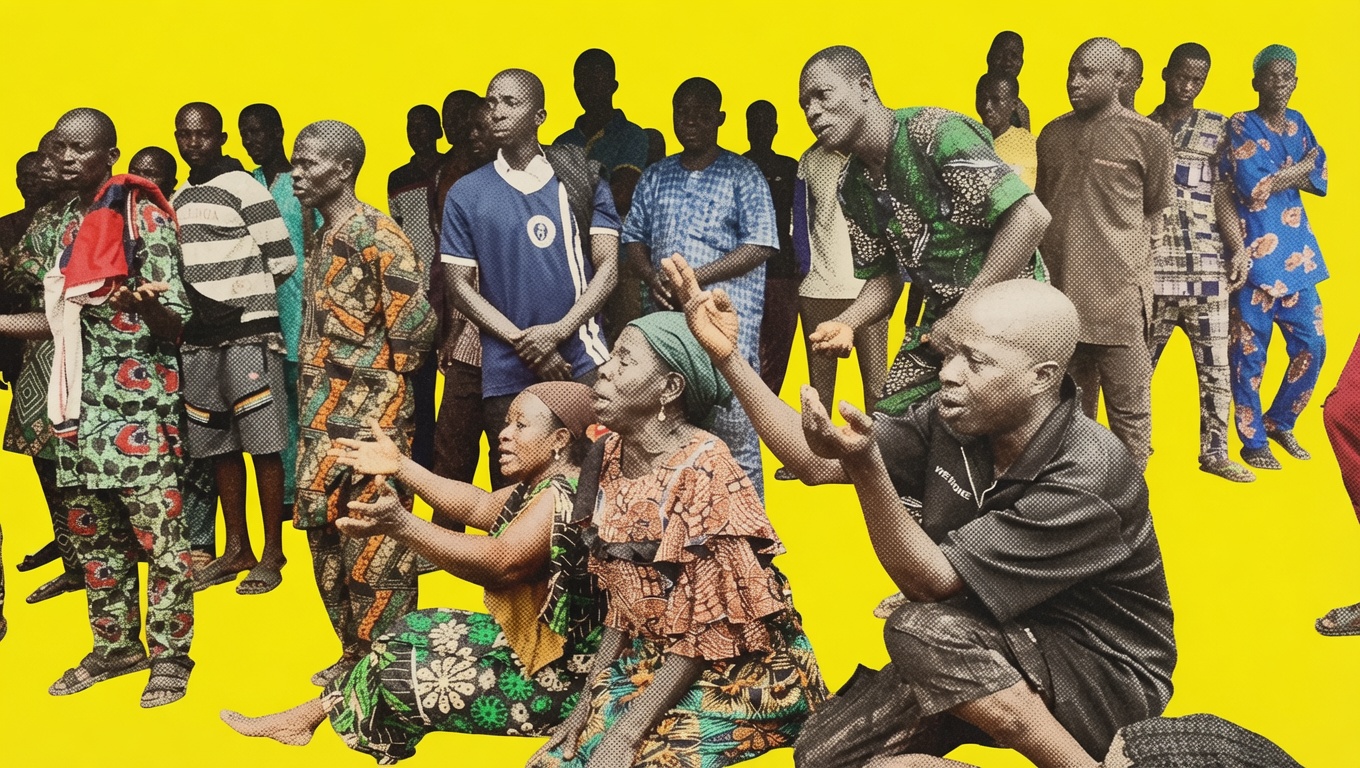
A nation is judged not by the height of its skyscrapers, the size of its budget, or the eloquence of its leaders, but by how it protects its weakest citizens. Among those citizens are children, the innocent souls whose only crime is to dream of a better tomorrow.
Today, Nigeria stands before a mirror stained with blood, tears and unanswered questions. In the dusty communities of Oriire Local Government Area of Oyo State, parents wake up every morning with a burden no father or mother should carry. Their children, who left home in school uniforms in search of knowledge, remain in the hands of terrorists.
For weeks, mothers have stared at empty beds. Fathers have walked endlessly between security offices, prayer grounds and village squares searching for hope.
The silence of absent children now echoes louder than the sounds of laughter that once filled their homes. One can only imagine the agony.
What does a mother feel when she prepares breakfast for a child who is no longer there to eat it? What does a father tell younger siblings who ask, “When is my brother coming home?” How does a family sleep at night knowing their loved ones are somewhere in a forest, uncertain of the next sunrise?
The answers lie in tears.
The abduction of schoolchildren and teachers in Oriire is not merely another security incident. It is a fresh wound in the conscience of a nation already bleeding from countless injuries. It is a reminder that insecurity has gradually become a permanent resident in our national life.
Across Nigeria, death has become a familiar visitor. From the troubled communities of Plateau, where nineteen innocent persons were recently killed, to villages in Niger State, to communities in Kogi, Benue, Zamfara, Katsina, Borno and parts of the North Central region, the story remains painfully similar. Families bury loved ones almost daily. Farmers abandon their lands. Schools close their gates. Villages empty overnight.
The nation mourns, yet the killings continue.
We have become accustomed to headlines announcing massacres, kidnappings and attacks. We scroll through horrific stories on our phones, shake our heads in disappointment and move on to the next news item. That, perhaps, is the greatest tragedy of all — not merely that people are dying, but that we are slowly becoming comfortable with the deaths.
The bloodshed no longer shocks us as it once did. Former Head of State, General Abdulsalami Abubakar, recently called on Nigerians to unite against terrorism and support security agencies in their efforts to restore peace. His appeal comes from a place of patriotism and concern. Yet it also raises an uncomfortable question: how much longer must ordinary citizens carry the burden of insecurity?
However, the abduction in Oriire inevitably evokes painful memories of the 2014 kidnapping of 276 schoolgirls from the Government Girls Secondary School, Chibok — an incident that shocked the world and became a symbol of Nigeria’s prolonged struggle with insecurity. More than a decade later, many of the Chibok girls have been rescued or released, but some remain unaccounted for, leaving families trapped in an endless cycle of hope and heartbreak. The Chibok tragedy exposed the devastating human cost of terrorism and highlighted the vulnerability of schools and children in conflict-affected communities.
Today, the plight of the abducted children and teachers in Oriire rekindles those same fears and painful memories. Like the Chibok parents who endured years of uncertainty, the families in Oriire now wait anxiously for news of their loved ones, praying that history does not repeat itself.
For years, Nigerians have been urged to remain patient. They have been told that security operations are ongoing. They have been encouraged to cooperate with authorities. They have obeyed these calls. But parents whose children are missing cannot feed on promises.
Widows cannot rebuild shattered lives with assurances. Orphans cannot replace lost parents with official statements.
The true measure of governance is not in speeches delivered from podiums but in the safety of citizens in their homes, schools and farms.
The failure to secure lives is the failure of government itself. This may sound harsh, but it is the painful truth. Government exists primarily to protect life and property. Every tax collected, every budget approved and every election conducted ultimately derives legitimacy from that sacred responsibility.
When terrorists can invade schools and cart away children, something has gone terribly wrong. When farmers cannot cultivate their lands without fear of abduction, something has gone terribly wrong. When communities sleep with one eye open and one ear alert for gunshots, something has gone terribly wrong.
And when citizens begin to believe that they are alone in their struggle for survival, something has gone disastrously wrong.
The parents of the Oriire children are not asking for luxury. They are not demanding political appointments. They are not requesting special privileges. They simply want their children back. That is all. They want to hear familiar voices again. They want to embrace sons and daughters they fear may never return. They want to reclaim ordinary moments that most people take for granted.
A mother’s greatest wealth is not money. It is her child. A father’s greatest achievement is not political influence. It is the safety of his family. Every passing day in captivity is another day of torture for these parents.
As one grieving parent, Aishatu, reportedly lamented in a prayer gathering: “We are alive, but our hearts are in the forest with our children.” That simple statement captures the tragedy of modern Nigeria.
Other News
Millions of Nigerians are physically alive, yet emotionally imprisoned by fear — fear of kidnapping, fear of attacks, fear of travelling, fear of farming, fear of sending children to school. Fear has become our national companion.
This was not the dream of those who fought for Nigeria’s unity. It was not the vision of generations who believed education would unlock opportunities and prosperity. It certainly was not the promise made by leaders who sought public office. Yet here we are.
A country blessed with enormous human and natural resources, struggling to protect its most vulnerable citizens.
The tragedy extends beyond the immediate victims.
Every attack weakens confidence in the state. Every kidnapping discourages investment. Every killing deepens poverty. Every abandoned farm threatens food security. Every closed school steals a child’s future. The consequences ripple through society like waves after a stone is thrown into water. And perhaps the deepest wound is psychological.
Children growing up in conflict-prone communities are learning dangerous lessons. They are learning that violence often triumphs over innocence. They are learning that classrooms are not always safe. They are learning that life can change forever in a single moment.
No nation can build a prosperous future upon such foundations.
Yet amid the darkness, hope remains.
Hope remains because security personnel continue rescue operations. Hope remains because communities still pray. Hope remains because many Nigerians refuse to surrender to despair. Hope remains because even in our most difficult moments, humanity persists.
Across the country, strangers contribute money to victims. Religious leaders offer comfort. Volunteers assist displaced families. Ordinary citizens continue to display extraordinary compassion.
These acts remind us that Nigeria is more than its tragedies.
But compassion alone cannot replace effective governance. The nation requires decisive action. The battle against terrorism and violent criminality must move beyond rhetoric. Intelligence gathering must improve. Border security must be strengthened. Rural communities must receive adequate protection.
Technology must complement traditional security methods. Most importantly, accountability must become non-negotiable. Lives depend on it.
History will not remember how many press conferences were held. History will remember whether children returned home safely. History will remember whether communities were protected. History will remember whether leaders rose to the challenge or merely observed events from a distance.
As rescue efforts continue in Oriire, Nigerians join grieving parents in prayer and hope. We pray that every abducted child returns safely. We pray that every teacher held captive regains freedom. We pray that every family receives relief from unbearable anxiety.
But prayer must be matched by action.
The tears flowing in Oriire today are the tears of Nigeria itself. They are the tears of mothers in Plateau. The tears of widows in Benue. The tears of farmers in Niger. The tears of families in Kogi. The tears of countless communities whose names rarely make national headlines.
They are tears that ask difficult questions.
How many more children must be kidnapped? How many more families must be shattered? How many more graves must be dug before insecurity ceases to define our national conversation?
Until those questions are answered, the cries of Oriire will continue to echo across the country. And those echoes should disturb every conscience.
Because a nation that cannot protect its children risks losing not only its future, but also its soul.