Follow Us on Google

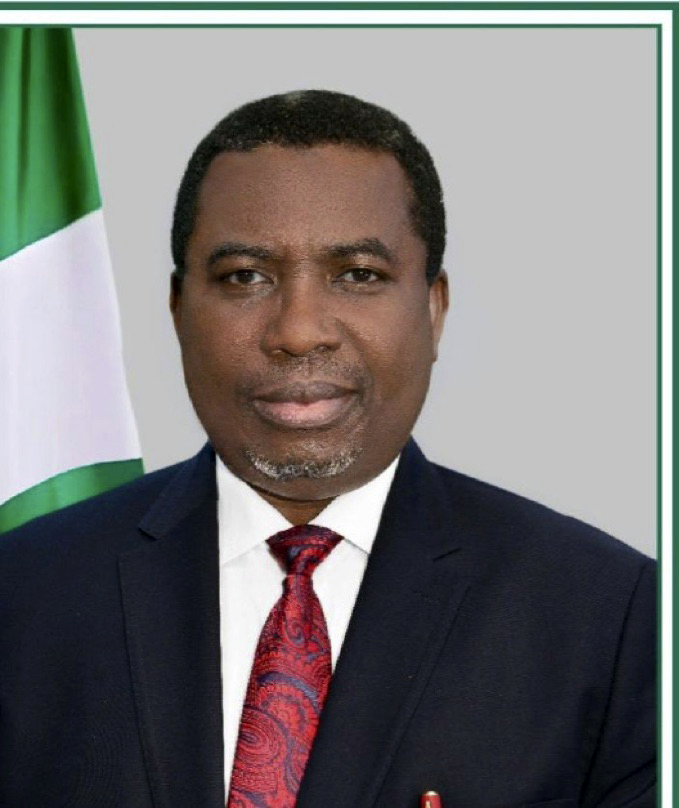
President Muhammadu Buhari recently renewed the appointment of Godwin Emefiele for a second five-year term as the Governor of the Central Bank of Nigeria (CBN), in line with the provisions of Section 81(2) of the Central Bank of Nigeria’s Act 2007. With the confirmation of his appointment by the Senate, Emefiele has made history as the first CBN Governor to be reappointed since the inception of the present democratic dispensation in 1999.
Undoubtedly, the retention of Emefiele as the CBN boss is an acknowledgement of his good performance in the last five years and the need to ensure continuity and stability of the current monetary policy.
His first tenure will expire on June 2, 2019. As he begins his second five-year term in office on June 3, 2019, Nigerians, including financial market watchers, expect him to focus on policies that will drive sustained growth across various sectors of the economy. Therefore, in the next five years, Emefiele must leverage on his past experience on the job and decades of sterling performance as an accomplished banker. He should sustain the achievements recorded in the apex bank in the last five years and improve on them. There is need to put in place vibrant macroeconomic policies that will stimulate the economy to grow. And there are many of them that we think should be his priority in his second term.
He should ensure adequate control of money supply, management of the interest rates, inflation, foreign exchange (FX) and external reserves. None of these should be left to be determined by the market forces alone. He should use his second term to achieve the much-anticipated convergence of the foreign exchange market. This will significantly stimulate Foreign Direct Investment (FDI). Having different FX windows, as it is the case now, sends wrong signals to investors who are eyeing Nigeria’s market.
Beyond this, the CBN should be more flexible in allowing Deposit Money Banks trade our national currency, the naira, to lessen the pressure on Forex. This, according to analysts, will give the naira more liquidity. To ensure more credits to the private sector, the CBN should review the current Cash Reserve Ratio (CRR) regime. Also, the CBN’s development fund should be adequately coordinated through the commercial banks to achieve real growth and transparency. The apex bank must ensure that payment service banks meet the needs of millions of unbanked Nigerians.
There is no doubt that the CBN under Emefiele has developed interventionist policies in various sectors of the economy. We can recall the Anchor Borrowers Programme in agriculture and intervention in the power sector and others.
In the years ahead, we expect more interventions that will help stimulate the economy. We agree with the CBN’s recent assertion that Nigeria had wasted much growth opportunities in the past by abandoning agriculture and manufacturing sectors and relied heavily on crude oil for revenues. The viable option now is to return to these sectors, including palm produce and other cash crops, which the apex bank is currently funding at single digit interest rates. For sustainable development in the economy, the banks should give loans at low interest rates to the productive sectors.
The road ahead is still tough, with the fundamentals of the economy getting weaker and the inflation rate rose to 11.37 per cent in April, from 11.25 per cent in March. We urge the CBN to improve growth and shore up the value of the naira, reduce inflation, imports and deal decisively with those who circumvent government’s economic policies. The globalised economy requires the apex bank to evolve monetary policies capable of withstanding local and external shocks. We advise Emefiele and his team to make appropriate policies that will put the economy in good stead.
While wishing Emefiele a successful tenure in office, we urge him to use his reappointment to steer the economy through sound macroeconomic policies that will spur growth. He should lead by example in the management of the CBN.