Follow Us on Google

By Obiotika Toochukwu
Leadership, by its very nature, commands followership. Every human being is born with the potential to lead, whether in a family, a club, kindred, an organisation, a church, an institution, or an entire nation. Leadership is not merely the privilege of occupying an office; it is the responsibility of giving meaning, direction, hope and dignity to the lives of others. That is why the public entrusts its commonwealth to those elected to govern. The people do not surrender their future to politicians; they lend them the authority to protect it.Political leadership, therefore, must be measured by its human consequences.
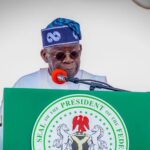
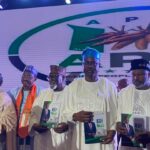
As Nigeria approaches the January 16, 2027 presidential and National Assembly elections, the controversy surrounding President Bola Ahmed Tinubu’s decision not to personally campaign across all 36 states has become a troubling symbol of the distance between political power and ordinary citizens. Reports indicate that the President intends to attend selected rallies while relying on party leaders to mobilise support elsewhere. His campaign council has defended the strategy as a political decision, not a constitutional obligation. Nevertheless, the question before Nigerians is larger than the itinerary of a presidential candidate. It is about accountability for a nation suffering under economic hardship deserves more than a carefully calculated electoral map. It deserves a government willing to confront the people, listen to their grievances, explain its policies and demonstrate how its decisions will translate into tangible improvements in their lives.
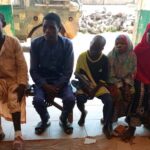
The removal of fuel subsidy, pressure of inflation, depreciation of the naira and the increasing cost of living had placed extraordinary burdens on Nigerian households. Although the administration argues that its reforms are improving public finances and attracting investment, the immediate human cost remains painfully visible. A government cannot endlessly demand sacrifice from citizens without showing them the destination of that sacrifice. A humane government must understand that taxation is not an entitlement to exploit. Laws are not instruments of intimidation. Public authority is not a personal inheritance. Every tax must have a justifiable public purpose, every law must respect constitutional rights, and every reform must be evaluated against the welfare of the people.
When leadership fails to recognise these obligations, citizens have both a moral responsibility and a democratic right to demand change.This is where the necessity of a popular uprising must be understood. An uprising need not begin with stones, burning buildings or bloodshed. It can begin with the awakening of a people who refuse to accept injustice as their permanent condition. It can begin with workers demanding fair wages, students demanding accessible education, traders resisting unjust levies, and citizens gathering peacefully to insist that their government must listen.A justifiable revolt against oppression is first a revolt of conscience. It is the refusal to surrender one’s humanity to a system that has forgotten its obligations. It is the courage to say that poverty is not destiny, that corruption is not culture, and that political power does not make an individual superior to the people who elected him.
Other News
Nigeria’s democratic institutions must also recognise that the people possess lawful instruments for removing failed leadership. Impeachment, where constitutionally justified and conducted according to due process, is not an attack on democracy rather it is a constitutional safeguard against the abuse of public office. Electoral defeat, judicial accountability, legislative oversight, peaceful protest and lawful civic resistance are equally legitimate means of restoring public confidence. Dethronement, in a democratic republic, must mean the removal of political authority through the will of the people and the operation of the law, not through unconstitutional force. No leader should be permitted to confuse the protection of an elected mandate with immunity from accountability.The Nigerian people must therefore begin preparing for a new generation of leadership. The country needs men and women whose ambitions are guided by service rather than personal enrichment; whose political programmes are founded on economic recovery, education, healthcare, security, employment and social justice. We need leaders who understand that the presidency is not a throne of privilege but a burden of responsibility.
The preparation must begin now. Citizens must register, verify their voter information, scrutinise candidates, attend public debates, organise community conversations and demand credible manifestos. Civil society organisations, religious institutions, professional associations, labour unions, students and the media must become active guardians of democratic accountability. The ballot must become a deliberate instrument of national renewal.The opposition, too, must rise above personal rivalries. Nigeria cannot afford an alternative leadership that merely criticises the government without offering a coherent, credible and humane programme. The people need a united commitment to constitutional democracy, transparent governance and the restoration of public dignity.
Ultimately, the future of Nigeria does not belong to any political party, president, governor or political dynasty; it lies with the people. The authority of government originates from their consent, and the legitimacy of leadership survives only through accountability.When a nation cries for recovery, its leaders must listen. When citizens demand justice, their government must respond. When the people are pushed to the edge of despair, the responsibility of leadership is to restore hope, not deepen their suffering.Nigeria must rise, not in the destructive fury of violence, but in the determined strength of a people who understand their rights, defend their commonwealth and refuse to surrender their future.
The time has come for good and just Nigerians to prepare for the task of national redemption. The people must reclaim their voice, their dignity and their country for no government is greater than the people and no incumbent is indispensable. There is no democracy permitted to survive when the suffering of its citizens becomes the price of political ambition.
• Toochukwu writes from Awka