Follow Us on Google

Power rarely speaks plainly. It hides behind metaphor, swaddles itself in proverb and takes refuge in the charged spaces between insult and implication. Long before policies are debated, before constitutions are interpreted, before institutions are repaired or destroyed, language has already drawn the outlines of the political terrain. Philosophers from Plato to Foucault remind us that discourse does not merely reflect reality; it shapes it. Sociologists argue that collective identities emerge through shared narratives and symbols. Psychologists recognise that naming is a moral act—choosing who or what to name is already an act of judgment. And linguists, especially in the tradition of Speech Act Theory, see words as actions—utterances that don’t just describe but perform: they bind, absolve, condemn, bless, and transform.
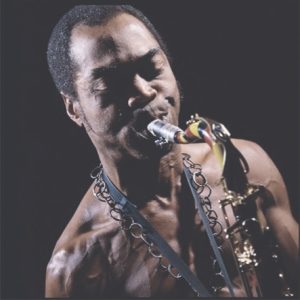
It is within this thick tangle of meaning and power that the current contest between Minister Nyesom Wike and Governor Seyi Makinde unfolds: not as a simple quarrel, but as a Vampire–Vagabond boxing ring of words, where metaphors land like wellaimed punches, and public perception is both audience and referee. What may look like political commentary is in fact a carefully staged struggle over moral authority, historical narrative, and future legitimacy – a struggle that seems to echo decades of Nigerian political experience and even the prophetic voice of Fela AnikulapoKuti’s V.I.P. long before this moment.
Makinde and Wike are former allies, whose relationship predates their exchange of invectives. They are veterans of shared meetings, compromises, silent agreements, and, at times, quiet tensions. In the theatre of Nigerian elite politics, shifts in alignment are common, and alliances are seldom rooted in shared principles so much as tactical convenience. But when such alliances fracture, the resulting rupture is not just strategic; it is semantic. Wike steps into the ring invoking vampires, i.e., creatures of the night, parasitic, feeding unseen on the vitality of what should be living and growing. Makinde counters with vagabonds, which implied rootless, unanchored figures who wander without fixed address or accountability. These metaphors are not casual. They tap into deep cultural and psychological archetypes – the vampire as predator, the vagabond as social outcast. When leaders employ such imagery, they are not simply insulting opponents; they are inviting audiences to make moral judgments based on widely shared associations. And yet, the language here is not ad hoc. It is rooted in history, in folklore, in the lived experience of societies that have seen leadership marked by opportunism, and in political critique that refuses to be gentle in times of crisis.
Behind the spectacle lies a deeper truth: vampires and vagabonds are not opposites but identical twin products of institutional decay, i.e., figures that emerge when leadership vacuums widen into chasms. After 2015, when the Peoples Democratic Party (PDP) lost federal power, the party entered a period of prolonged identity crisis, courtesy of electoral defeat syndrome (EDS). Without the gravitational pull of federal authority, internal mechanisms that once curated competition and contained conflict weakened. Leadership norms eroded. Rules became negotiable. Ambition became the default organising principle. In such conditions, informality fills the gaps left by weakening structures. Informal alliances become more important than formal procedures; personal loyalty often outweighs organisational doctrine. These are precisely the conditions under which both vampires and vagabonds thrive, not necessarily because they are inherently evil, but because they are adaptive in environments, where rules are unclear and power is personalised. Wike’s description of “internal vampires” thus resonates with a longstanding critique of Nigerian political elites, that in the absence of strong institutions, politicians survive by feeding on the weakest parts of the system, that is, the public trust, public resources, and public faith. Makinde’s “vagabonds” similarly captures the sense of leaders who drift without ideological anchor, whose loyalty is to circumstance rather than to consistent principle. Neither metaphor stands alone. They are diagnostic tools, each trying to map the contours of a problem that is as organisational as it is ethical.
Political boxing matches may feel spontaneous but are rarely so. They are often the culmination of longstanding tensions, ambiguities, and unresolved questions. In this case, the rhetorical bout between Wike and Makinde is the latest iteration in a repetitive cycle of elite contestation – a cycle in which language becomes both weapon and shield. When Wike speaks of vampires, he casts himself as guardian against nighttime predators, a rescuer protecting the party’s lifeblood. When Makinde speaks of vagabonds, he casts himself as a reformer who has seen and rejected corruption. Their metaphors carry moral weight because they promise clarity in a landscape that has been confusing for years. However, there is irony in this choreography. Both men, at different times, were part of the very system they now criticise. Makinde himself confessed to having been “yoked” with the group he now condemns, a moment that is as revealing as it is tactical. Confession, after all, is a powerful move in the politics of language. In many cultural and religious traditions, confession is a first step toward redemption. By acknowledging past complicity, Makinde attempts to disarm critics and claim higher moral ground. This is not just rhetoric but political psychology in action. Wike, by contrast, frames his intervention as a defence, not of himself but of the party’s purity. By naming vampires, he situates himself as an internal guardian against internal predators. This is heroic language, even as it demonises his opponents.
Other News
In the background of this verbal contest is a voice that predates it by decades, not physically present but conceptually resonant: Fela AnikulapoKuti. When Fela used the phrase Vagabonds in Power, now popularly referred to by its acronym V.I.P., he was articulating a critique not of individual personalities but of a recurring pattern in Nigerian and African politics; that is, the elevation of leaders who hold office yet act without accountability, empathy, or responsibility. Fela’s Vagabonds in Power (V.I.P.) is a pointed satirical inversion of the conventional “Very Important Person.” By redefining VIPs as leaders untethered from responsibility, drifting through power with self-interest as their compass, Fela exposes the gap between title and character. Where society venerates status, he lampoons the moral emptiness behind it, showing that those celebrated as important often act like rootless vagabonds, preying on the public while cloaked in prestige. The satire turns respect into critique, reminding us that importance without accountability is merely performance.
To understand the political and historical context of Fela’s critique is to place today’s editorial exchange in a long line of social commentary that sees political power as a vortex where personal ambition often consumes public purpose. Fela emerged as a musical and cultural force in the 1970s, a period of intense political turbulence in Nigeria and across Africa. The postindependence moment promised selfdetermination, but many newly sovereign states quickly saw power concentrate in narrow elite circles. Military coups, civilian interregnums, and unstable transitions became normative. Politicians and generals alike often appropriated public resources for private ends, and the dreams of independence were too frequently deferred. In that context, Fela’s V.I.P. was not a lighthearted satire but a sociological diagnosis delivered through music. He used rhythm, repetition, and repetitionladen refrains to demonstrate how political elites could be exalted in title yet effectively rootless in principle. To call leaders vagabonds was to suggest that they are unanchored, without accountability to the people whose welfare should be their concern. Given this ‘Felaric’ inversion, one might have expected Governor Makinde to exercise restraint in branding political actors as “vagabonds.” Yet, in invoking the term, he deliberately channels satire and moral judgment, turning a loaded metaphor into both critique and declaration of authority over the party’s moral terrain.
The genius of Fela’s critique lies not in its poetic flair but in its structural insight – that power without ethical anchorage becomes a vacuum that privileges selfinterest over public good. This is not a critique limited to any one individual or party. It is a pattern that recurs when political systems lose their connective tissue, that is, when institutions decay and personal loyalty trumps organisational coherence. Decades later, the metaphors of vampires and vagabonds in the Makinde–Wike exchange resonate with Fela’s earlier diagnosis. Different images, same underlying condition – a political culture where titles and positions multiply faster than accountability and service. In each of these phases, language has played a decisive role. Leaders have invoked national unity one moment, division the next. They have claimed reform while perpetuating selfinterest. They have appealed to tradition while innovating new forms of patronage. And through it all, the metaphors have multiplied: predators and protectors, reformers and reactionaries, traitors and patriots. What this pattern suggests is that political language does not simply describe conflict; it choreographs it.
The boxing ring of metaphors distracts from the house that still demands repair. It dazzles with imagery but can also obscure the deeper work of institutional reform. Cheer the metaphors if you will, but remember, chaos is not defeated by ridicule, and dysfunction is not cured by insult. Words matter, deeply. They connect dots across decades, paint verses on the canvas of public life, and shape how citizens judge their leaders. But unless speech is matched by concrete action, the Vampires–Vagabond ring will keep returning. Power struggles will continue to be framed as battles between monsters rather than as contests over policies and principles. Leaders will trade metaphors while institutions decay. And Fela’s refrain – vindicated again and again – will echo not as triumph but as warning – that power without accountability remains a threat to the very people it claims to serve.
In the end, the Vampires–Vagabond boxing ring is both spectacle and signal. It tells us not only who is fighting; it dictates how they choose to fight. It reveals the limits of elite discourse and the enduring appeal of imagery over substance. It reminds us that language is not neutral, that naming is a moral act, and that metaphors can both illuminate and deceive. Fela stands quietly in the background, not as a nostalgic relic, but as a conceptual witness. His critique of VIPs as Vagabonds in Power was never merely poetic; it was structural. It traced a pattern that persists today, that is, the elevation of leaders who hold titles but lack tethering to the public good. The challenge for Nigeria – and for any society seeking meaningful democratic renewal – is to move beyond contests of language as spectacle, and toward contests of vision, policy, and integrity. Words can name problems; action must solve them. Until that happens, the ring will remain, the metaphors will multiply, and the quiet chorus of Fela’s insight will continue to remind us why language matters, why history matters, and why power must always be held accountable to those it claims to represent.
• Agbedo writes from the University of Nigeria, Nsukka.