Follow Us on Google
How Gov. Sule’s security strategy, inter-agency coordination, community partnerships are reshaping Nasarawa State’s security profile
By Abel Leonard, Lafia
There are moments when a government’s security record is measured not by what happened, but by what did not happen.
In a region where kidnapping, banditry, communal violence and terrorism have altered the daily lives of millions, Nasarawa State has managed to remain outside one of the latest international travel warnings covering much of North-Central Nigeria.
That distinction has now drawn fresh attention to the state.The United Kingdom’s Foreign, Commonwealth and Development Office (FCDO), in its latest travel advice, warned against all but essential travel to several North-Central states, including Benue, Kogi, Kwara, Niger, Plateau and Taraba. However, Nasarawa was not included.
The Nasarawa State Government via a government House press release signed by the Chief Press Secretary to Governor Abdulahi Sule, Ibrahim Adra recently welcomed the development cautiously, attributing it to the collective efforts of security agencies, the federal government, communities and Sule’s administration.

For Sule, however, the development is not a reason to relax. It is a reminder of what is at stake. “Much more needs to be done,” the state government acknowledged, while appealing to residents to remain vigilant and provide security agencies with timely and credible information. That caution is important because Nasarawa is not an island of peace.
The state shares boundaries with several states facing serious security challenges. Governor Sule himself has described its geographical position as a vulnerability, explaining that Nasarawa is “sandwiched between states that are having bigger challenges” and that criminals heading towards Abuja can find hiding places in the state’s forests and border communities.
Yet, despite that exposure, Nasarawa has largely avoided the scale of terrorism and banditry witnessed in some neighbouring states.
So, what is Nasarawa doing differently? The answer begins with the way the Sule administration has treated security.
Rather than viewing insecurity strictly as a police or military responsibility, the government has increasingly approached it as a collective responsibility involving security agencies, traditional rulers, local governments, communities and the political leadership.
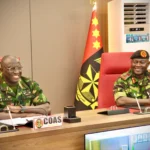
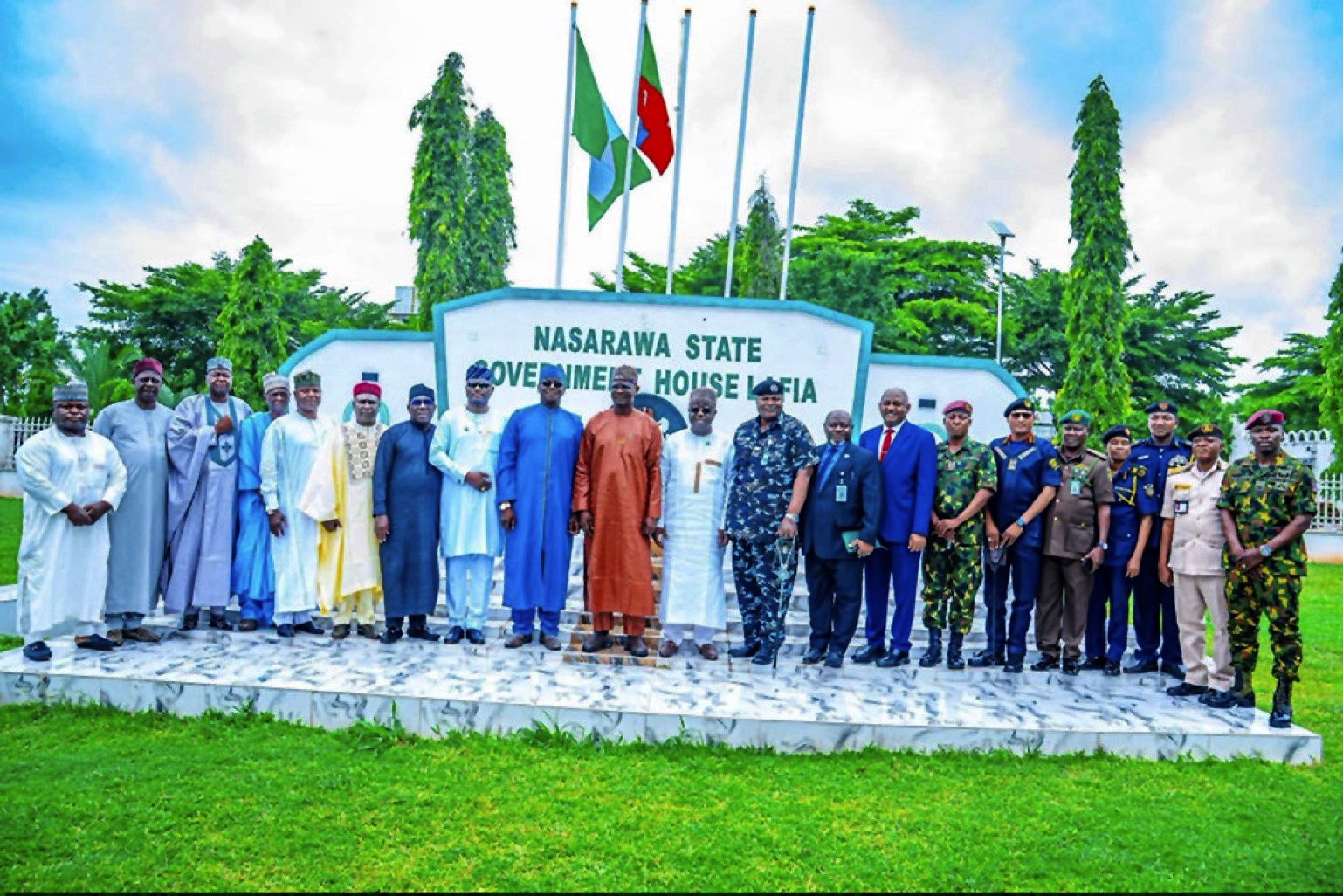
That philosophy was evident in 2025 when the governor hosted the Chief of Army Staff, Lt-General Olufemi Oluyede, and his principal officers. Sule acknowledged that Nasarawa’s geographical position makes it vulnerable but praised the synergy among the Nigerian Army, Special Forces, Operation Whirl Stroke, the 177 Battalion in Keffi and the Nigeria Police Force.
“We must thank all these security agencies. They have always been very, very supportive,” the governor said, stressing that the cooperation among the formations had helped maintain stability in the state. That cooperation has become one of the defining features of Nasarawa’s security strategy.
The administration has backed the security formations with operational support, including vehicles and motorcycles intended to improve mobility and response capacity. In November 2024, Sule distributed operational vehicles and motorcycles as part of efforts to strengthen government operations and security.
The thinking is straightforward: security personnel cannot effectively protect communities if they cannot get to those communities quickly.
Perhaps the most significant change, however, is the growing emphasis on prevention. Rather than waiting for criminal gangs to establish themselves before responding, the state has increasingly sought to identify potential threats early.
This explains the attention being paid to intelligence, forest surveillance, border monitoring and cooperation with neighbouring states. Nasarawa’s security chief, Labaran Magaji, recently put it bluntly: “We won’t allow criminals to establish a foothold in Nasarawa.”
According to Magaji, the state is working with neighbouring states because criminals do not respect political boundaries.
“Security agencies, therefore, have to work across those boundaries, share intelligence and coordinate operations,” he said.
That philosophy is particularly important for Nasarawa. A criminal pushed out of one state can simply cross into another. For a state bordering Benue, Plateau, Taraba, Kogi, Kaduna and the Federal Capital Territory (FCT), intelligence-sharing is therefore not an option. It is a necessity.
The state’s relative peace has also depended heavily on the work of security agencies operating on the ground. The Nigeria Police Force, Nigerian Army, DSS, NSCDC and other agencies have repeatedly conducted joint operations against kidnapping, trafficking, armed robbery and other forms of criminality.
One of the clearest examples came in May 2026 when the police Intelligence Response Team rescued 30 Malian nationals held in Nasarawa by a criminal syndicate involved in human trafficking and staged kidnapping. Thirteen suspects were arrested during the operation.
The police said the breakthrough followed credible intelligence and coordinated action. The operation is significant because it demonstrates that Nasarawa’s security challenge extends beyond conventional kidnapping.
The state, because of its proximity to Abuja and its location along major routes, can also become attractive to organised criminal networks operating across state and national boundaries. Security agencies have therefore had to deal with increasingly sophisticated criminal activities. And they have scored notable successes.
But there is another element that is often missing from discussions about security: the people. In Nasarawa, traditional rulers and community leaders have increasingly become part of the security architecture.
During the 2025 crisis along the Benue-Nasarawa border, Sule summoned traditional rulers and specifically asked monarchs in border communities to help protect their areas and prevent the escalation of violence.
“I am going to rely on you, especially our royal fathers at the borders. You are more familiar with these issues than I am,” the governor told them. That statement captures an important reality.
A security officer may patrol a village for a few hours. A traditional ruler lives with the people. A district head knows the newcomers. A farmer knows the unfamiliar face in the community. A youth leader may hear about suspicious movement before it reaches the police station. That local knowledge can make the difference between preventing an attack and responding to one.
Perhaps, one of the strongest examples of Nasarawa’s peace-building effort is Toto local government area. For years, ethnic and communal tensions in parts of Toto created displacement and insecurity. But peace initiatives involving traditional rulers, community leaders, government and civil society groups have helped create conditions for displaced residents to return.
In February 2025, traditional rulers and stakeholders representing Bassa, Egbira, Gade, Gbagyi and other communities agreed to establish intra-community and inter-community peace and reconciliation committees.
General Martin Luther Agwai, former Chief of Defence Staff and chairman of the Middle Belt Trust, told the gathering that dialogue was essential to ending the cycle of conflict.
“The time to dialogue and live together is now,” Agwai said.
The significance of that intervention goes beyond reconciliation. According to stakeholders at the meeting, abandoned communities and ungoverned spaces had previously provided hiding places for criminals. Peace, therefore, became a security strategy.
The return of people to their ancestral communities meant the return of eyes, ears and community structures to places where criminals could otherwise operate unnoticed.
Other News
By March 2025, the Toto local government area chairman, Ahmed Baba Yahaya, reported that peace and unity had returned to Bassa communities and that returnees were rebuilding their lives.
The former state’s Commissioner for Security and Sundry Matters, CP Usman Baba (retd.), also commended the governor’s inclusive approach and urged residents to sustain peace. Traditional leaders similarly pledged to maintain harmony.
Perhaps one of the strongest political endorsements of Nasarawa’s security environment came not from the state government but from President Bola Ahmed Tinubu. During his June 2025 visit to Nasarawa, the President commended Governor Sule and the Council of Traditional Rulers for the “peace, stability, and progress” in the state.
That acknowledgement is significant. It suggests that the state’s relative stability has not gone unnoticed at the federal level. But there was also a more unusual endorsement.
In November 2025, the Christian Association of Nigeria’s National Chairman, Rev. Anthony Tukura, explained why Nasarawa had been selected to host the 30th National Choral Convention.
“We have chosen Nasarawa State for one specific reason,” Tukura said. He explained that while insecurity was affecting some states, the organisers assessed Nasarawa as peaceful and credited the governor with working hard to maintain peace and order.
For a state seeking investment and development, such perceptions matter. Peace attracts people. People attract business. Business creates jobs. And development becomes easier where communities are not constantly disrupted by violence.
Yet Sule’s approach has not been one of declaring victory. In October 2025, the governor convened an expanded security council meeting after raising concerns over the emergence of a Boko Haram splinter group, Wulowulo, in parts of the North-Central.
“We need to ensure that this new group does not come into our state,” he warned. He also urged security agencies to intensify operations and praised the police for deploying additional personnel.
At the same meeting, he warned against influential people interfering in the prosecution of suspects, particularly drug traffickers.
That posture, anticipating the next threat rather than celebrating the absence of the last one, may be one of the reasons Nasarawa has remained relatively stable.
And now, in August 2026, Sule has taken the strategy a step further. He inaugurated a nine-member State Security Advisory Council and charged it with looking beyond conventional policing to the economic and social causes of insecurity. The governor argued that security threats have become more complex and require a coordinated, intelligence-driven response.
That is an important development.
Poverty, unemployment, drug abuse, youth vulnerability and social exclusion can provide fertile ground for criminal recruitment. A security strategy that only deploys guns and uniforms can therefore treat the symptom without addressing the disease.
Sule’s new council is expected to examine that wider security picture.
But any serious assessment of Nasarawa’s security record must acknowledge that the state still faces real threats. Recent attacks, including kidnappings around university communities, demonstrate that criminal elements remain capable of exploiting gaps.
The Nigeria Police Force has also continued to record arrests and rescue operations in the state. The message is therefore clear: Nasarawa is relatively peaceful, but it is not crime-free. That distinction matters.
The government’s greatest danger now would be complacency. The fact that the UK has not placed Nasarawa under the same North-Central travel restriction as several neighbouring states should be treated as encouragement, not as a licence to relax.
Indeed, the state’s own security leadership understands this. Magaji’s warning that criminals must not be allowed to establish a foothold reflects the reality that the state’s peace remains something that must be defended continuously.
What is emerging in Nasarawa is not necessarily a perfect security model. But it is a model worth studying.
It combines conventional security operations with intelligence.
It combines federal security agencies with state support. It combines military response with community information.
It combines traditional authority with modern policing. And increasingly, it recognises that development and security are inseparable.
The decision to address community conflicts, facilitate the return of displaced residents, protect schools, support security agencies and confront emerging threats before they become entrenched all form part of the same picture.
That may explain why a state surrounded by serious security challenges has managed to maintain a comparatively different security profile.
For Governor Sule, the latest UK advisory is a valuable recognition. But the bigger test is what happens next. Can Nasarawa maintain its relative peace? Can it prevent criminal networks from exploiting its forests and border communities?
Can the government sustain its relationship with security agencies?
Can traditional rulers and communities continue providing the intelligence needed to detect threats early?
Can young people be kept away from drugs, criminal networks and political violence? And can the state ensure that the peace enjoyed today survives beyond the present administration?
Those are the questions that will ultimately determine the value of Sule’s security record.
For now, however, the evidence points to a state that has chosen prevention over complacency, partnership over isolation and intelligence over reaction.
The latest UK travel advisory has merely put an international spotlight on what residents and stakeholders have been saying for some time.
Nasarawa is not without insecurity.
But in a region where the gun has become the language of fear in many communities, Nasarawa has so far managed to keep that language from becoming its defining identity.
And perhaps that is the most important part of the story.
The peace has not happened by accident. It has been built, defended and if Nasarawa is to remain secured, it must continue to be protected.