Follow Us on Google
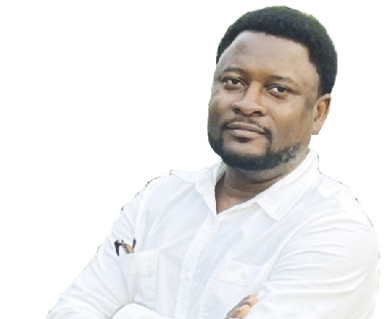
Abideen Ojomu’s work, The Ojuelegba Crossroads, has earned him a spot as one of the three shortlisted writers expected to win the Nigerian Liquified Natural Gas (NLNG) Prize for Literature when the winner is announced this month.
Ojomu, who is based in Canada, says The Nigeria Prize for Literature, sponsored by NLNG, is empowering the development of literature in Nigeria.
In a chat with Damiete Braide, Ojomu speaks on why he wrote Ojuelegba…, his creative process of writing a play, what arts mean to mean to him, among others.
Congratulations for making the shortlist for this year’s edition of The Nigerian Prize for Literature. How does that make you feel as a dramatist?
Making the shortlist of the NLNG prize for literature is a very important milestone in my writing. It is surely a reward for the twenty-three years of research and study to create an art that will have socio-political implications. I see the Nigerian Prize for Literature as an award that has regional and global relevance in its pursuit of the dissemination of African literature and art in a manner that re-educates the world about our historical antecedents and future potential, and I worked hard to create an art that pays credence to that. I feel greatly rewarded for this pursuit of excellence in African Art.
Is this your first time?
Yes, This is my first time submitting to the NLNG prize for literature. Though I have been following the award since its inception I knew I wanted to submit to the award, however, I was not in a rush to submit a play just to make the numbers, I worked hard for years to sharpen my skills and refine my story with the relevant materials and research and then I submitted. I could have submitted it anytime within the twenty-three years it took to write “The Ojuelegba Crossroads” but I thought I would wait and work through it until the play come comes full circle before submitting it to the award. I think this is indicative of the relevance I attached to the award.
What was the motivation for writing ‘The Ojuelegba Crossroads’?
I have always had the joke with my friend that had I been recruited by NLNG or any top oil and gas company after graduation, I probably would not have written this book because I would have had different lived experiences. I graduated from Lagos State University in 2000 as a chemical engineer and couldn’t find a job in that field. I realized that the jobs of most chemical engineers overseas because of the low level of industrialization in Nigeria. This experience led me to start engaging with the socio-political situation in Nigeria. I then decided to further my undergraduate intentions by writing a book that projects the socio-economic vicissitude of ordinary people in a country with immense resources and opportunities. I was also interested in engaging with the problem of black people in general and the inability to live to the height of our potential. The play discusses the unity of our people, and the need to rediscover the opportunities and strength in our diversity and to cultivate a national pride consistent with the greatness of ancestors.
Would you say the title resonates with the idea behind it?
Yes, it does. By definition, a crossroads is a point at which a crucial decision must be made that will have far-reaching consequences. The Ojuelegba crossroads is a very important place not only in Lagos but on the African continent due to its cultural antecedent. It has been a point of cultural convergence as our ancestors venerate the “elegba or Legba” diety at this location. Over the centuries, development stretches its steel and concrete limbs across the remote forest, and Ojubo- Elegba now shortened to Ojuelegba finds itself at a very important crossroads connecting important settlements at its four cardinals. These bordering settlements advanced as a result of social imperatives but the crossroad remains a bottleneck thereby preventing the consolidation of the disparate developments into a single formidable whole. The crossroads can no longer hold up on its primary responsibility of providing the required link for the stronger whole. Based on the existential and development crises posed by the crossroad at which every African Nation finds itself it is required to find new ways to resolve this impasse. The shrine of the deities, the masquerades, and the ancestors are right around the corners, can we knell before our ancestors and ask them how they built the Benin Kingdom, Borgu Kingdom, Fulani Empire, Hausa Kingdoms, Kanem Bornu Empire, Kwararafa Kingdom, Ibibio Kingdom, Nri Kingdom, Nupe Kingdom, Oyo Empire, Songhai Empire, Warri Kingdom, Ile Ife Kingdom, and Yagba East Kingdom. Our ancestors’ greatness enthralled foreigners before their lies engulfed us and led us away from our greatness. The book is a metaphor for us to rediscover the greatness of our ancestors and walk in the shadow of their greatness. The metaphors of the book and the headings are a clarion summon for us to remove all bottlenecks on the path of our development as a country.
|
This book is calling us to make that far-reaching decision that changes the destiny of our country and our people. It is calling us to rise up and take the rein of leadership in regional and global affairs.
What is your creative process for writing a play?
The creative process followed an exploratory approach, where I spent years reading about a lot of African civilizations and kingdoms. I extensively studied the Aksumite civilization, the Nubian civilization, the Songhai Civilization, the Ashanti, Bornu, and the Oyo. I was particularly fascinated by the Benin empire and wondered why the knowledge of great African civilizations is not incorporated into our education at every level right from kindergarten. The study of these civilizations was very important in deconstructing my long-held fetishism for foreignness indoctrinated by the current educational prescriptions. This was very important for my overall ideological development because it empowered me to identify falsehood in the representation of Africans by foreign authors. I also leveraged the works of great historians like Cheikh Anta Diop of Senegal. Cheikh Anta Diop research into the uniqueness of the black race was very important in the creative process of the book, his research assisted me in piercing the veil of invincibility created by race and racism.
How do you develop characters and plotlines that are engaging and believable?
Symbolism is my most important tool for creating characters and plotlines. Because Art is evocative, it is very important to enlist the audience during the rendering of the art so that they become creators taking their cue from the art as it unfolds before them. This keeps the audience fully engaged with the symbols, redefining the representation before them and finding new meanings for characters based on their changing preoccupation. I believe this is the most productive way of empowering the audience to own the art.
I also rely on the effective use of our language to create great dialogue. Our language reads like poetry. If you listen carefully to most African languages, you will notice the perfect arrangement of rhymes, rhythm, and perfectly injected figurative tools. You will notice a lot of poetry in the book. I rely on poetry a lot to capture the essence of stage interactions.
In writing this play, were there personal experiences that you had to include in it?
Yes. There were some personal events that were molded to fit the structure of the play. Some of the characters are people that I have met with or had interaction with at some point. It is my belief that every interaction that we have with others are piece of artifact that could be used to create art. Also, as much as possible I tried to create an art that is disinterested but sometimes my own emotion showed up in some parts of the book. For example, the creative delivery of Senator Gbewiri Pratt-Dickson reflected empathy. I tried to render the play in a manner that imposed less judgment on the corrupt politician. Through the use of symbolism and description, I tried to deflect judgment from him and empower the readers and audience to rise above pedestrian sentiment characterized by hatred and angst. I could have rendered that part of the book without any form of emotion but I guess we are all human and ultimately our biases belong somewhere.
You’re a playwright, poet, actor, and dancer. Which of these came first and how?
Dancing comes naturally to me. It was the first art form that I used for my creative expression. Dancing gives me a chance to escape from every manner of stress and despair. It connects me to everything and allows me to pursue other interests.
How long did it take you to research, put your thoughts together, and write this play?
Twenty-three years to be precise.
You have written several plays such as Oils Wheels, Woes of Warriors. For you, what really stands The Ojulegba Crossroads out among your other plays?
The depth of research and the time devoted to learning about our historical antecedents sets the book apart.
How does your background as a graduate of Chemical engineering affect your playwriting?
I think chemical engineering just equipped me with a structure with which I engaged everything in my life. Chemical engineering requires a lot of comfort with mathematics. I believe my good mathematical skill is responsible for my structured approach to doing things. Art is a very structured discipline and I believe my practice in art benefitted from my engineering skills. In all, I believe anybody can achieve anything so long as they set their mind to it and understand that failure is perhaps the most important companion on the road to success.
What does art mean to you?
Art for me is the most important tool available in any society. It functions as a means of reawakening social consciousness, documenting cultural practices, an arsenal for defending against cultural invasion, and a building block to constructing a great society. Art for me is a tool for resisting destructive agenda and a tool for entrenching cultural norms.
Having gone this far, what are your expectations?
I see a great future for the book. I see the relevance of the book for the unification and Africa and the pursuance of a stronger and more prosperous continent. This is my most important expectation, perhaps this expectation will lead the book to the winner of the NLNG Prize for Literature.
How would you describe the NLNG’s commitment to promoting literature and creativity?
The NNLG Prize for Literature is empowering the development of literature in Nigeria. The number of new literary works created to compete for the award over the past years is staggering and this is a very important pre-requisite to the development and preservation of our culture. Literature is a very powerful tool for nation-building because literature revitalizes and influences our thought processes. A great story about the braveness of one’s ancestors stimulates a feeling of braveness. The current trajectory of growth in the African and black literature occasioned by the NLNG award plays a very important role in the preservation of black history and culture (due to the population of Nigeria, approximately one in every ten black people is a Nigerian.) However, there is a need to create an ecosystem around literature which might include, theatre infrastructure, book distribution and channel, publishing, library unfractured, research grants for historical documents, etc. These programs will ensure the realization of the potential for social and economic change that literature could deliver.