Follow Us on Google
By Seyi Babalola
In the high tech corridors of a research facility funded by NASA in Washington, D.C., a new approach to manufacturing is quietly reshaping what is possible at microscopic scale.
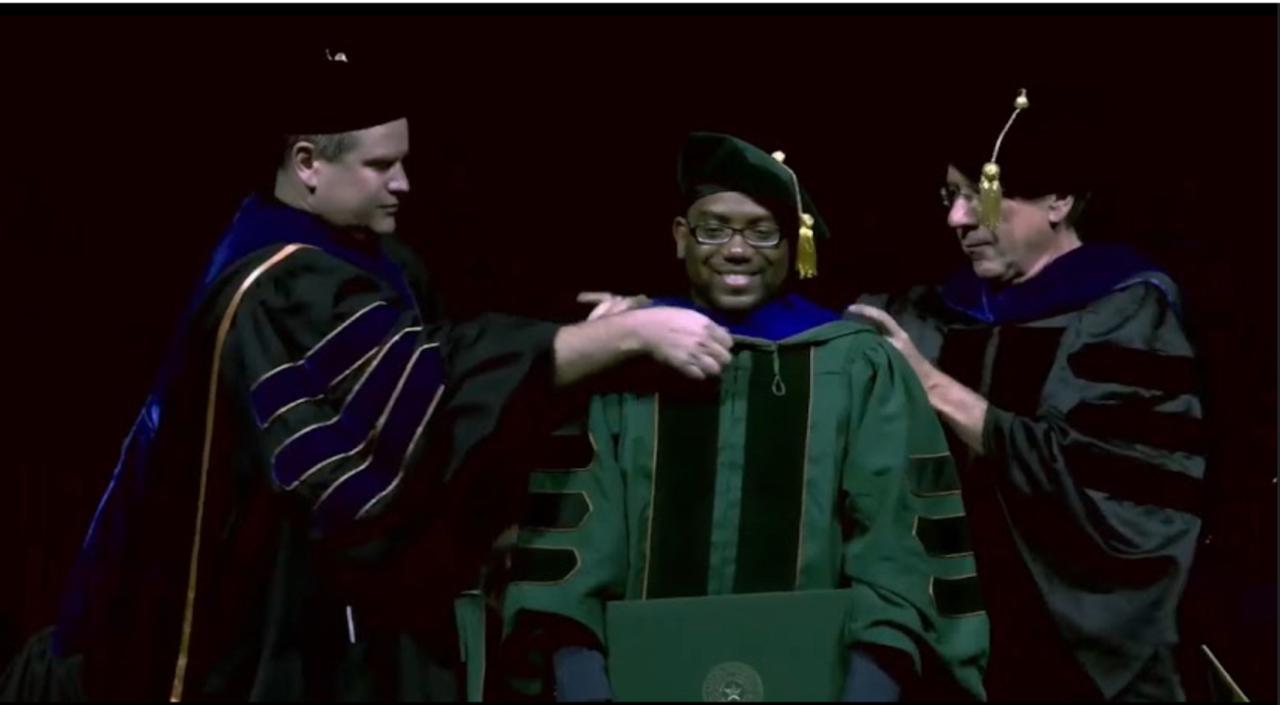
One of the key researchers driving this is Dr. Aigbe Awenlimobor, a mechanical engineer from Edo State in Nigeria, whose work at the Center for Advanced Manufacturing (CAM-STAR) combines deep materials science with practical engineering to solve problems that once seemed unavoidable.
For decades materials scientists have worried about microscopic voids that form during additive manufacturing and composite processing. These pockets of trapped air are invisible to the naked eye yet they create weak points that can grow into catastrophic failures under stress.
The issue becomes critical in sectors such as aerospace and defense where components must be both extremely light and extremely reliable. Carbon fiber reinforced polymer composites, prized for their strength and light weight, are particularly vulnerable during the heating and curing stages of production, when tiny imperfections can appear and compromise performance.
Dr Awenlimobor has developed a coherent strategy he calls “Zero Defect” that uses advanced computational models to predict where voids are likely to form and to adjust process parameters before material is laid down.
By combining high fidelity simulations with precise control of temperature and material flow during three dimensional printing, his method prevents defects from being introduced rather than trying to fix them after the fact. The outcome is composite parts that achieve exceptional strength to weight ratios and consistent performance under the extreme conditions encountered in space missions and high speed travel.
The significance of this work extends well beyond any single laboratory. It demonstrates how rigorous engineering and imaginative problem solving can remove long standing limits on what manufacturers can build.
It also offers a powerful example of global talent shaping technologies that will define the next decades of exploration and transport. The innovations emerging from this effort promise to make future flights safer and more efficient and to remind the world that world class engineering can come from many places.