Follow Us on Google
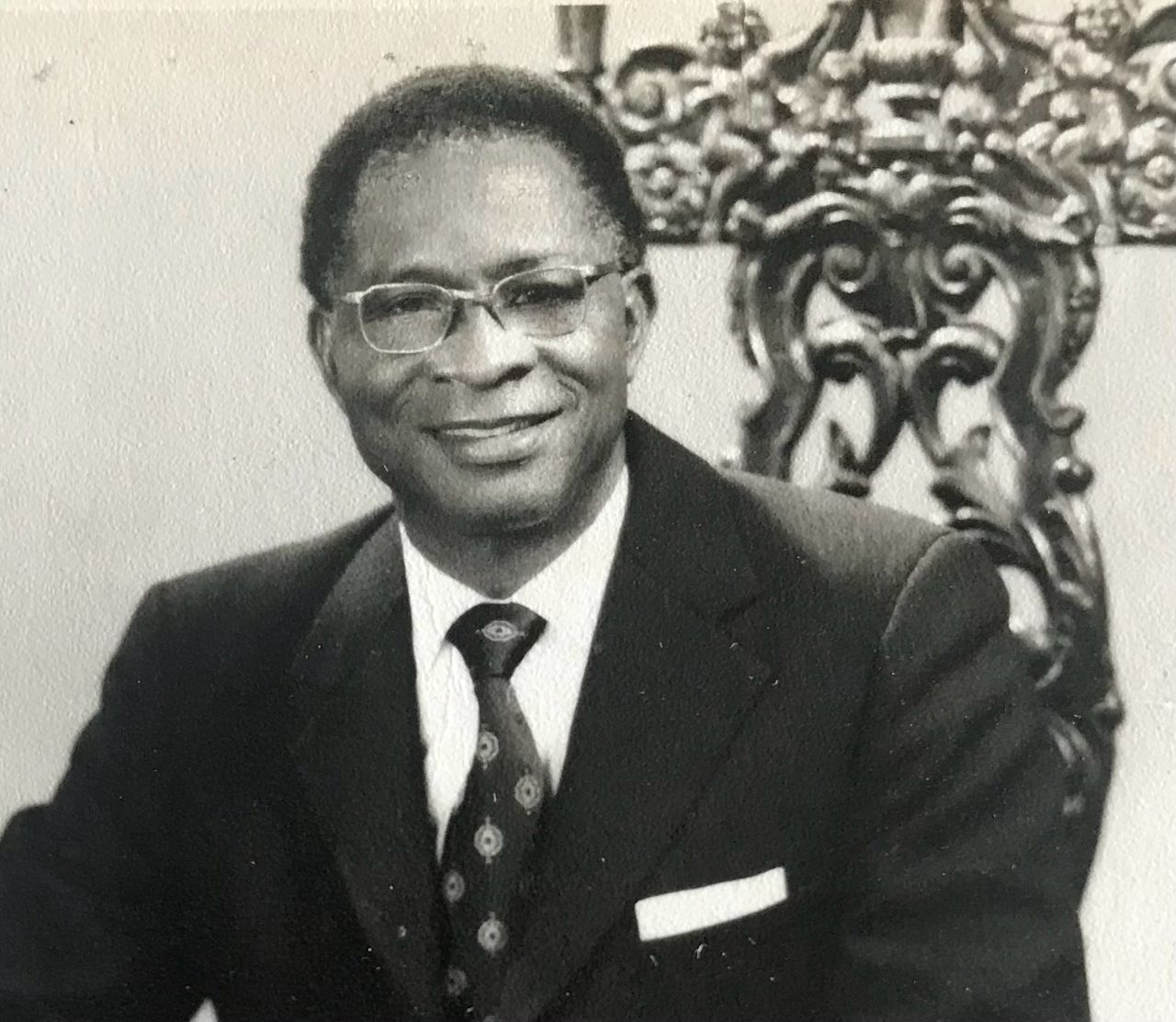
Fifty-one years after his death on July 16, Zacchaeus Onumba Dibiaezue is remembered through an NGO establishing free libraries built in his memory and the improbable, self-taught path that made such a memorial necessary in the first place
Most of the children pulling books off the shelves at the Zaccheus Onumba Dibiaezue Memorial Libraries (known simply as ZODML) in Ikoyi could not tell you who Zaccheus Onumba Dibiaezue was. That is not a failure of the organisation. It may be its whole point.
Last year, ZODML logged 90,573 visits, up 48 percent on the year before, and lent out 36,626 books and other items, a 52 percent rise. It has now set up 34 school libraries and has 19 inside correctional facilities in seven states. Its Book Talk programme puts public school children in the same room as the authors of the books they’ve just read. Its Poetry Prize, open to students at public tertiary institutions across the country, pulled in 2,356 submissions from 240 institutions in 2025, a number that would have been unthinkable to the man in whose name the whole enterprise exists, a man who was never permitted to enroll in secondary school.
To understand why libraries carry his name, it helps to go back to a small room: a mud-walled hut in a farming community in what is now Anambra State, lit by a single oil lamp a boy had paid for himself.
Before the Libraries, a Lamp
Dibiaezue was the fourth of eight children, born to farming parents in Ifite Ukpo (Ifite Dunu today, in Dunukofia LGA) in 1917. His schooling began ordinarily enough, at St. Stephen’s Primary School, where teachers and family alike noticed a boy who learned faster than most.
Then came the setback that should have ended the story. His father’s early death left the family unable to fund any further schooling, and Dibiaezue’s formal education stopped.
He did not stop learning. Locked out of a classroom and too poor to buy lamp oil outright, he collected and sold fruit found in the bush to pay for it, reading late into the night while everyone else slept. He studied on his own terms and on his own time, passing the entrance requirements for a clerking post in the colonial tax office at Awka before joining the police force, where, again entirely without formal secondary education, he rose to Inspector within six years.
None of it was the destination. Quietly, doggedly, Dibiaezue was preparing for something almost nobody in his position attempted: a university education in England. Working alone, without a teacher, a school, or a syllabus handed to him by anyone, he studied his way to a pass in the United Kingdom Universities Matriculation Examination, the qualifying exam that, for almost every other candidate, followed years of secondary schooling he simply never had.
Barrister and Economist, Simultaneously
He sailed for England in 1952, hoping initially for Oxford or Cambridge. Their collegiate, residential model made little room for a man determined to bring his wife and children to live with him, so he chose the London School of Economics (LSE) instead, enrolling to read Economics.
What he did next is the detail that tends to stop people short: rather than complete one qualification and then pursue the next, Dibiaezue undertook two demanding courses of study at once, an economics degree at the LSE and preparing for the English Bar, enrolling at Lincoln’s. He earned both his degree and his legal qualification. He signed the Roll of Barristers of the High Court of Justice, Queen’s Bench Division, on 28 November 1956, having been called to the Bar at Lincoln’s Inn; the University of London conferred his Bachelor of Science in Economics, with Second Class Honours, that same year, on 8 August. His wife Patience, meanwhile, was completing her own studies in Bakery at Borough Polytechnic, the couple building two separate futures on the same small island, thousands of miles from the village that once decided his education was finished.
Back in Nigeria by the end of 1956, Dibiaezue set up a legal practice in Port Harcourt and began a career that would eventually touch nearly every institution of consequence in the Eastern Region. He joined African Continental Bank in 1959 as its Company Secretary and Legal Adviser, moving to Lagos to take up the post. By 1966 he was Executive Chairman of the Eastern Nigeria Development Corporation. After the Nigerian civil war, serving under Ukpabi Asika’s East Central State administration, he became the state’s first Commissioner of Finance, later moving to the agriculture portfolio, before retiring from public life in 1972. In his hometown, he served as President-General of the Ifite Dunu Town Union from 1971 until his death.
A newspaper tribute printed in Enugu’s The Renaissance days after he died summed him up in a single, pointed line: he was “not necessarily the man to join the bandwagon only because others were there.” The same piece noted his reputation for plain speaking and for an independence of mind that occasionally cost him easy friendships, a man, in its words, of “his own.”
Dibiaezue and Patience had four children, Ngozi, Ifeoma, Michael, and Richard, and by family accounts he remained, throughout his working life, an obsessive reader who quietly provided financial support and mentorship to young people in his community who had fewer opportunities than he had ultimately earned through his own perseverance.
Zacchaeus Onumba Dibiaezue died in Enugu on 16 July 1975, of a brain tumour. For two decades, his story lived only where most family stories live, passed between relatives, half-remembered in his hometown, absent from any wider record.
Back Where the Story Started
Twenty years after his death, in 1995, his widow and daughters faced a question shared by many families of eminent Nigerians: how should a life of uncommon achievement be remembered? Rather than establish another memorial lecture, a familiar tribute of the era, they chose to create something that reflected his lifelong commitment to learning.
What followed took longer than the idea itself. A location had to be found and an initial collection of books sourced and catalogued. ZODML was registered in 1999, and its first library did not open to the public until 2000, in a converted house on Awolowo Road, Ikoyi, the building that continues to anchor the organisation today.
ZODML libraries and programmes now reach seven states. Partnerships with the National Library of Nigeria and Book Aid International have put books and dedicated reading spaces in front of many children who might otherwise never have encountered either. The Lagos State Government and the Nigerian Prison Service have both recognised the organisation’s work.
Ifeoma Esiri has described her father’s life as “a blueprint”, not simply an inspiring story, but living proof that a child denied the advantages of formal education can still, in her words, “become more than their circumstances suggest they should be.” Those words are neither a slogan nor a rhetorical flourish. They are a distillation of his life and the philosophy that gave birth to the institution established in his memory.
But the converted house on Awolowo Road was never meant to be the final chapter. ZODML plans to transform the site into a five-storey library built to what it says will be Nigeria’s first EDGE-certified library. Just as the family sought to honour Zaccheus Onumba Dibiaezue’s legacy by creating an institution rather than a monument, the new building aims to embody the same values of stewardship, learning and public service in its very design.
Which returns us to the children on Awolowo Road who don’t recognise the name on the wall. Fifty-one years after Zacchaeus Onumba Dibiaezue’s death, that quiet anonymity may be exactly what he would have wanted. He spent his own childhood chasing enough lamp oil to keep reading after dark. The library that bears his name now exists so that no child who walks through its doors ever has to.
Sources consulted: family biographical notes; “A Man Of His Own” (tribute to Zacchaeus Dibiaezue), The Renaissance, Enugu, 26 July 1975; “Dibiaezue Libraries: A Reading Place For The Community,” The Guardian Nigeria, 14 August 2015; “The Library on the Road,” Farafina Books, 24 October 2012; interview with Ifeoma Esiri, Daily Sun Nigeria; University of London and Lincoln’s Inn certificates, 1950–1956; ZODML 2025 activity figures