Follow Us on Google
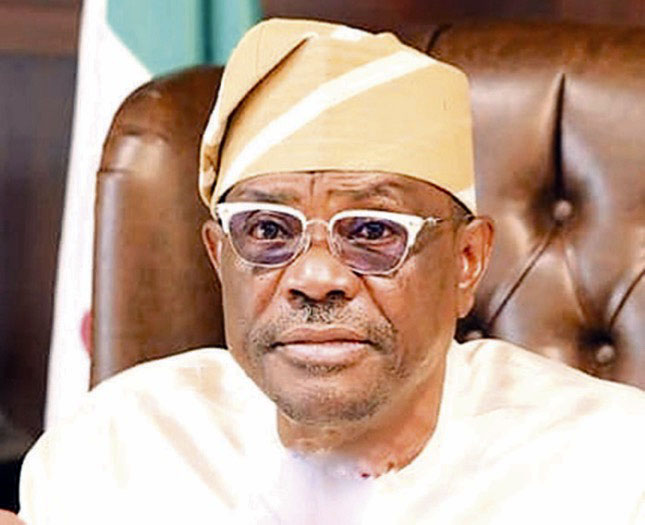
If politics were a wrestling ring, Nyesom Wike would be the man who enters wearing a suit, rips off the jacket, and shouts, “Who touched my project?”
He is not merely a politician, he is an event, loud, combustible, dramatic and perpetually one argument away from national news. In a political culture of whispers, Wike roars. Where others hold meetings, he holds battles. Where some write memos, he issues thunder. And yet, the same thunder that startles the clouds can also scares away the rain.
The latest episode in the long-running television series called Wike vs. The World premiered recently in Abuja. The plot was simple: a disputed piece of land, a uniformed officer and Wike, the sheriff of the Federal Capital Territory, storming the scene like a man auditioning for Nollywood. Cameras rolled, aides froze and the soldier, poor fellow, found himself in the middle of a very Nigerian drama, the kind where a minister forgets his microphone is always on.
However, the young Braveheart remained measured, respectful but resolute, daring Wike for whom these qualities are strange.
Wike had come not for negotiation but for declaration. It was governance, yes, but performance governance, the kind measured in decibels, not documents.
To be fair, his rage was not baseless. Abuja’s land system is an empire of impunity. The powerful have treated public plots like family inheritance for decades. But Wike’s outrage, as always, came with that special seasoning of spectacle. In defending the rule of law, he once again managed to become the main headline.
Wike has many gifts, and subtlety is not one of them. He is a man built for confrontation. As governor of Rivers State, he fought nearly everyone. His predecessor? Enemy. His successor? Betrayer. His party’s leadership? Sellouts. His commissioners? Suspicious. His contractors? Lazy. His opponents? Unworthy.
Even the traffic lights in Port Harcourt seemed to change faster when they heard his gravelly voice approaching.
And yet, that fury got things done. Roads were built, flyovers rose, the city glittered. For many in Rivers, Wike was proof that a little dictatorship now and then can be good for development. They loved the spectacle, the audacity, the certainty that their governor could not be bullied by anyone, not even the gods.
But Abuja is not Rivers. In the capital, ego collides with protocol, and shouting at the wrong person can turn a quarrel into a constitutional crisis. When a minister calls a military officer a fool on camera, the issue stops being about land and starts being about dignity. Governance becomes drama and drama, unfortunately, rarely builds policy.
Wike’s political path is littered with the ruins of past battles. He has clashed with governors, senators, judges and even his own party hierarchy. When he finally joined the Federal Government, many wondered whether the new terrain would tame him or test him.
Now we know the answer: it has done both.
Braggadocio, that loud, fearless swagger that makes opponents tremble and supporters cheer, can be an asset. But it has an expiry date. The same courage that breaks barriers can also break bridges. Wike’s voice has carried him far but the echoes are beginning to sound like arguments with himself.
There is something Shakespearean about him, the tragic hero undone not by weakness but by his own excess of strength. In Macbeth, ambition killed; in Othello, jealousy did; in Wike, it might just be volume.
And make no mistake, he is intelligent, perhaps, too intelligent to play the part of the eternal bulldozer. He understands bureaucracy, he grasps power dynamics, and he genuinely wants to achieve results. But Wike seems addicted to the adrenaline of conflict. He governs as if the only way to prove honesty is to insult someone publicly.
His supporters call it bravery; his critics, bluster. The truth lies somewhere between, an extraordinary man who has mistaken loudness for leadership.
The Abuja land episode perfectly captures this paradox. There he was, standing before cameras, speaking for justice but performing for posterity. His every gesture said, I alone will clean this mess. Yet governance is not a solo act; it is a chorus. One man can start a tune, but if he drowns out the rest, the music becomes noise.
Other News
Wike has spent a lifetime confusing noise for music. He prides himself on fearlessness, but courage without restraint is just recklessness wearing a cape. There is dignity in restraint, grace in silence, and power in calm. Even lions do not roar every time they hunt.
And yet, Wike roars at everything, from political opponents to civil servants, from perceived saboteurs to journalists, asking inconvenient questions. The man could quarrel with a mirror.
The trouble with perpetual war is that it becomes a habit. You start to need conflict the way others need coffee, just to feel awake. Every disagreement becomes an insult; every criticism, an attack. Soon, your allies start wearing helmets, just in case. Even your victories start to look like accidents of noise.
The saddest thing about Wike’s battles is that many of them begin with noble intent. He fights corruption, inefficiency and impunity. But noble causes can be undone by ignoble methods. Governance is not war; when every encounter becomes a skirmish, even the righteous lose their audience.
There’s also the question of legacy. What will Wike be remembered for when the noise fades? For his projects, or his fights? For the roads he built, or the bridges he burned? For his development drive, or his political demolition? History rarely has patience for men who were always right but never calm.
A wise man once said that when your hammer is too big, every problem begins to look like a nail. Wike’s hammer is enormous, and Abuja is full of glass. Every swing risks shattering something valuable.
He would do well to remember that the capital is not a campaign ground. The minister’s office is not a boxing ring. Power in Abuja is a delicate orchestra, a mix of egos, laws, and invisible strings.
And yes, one must applaud his zeal. But zeal without finesse is fireworks without a target, bright, loud, and ultimately pointless. At some point, even thunder must learn to whisper.
Wike’s challenge now is not to prove that he can fight; everyone knows that already, but that he can choose not to. The mark of maturity is not in the number of battles won but in the wisdom to avoid unnecessary ones.
The city he governs is tired of drama. Abuja does not need another strongman; it needs a strategist. It needs someone who can turn the noise of power into the melody of governance.
Because if Wike continues at this pace, shouting at contractors in the morning, trading barbs with generals at noon, and quarreling with party leaders by night, he might find himself alone on the battlefield, surrounded only by echoes. And power, when it loses the audience, becomes just noise in an empty hall.
So, perhaps, as prepares for his next confrontation, Wike might pause to hear the sound of his own thunder fading into distance. He might realise that not every challenge requires a war cry, not every disagreement demands a duel. Sometimes, victory lies in quiet mastery, in knowing when to fight and when to smile, when to roar and when to listen.
He has the intellect, the drive, and the authority to build something enduring. What he lacks is the calmness to let his work speak louder than his words. Because in the end, even thunder rests after the rain.
Wike has already proven that he can command attention. Now, he must prove that he can command respect. To do that, he must slow down, lower the volume, and pick his battles with wisdom.
He can’t fight everyone forever. Not the soldiers, not the governors, not the bureaucrats, not even the ghosts of old party quarrels. He must decide which wars build his legacy and which merely entertain the crowd.
Because the applause always ends. The cameras will move on. The megaphone will one day fall silent as it soon may. And when that happens, the only question that will matter is whether all that noise left anything standing.