Follow Us on Google
By Uche Okobi
Ibrahim grew up in the Crittall-Hope area of Barnawa, Kaduna, Kaduna State. By age 11, he became the man of the house in a one-room dwelling that he shared with his mother and four sisters when his father left for Lagos in search of work in August 2020, shortly after the COVID-19 lockdown and easing of restrictions, and never contacted the family again. His mother, a petty trader, had five other mouths to feed and no time to ask where her only son disappeared to after school. By 13, Ibrahim dropped out of school and began running errands for a gang around Kingsway, along Ahmadu Bello Way.

It was said that Ibrahim died in 2023 in the runup to the general election, stabbed in a gang clash that nobody could explain. Because there was no body, no formal report nor police involvement, there were doubts as to whether he was actually dead or alive and living life on his own terms. Nobody gave a damn. Ibrahim just faded away.
His elder sister, the family’s first child, later benefited from a scholarship scheme run by a women’s foundation that had heard of the family’s hardship through a church network. She is now in her final year at a polytechnic in Zaria, training to become a laboratory technician.

Ibrahim’s story was brought to Daily Sun’s reporter’s attention after the empowerment programme for girls, where his sister was one of the beneficiaries.
His mother loved him. His sister’s benefactors meant well. But somewhere between the lines of that story is a truth that Nigeria has been reluctant to confront: while the nation has learned to fight for its daughters, it has forgotten to ask what is happening to its sons.
A recent case of child abuse that grabbed Nigerians’ attention and sparked outrage in June 2026 involved 10-year-old Chiziterem Ozuluigbo. It came to light after a horrific video surfaced online showing severe burns and injuries inflicted on him by his guardians, Mrs. Chisom Chukwuyere, 30, and her husband, Mr. Chukwudi Chukwuyere, 40.
The boy was sent by his parents to live with the Chukwuyeres in the hope of securing a better education and future. However, his guardians, who resided at Odume Layout, Awada, in Obosi, Idemili North Local Government Area, Anambra State, turned Chizitetem to a beast of burden and inflicted injuries on him at the slightest provocation. Neighbors raised the alarm after discovering the boy’s deplorable state. During police interrogation, the female guardian confessed to pouring melted, burning plastic over his body to cause the severe burns. The Anambra State Police Command arrested the couple and another teenager involved. They were subsequently remanded in a correctional facility by the court pending their trial. Although the Anambra State First Lady, Dr. Nonye Soludo, and the Ministry of Women Affairs took full responsibility for the boy’s protection and care, and he was reunited with his mother in Enugu in late June 2026, after receiving intensive medical care and psychological rehabilitation at the General Hospital in Onitsha, commentators say the boy had been suffering for long and his rescue was an afterthought. He would have been overlooked like thousands of other boys in similar circumstances if the video of his maltreatment had not gone viral on social media platforms.
Like Ibrahim, Chiziterem fell victim to a long-standing practice of neglecting the plight of the boy-child, assuming boys can take care of themselves. In contrast to what obtains with the girl-child, matters pertaining to boys are often taken for granted.
Every October 11, the world marks the International Day of the Girl Child, a United Nations-recognised observance that has over the past decade become a rallying point in Nigeria for scholarships, mentorship drives, anti-child-marriage campaigns, fight against female genital mutilation and safe-space initiatives for girls. Government ministries issue statements, corporate organisations sponsor STEM camps for girls, First Ladies of states host events and non-governmental organisations (NGOs) issue communiques on the girl-child’s vulnerability to early marriage, sexual violence and educational exclusion.
But there is no globally recognised International Day of the Boy Child. Some groups have in recent years marked May 16 as the boy-child’s day, but it commands less media attention, corporate sponsorship or policy weight than October 11 does.
Activists warn this trend of bias and neglect could lead to a generation of boys growing into men who carry unresolved trauma, limited emotional tools and the potential to perpetuate cycles of violence, absenteeism, substance abuse or underachievement.
“Children should just be children. Treat them with the same measure of love. What has the boy child done to you?” queried Nigerian Twitter activist S.A.L.A.K.O (@UnkleAyo), a strident voice for boys’ wellbeing. Salako has used his substantial platform to challenge narratives that, in his view, demonise or neglect boys while celebrating girls.
Last year, when a television station framed the International Day of the Boy Child around “managing anger and depression,” he pushed back hard: “When you celebrated the girl child, you advocated for access to education. Why have you chosen this theme for the boy-child? Why are you complicit in the global agenda to demonise the boy child?”
Salako’s advocacy is not a rejection of girl-child programmes. It is a demand for balance. He has repeatedly argued that the boy-child should not be an afterthought in scholarships, mentorship schemes or recruitment drives that increasingly prioritise “girls and women only.”
“The structure of societal order lies on what you do with the male child,” he wrote. “The boy-child shouldn’t be an afterthought. You’re limiting them from scholarships, mentorship and you won’t give them jobs. We will be here for the consequences.”
His warnings link neglect of boys to rising crime, social breakdown and the very insecurity that threatens the progress made for girls.
Nevertheless, awareness is growing. Among parents and other stakeholders, there is a rising chorus of voices insisting that gender equality should not mean the neglect of one gender in favour of another. And it should not be lopsided in favour of girls.
For instance, Mrs. Fadekemi Ogunjobi, better known as Mummy Ezekiel, a mother of six boys in her early fifties, who runs a provisions store with her husband and kids, aged eight to 19, in Agege, Lagos State, complained to this reporter that things have changed a lot in recent years. Boys are now endangered.
“Even girls and very mature, settled adult women are now hunting boys, toasting boys,” she said.
She expressed fears about the future of her boys, about sexual predators, drug dealers and criminals who might break past the home training she has instilled through the years and take over her children.
She said: “Any small thing, they accuse boys of stealing, then jungle justice. They accuse boys of rape. They will not even hear their side of the story. I have warned my sons to beware of girls. No girlfriends until 21. They should face their books.”
Mummy Ezekiel lamented the dangers her children face daily, including threats from police, cults, area boys, spoilt rich kids, peer pressure, ‘Yahoo boys’, social media and smartphone distractions. She said boys are presumed guilty until they prove their innocence, “just because they are boys.”
A boy, who is struggling, is culturally, expected to “man up.” A boy who cries is told to stop behaving like a girl. A boy who needs guidance is often left to find his own way, and “finding his own way” too often means finding the nearest group willing to give him a sense of belonging, however dangerous.
Other News
Some advocacy groups have gone as far as characterising the situation as a national security threat, not merely a welfare concern. They linked the wave of banditry, kidnapping and violent extremism in Nigeria’s North East, North West and North Central regions, as well as other parts of the country (Unknown Gunmen, cults and robbery gangs in the South), to the ready availability of disillusioned, undereducated and unmentored young men. The rising number of attacks by bandit groups and intensified violence from extremist factions has been described as further underscoring the urgent need to address youth vulnerability.
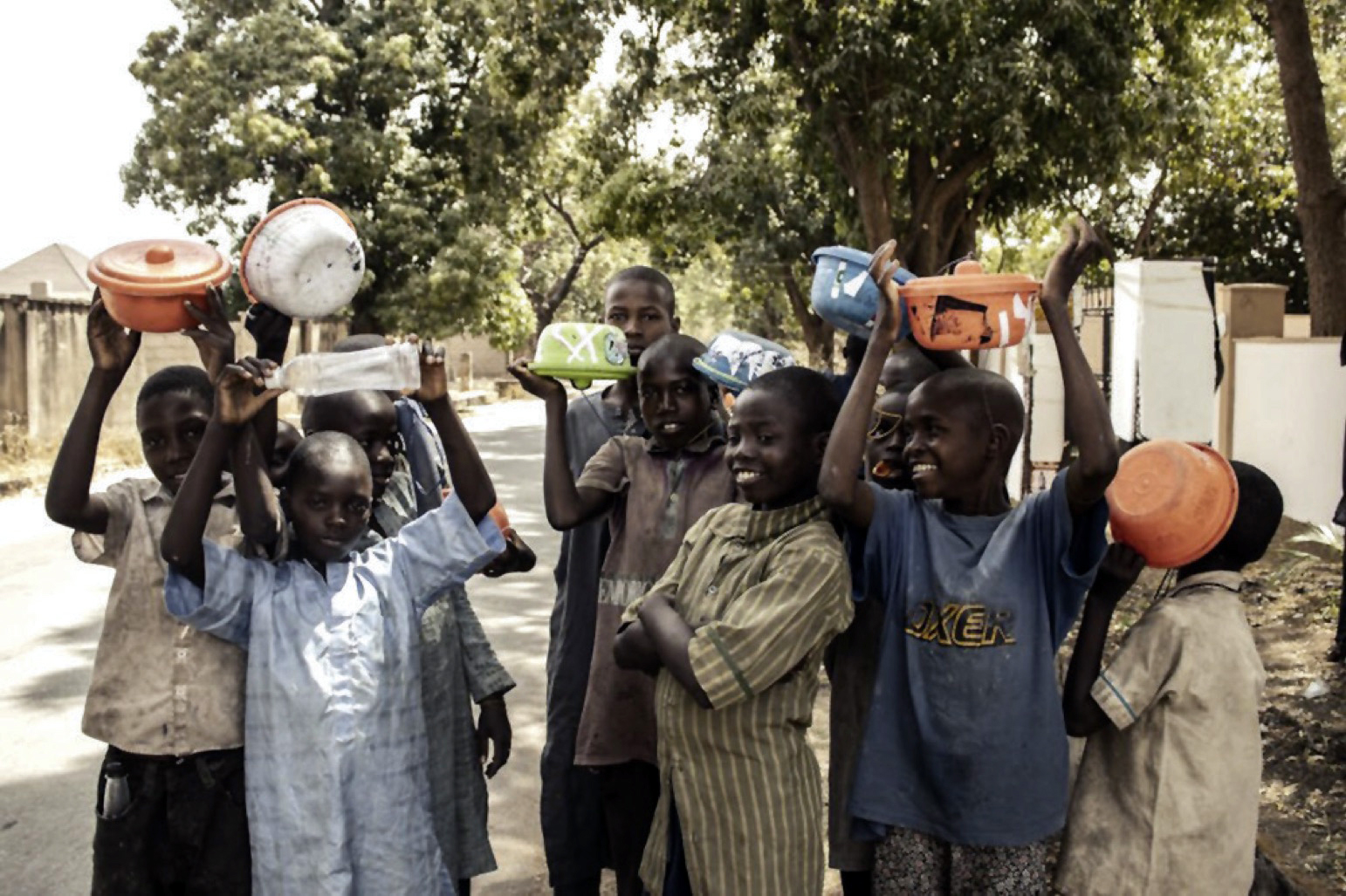
Statistically, Nigeria has the highest number of out-of-school children in the world and, while both boys and girls are affected, the pattern differs sharply by region and by age but boys are overwhelmingly affected. In the North, girls are more likely to be pulled out of school for early marriage but a staggering number of boys, estimated by aid agencies to run into the millions, are sent instead into the Almajiri system, which has left many young boys begging on the streets rather than learning a trade or a craft, or they join criminal gangs. Some estimates put the number of Almajiri children in Nigeria at about 10 million, roughly 81 per cent of the country’s more than 10 million out-of-school children, the majority of them boys.
Down south, in the cities, a different pattern plays out. Boys drift into cultism, thuggery, drug abuse and street violence, not because they are inherently more prone to crime than girls, but because nobody built for them the safety nets, mentorship structures and emotional-literacy programmes that have been steadily built for girls over the past two decades.
Light is on the horizon, however, as some stakeholders have decided to save boys from destruction. Among the organisations working most visibly in this regard is Boys Without Borders Nigeria, registered formally as the Empowering the Boy-Child Foundation, co-founded by Solomon Idowu and John Dare Okafor. The group has noted that issues surrounding the boy-child and his development have for years not received the attention they require, leaving the areas essential to his growth treated with levity. The organisation describes its mission as equipping boys with the resources and support they need to grow into well-rounded, functional members of society, arguing that boys, like girls, are vulnerable and deserve gender-focused interventions, rather than blanket suspicion. It has rejected the long-standing perception of the boy-child as a potential threat from whom girls must be shielded, insisting that this concept ignores the reality that boys, too, need support to grow into whole adults.
While there is a form of structure around issues that concern girls, government policies and interventions are ambivalent when it comes to the boy-child. And activists are not waiting any longer. Although there is a cloud of despair and the various efforts appear disjointed and ad hoc, half-effort is better than nothing.
Solomon Ayodele, tech executive, social advocate and founder of Boys Quarters Africa, said, “Whether the United Nations supports it or not, I am a nation myself. I will keep driving this conversation because, if we fail to raise wholesome boys, Africa will be in a terrible state within the next three to five years.”
Boys Quarters Africa focuses on education, mentorship and empowerment for boys and young men, and in 2019 it launched the #BoysToo campaign to draw attention to the sexual harassment and abuse of the male child, a subject still treated as almost unspeakable in much of Nigerian society, where the assumption persists that boys cannot be victims. In 2021, the organisation partnered with the Lagos State Government to launch the first Boys Club Against Gender-Based Violence, taking the fight for boys’ welfare directly into schools and communities. Ayodele’s work has earned him national recognition, including honours for activism and advocacy, a sign that the conversation is slowly gaining institutional legitimacy.
He said: “Boys need guidance, boys need support. Boys need people who believe in them before the world tells them who they should be.”
Like Boys Quarters Africa, the Soledotun Abdulkarim-Yusuf Foundation (SAF), founded by town planner, entrepreneur and philanthropist Hajia Soledotun Titilope Abdulkarim-Yusuf, a mother of three sons and a long-time member of Lions Clubs International, believes, “A society that neglects boys cannot protect girls.”
Through SAF, Mrs. Abdulkarim-Yusuf and her team focus on the holistic development of boys, education support, mental health intervention, mentorship, skills acquisition and positive identity formation.
The foundation has distributed educational materials to primary schools in Lagos, paid JAMB fees for boys across the country, covered medical bills for boys facing mental health challenges and visited tertiary institutions, including the University of Lagos, Lagos State University and the University of Port Harcourt, to spark conversations on boyhood, identity and emotional well-being.
One case that illustrates the foundation’s approach involved a 10-year-old boy named Ayomide who was battling a severe mental health challenge. His family could not afford treatment at the Federal Neuro-Psychiatric Hospital, Abeokuta. SAF stepped in, funding diagnosis and initial care. The foundation has since spent significant resources on his treatment and has extended similar support to other boys, including orphans. SAF has also organised festive outreaches at the Special Correctional Centre for Boys in Oregun, Lagos, bringing hope, gifts and the message that mistakes need not define a young person’s future.
“We believe that when we support a boy, we help shape a responsible, confident and purposeful young man who contributes meaningfully to society,” Abdulkarim-Yusuf has said. “This foundation was born from my passion to uplift young boys, to ensure they are not left behind, to help them discover their purpose and to guide them on a path of excellence, confidence and positive identity.”
She is careful to emphasise that empowering boys is not an attack on the girl child. SAF has visited girls’ schools to affirm that protecting and raising boys well ultimately protects girls as well.
“Boys are taught to be strong, to hide their feelings, to never cry,” noted one mental health advocate familiar with SAF’s work. “By the time they become men, many lack the language or the permission to seek help. The result is silence that can explode into violence, addiction or withdrawal.”
What many seem to ignore is that mental health struggles, depression, anxiety and untreated trauma are compounded by cultural expectations that discourage emotional expression.
She said this silence has societal costs. Neglected boys are more vulnerable to recruitment by criminal gangs, cult groups and extremist networks. They are over-represented in correctional centres. When they become fathers without positive models, the cycle of emotional unavailability and, in some cases, domestic violence continues. When they become partners and colleagues of the empowered young women society has invested in, the mismatch in emotional readiness and relational skills can undermine the very equality that girl-child programmes seek to achieve.
Other Nigerian organisations have joined the call. The Child and Youth Protection Foundation marks the International Day of the Boy Child with conversations on vulnerabilities, including violence, academic neglect, mental health stigma and harmful gender expectations., Twenty-One Five Child Foundation and others also run mentorship programmes, skills training and summits that treat the boy child as a priority rather than an afterthought. Even the Nigeria Police Force has now hosted events for the day, emphasising the need to break the silence around boys’ mental health and dismantle stereotypes that equate vulnerability with weakness. But they have barely scratched the surface.
The Empower the Boy-Child Summit movement has pressed the government to treat the crisis with the urgency of a security matter rather than a soft welfare issue. A recent edition of the summit, held in Abuja, drew attention to alarming statistics and characterised the situation as an urgent security threat. The foundation reported enrolling dozens of boys into structured mentorship programmes, with the majority completing months of intensive engagement.
Criticisms and negative perceptions aside, the President Bola Tinubu administration has repeatedly stated that children matter in its policies and agenda for a better Nigeria.
Hajiya Imaan Sulaiman-Ibrahim, Minister of Women Affairs and Social Development, reaffirming the administration’s stance under the Renewed Hope Agenda, said, “Every child counts, and every life matters.”
The minister made this statement on June 17, 2026, to mark the 2026 International Day of the African Child. She reaffirmed the federal government’s commitment to protecting and empowering every Nigerian child under President Tinubu’s Renewed Hope Agenda. Sulaiman-Ibrahim, describing the national significance of children, stressed that, “The Nigerian child remains the focal point of our national conscience, the anchor of our social stability and the heartbeat of our development aspirations.”
Minister Sulaiman-Ibrahim, stated specifically that boys matter: “We’ve talked about the girl-child for many decades; it’s time for our boys.”
At the official validation of the National Boy Child Policy and 40 other social protection frameworks in Abuja in June, she pointed out that the newly validated National Boy Child Policy is explicitly designed to correct long-standing systemic neglect and bridge gaps between policy formulation and practical implementation. The framework ensures that young boys receive robust mental health, economic, educational and emotional support to shield them from societal pressures. The initiative aligns with President Tinubu’s administration designating 2026 as the “Year of the Family and Social Development,” positioning stronger family units as the cornerstone for protecting male children.
Rather than replacing current milestones, the ministry confirmed that boy-focused programmes will now roll out alongside existing women and girls initiatives to build an inclusive society
Despite these assurances, activists like Salako insist things should change for the better fast, because, whenever such government pronouncements are made, the ‘child’ in focus is the girl-child. Policy statements and speeches will not stop cultural practices overnight. Parents and relevant authorities must wake up to bring equality into the training of children of both genders, instead of pampering girls while the boy-child remains an afterthought, until he becomes a problem everyone has to contend with.
Stakeholders say the consensus must be that now is the time to reposition the welfare of the Nigerian boy-child as a national priority.