Follow Us on Google
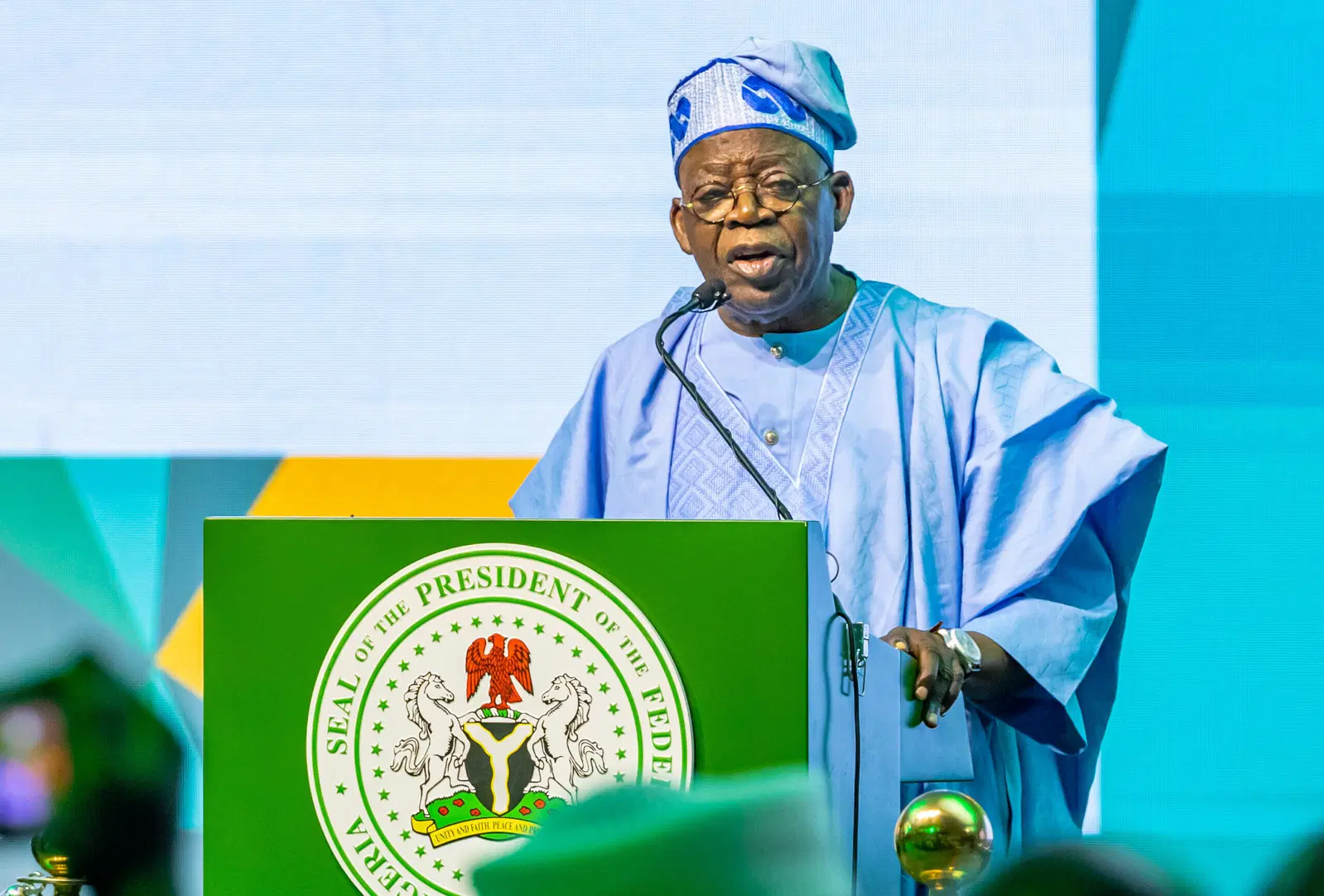
President Bola Tinubu may secure re-election in the 2027 presidential election despite growing public dissatisfaction, according to The Economist.
In a report published on October 1, Nigeria’s Independence Day, the British magazine identified the worsening security situation, the impact of the government’s economic reforms and the emergence of prominent political challengers as factors that could undermine Tinubu’s re-election bid.
“On the face of it, Mr Tinubu’s cool is surprising,” the newspaper wrote.
The Economist noted that the president’s apparent confidence may not necessarily reflect widespread satisfaction with his administration, but rather Nigeria’s complex electoral dynamics.
“Incumbents, with access to the ruling-party machinery and plentiful cash to dole out goodies, have tended to have an advantage in recent Nigerian elections,” it stated.
The Economist also identified the fragmentation of the opposition as a factor.
Atiku Abubakar and Peter Obi, leading opposition candidates, are flagbearers of the African Democratic Congress (ADC) and Nigeria Democratic Congress (NDC) respectively.
The Economist said Atiku and Obi’s failure to form a joint ticket could prevent opposition votes from being consolidated behind a single candidate.
Religion was also identified as a factor that could favour Tinubu in the 2027 election.
The Economist noted that Tinubu and Vice-President Kashim Shettima, both Muslims, could appeal to voters in northern Nigeria, which has the largest concentration of registered voters in the country.
According to The Economist, religious identity could also influence voters against Obi, a Catholic.
Other News
“Even voters who like Mr. Obi may rule him out because he is a Catholic; the fact that he has a Muslim running mate may not be enough,” it stated.
The publication also identified what it described as political cynicism among some voters as perhaps the most significant factor.
It said some voters in northern communities might not judge Tinubu’s administration solely on its record because of their experience of poor public services.
The publication cited a woman in Maiduguri who said she intended to vote for Tinubu as a “thank you” for medicine she received at a government hospital.
The Economist also linked Tinubu’s electoral prospects to voter turnout, particularly in areas affected by insecurity.
It noted that while many voters may be dissatisfied with the government, such discontent may not necessarily translate into votes against the incumbent.
“As long as the security crisis remains unresolved and economic growth, which is expected to hit 4.1% this year, does not translate into concrete improvements in Nigerians’ daily lives, many voters will remain disappointed. Yet few will use the ballot box to express their disappointment,” the publication added.
The paper also pointed to identity politics in parts of the south as potentially playing a role in Tinubu’s likely re-election, especially in Lagos, the president’s state.
The paper added that “plenty may swallow whatever bad feelings they have about their day-to-day struggles and vote for their ‘son’.
“No wonder Mr Tinubu feels safe enough to take extended holidays in Paris.”