Follow Us on Google
By Chinenye Anuforo
For women who step into public leadership, the battle does not always end when the microphone is switched off. Increasingly, it follows them home into their phones, social media accounts and private lives.
A political disagreement can become a personal attack. A question about policy can quickly turn into commentary about a woman’s body, marriage or family. And an online insult, when repeated and amplified across platforms, can become something much more threatening than a passing social media quarrel.
That was one of the uncomfortable realities confronting journalists and media practitioners in Lagos as they examined the changing nature of coverage of women in public leadership.
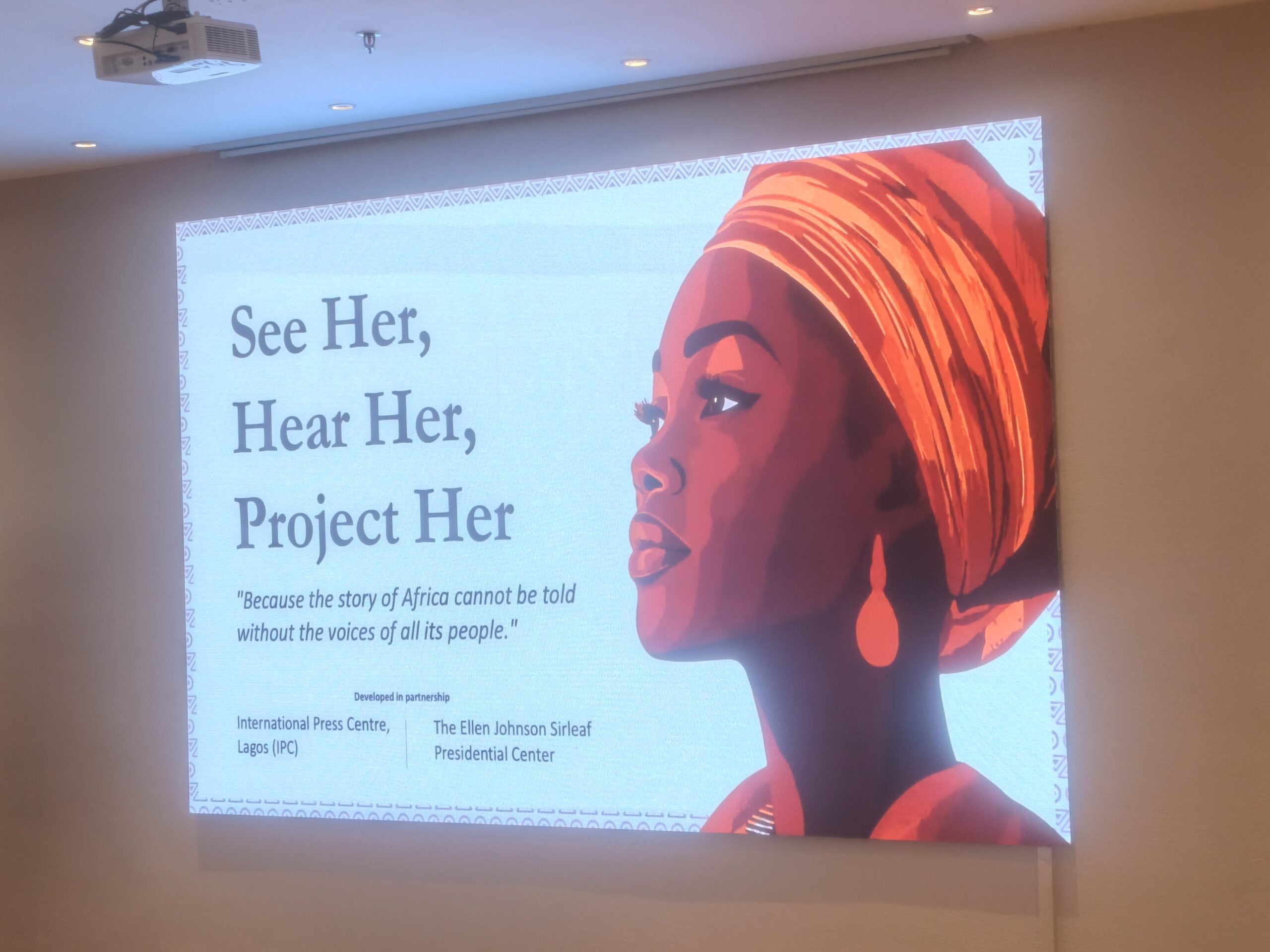
At a three-day reflection meeting on gender-sensitive reporting and media coverage of women in public leadership, participants interrogated the growing threat of technology-facilitated gender-based violence (TFGBV), the role of the media in amplifying online abuse and what journalists can do differently as Nigeria moves towards another election cycle.
The meeting, held from September 16 to 18, 2026, was organised by the Ellen Johnson Sirleaf Presidential Center for Women and Development (EJS Center) in partnership with the International Press Centre (IPC).
Key facilitator, Kathleen Ndongmo of News Central TV, took participants through the difficult terrain of TFGBV, digital safety and media responsibility, drawing attention to the ways technology can be used to harass, intimidate, silence or discredit women.
The message was clear, not every harsh comment directed at a woman is gender-based violence.
Women in public office, like their male counterparts, must be subjected to legitimate scrutiny over their policies, decisions, performance and conduct.
But there is a difference between asking a difficult political question and using a woman’s gender as a weapon against her.
When criticism moves into sexualised insults, attacks on appearance, marriage, children or unverified sexual allegations, the conversation has shifted from accountability to gendered abuse.
Blessing Oladunjoye, Publisher of BO News Service, brought another dimension to the discussion — the responsibility of the media to ensure women are visible in public life before controversy makes them newsworthy.
Rather than waiting for a woman candidate to become embroiled in scandal before introducing her to the public, journalists, she argued, can play a more proactive role by telling the stories of women seeking leadership, examining their backgrounds and making their ideas and records accessible to voters.
That approach also addresses one of the recurring problems discussed during the meeting: the fact that many women entering politics are not sufficiently profiled before election campaigns intensify.
Biographies, photographs, interviews, manifestos and background stories can give voters information with which to assess candidates beyond the stereotypes and personal attacks that often dominate social media conversations.
For Melony Ishola, Head of Programmes at PUNCH Videos, the challenge also lies in how stories are packaged and distributed in a media environment where online platforms increasingly determine what audiences see and discuss.
The traditional newsroom is no longer the only gatekeeper. A story published by a media organisation can be clipped, reposted, quoted out of context and turned into a completely different conversation online within minutes. That places a greater responsibility on journalists to understand what happens after publication.
The panel discussion, which also featured Simbiat Bakare, Founder of Naija Feminists Media, and Jumoke Falayi-Johnson, Chairperson of NAWOJ Lagos, examined the experiences of women navigating public spaces where digital visibility can come with intense backlash.
The discussion highlighted a paradox at the heart of social media. The platforms have made it easier for women leaders and candidates to speak directly to citizens without depending entirely on traditional media.
But the same platforms can expose them to coordinated harassment, impersonation, doxxing, cyberstalking and other forms of abuse.
Doxxing, for instance, involves the unauthorised publication of private information, potentially exposing the victim to further harassment or physical danger.
Participants also examined the emerging danger posed by manipulated images, including sexualised fake content generated or altered with digital tools.
For women in politics and public leadership, such attacks can have consequences beyond reputation.
They can discourage women from speaking publicly, encourage self-censorship and potentially make political participation more costly.
The problem is not limited to politicians. Women journalists themselves can become targets because of the issues they cover, the people they interview or the positions they take in public debates.
That prompted discussions about the need for newsrooms to develop safety protocols that protect both journalists and their sources.
Participants stressed that digital safety should no longer be treated as a personal responsibility that journalists have to figure out individually.
News organisations need systems for responding to threats, preserving evidence, reporting abusive accounts and supporting journalists who come under sustained attack.
The need for such measures becomes more urgent when online harassment spills into offline spaces.
The meeting heard discussions about cases in which online attacks against women in public life were followed by threats and other forms of intimidation. Such experiences demonstrate why journalists cannot dismiss online abuse simply as “social media noise”.
But the answer, participants stressed, is not to shield women leaders from criticism.
Bakare and other speakers emphasised the importance of drawing a clear line between legitimate political disagreement and gender-based abuse.
A woman in public office should be questioned. She should be challenged. Her policies should be examined. Her decisions should be scrutinised.
But none of that requires reducing her to her body, sexuality, marital status or family.
That distinction also places a burden on journalists. When abusive claims become viral, the media can either investigate and contextualise them or inadvertently give them a larger audience.
A sensational headline may generate clicks, but it can also transform an unverified allegation into something that looks like established fact.
This is where gender-sensitive journalism becomes more than simply using politically correct language. It requires verification.
It requires context. It requires asking whether the journalist is reporting a public-interest issue or simply reproducing an attack because it is generating engagement.
The discussions also touched on the role of journalists in holding one another accountable.
Rather than allowing problematic coverage to pass unchallenged, participants discussed the value of journalists questioning headlines, framing and narratives that reinforce gender stereotypes.
They pointed to the need for stronger collaboration between newsrooms, digital rights organisations and civil society groups, particularly when journalists or their sources face online threats.
There was also a call for journalists to take their own digital security seriously..Participants encouraged media practitioners to search their names online, understand what personal information is publicly available and exercise caution when sharing sensitive information such as locations, telephone numbers and other identifying details.
For women considering political leadership, however, the challenge goes even deeper. The fear of being attacked online can become part of the cost of entering public life.
A woman may have the qualifications, experience and political ambition to seek office, but also know that her public profile could expose her to attacks that have little connection with her competence or policies.That reality makes media coverage particularly important.
Falayi-Johnson, representing the National Association of Women Journalists (NAWOJ) Lagos, was part of a conversation that placed the newsroom itself under scrutiny: if the media does not challenge gender stereotypes, social media can easily reproduce and magnify them.
The media therefore has two responsibilities at once. It must scrutinise women leaders fairly while also refusing to become a vehicle for gendered misinformation and abuse. That balance is critical.
It is not about giving women leaders easier coverage. It is about giving them fair coverage. It is about ensuring that Nigerians encounter women candidates and public officials through their ideas, policies, experience and records, not only through the controversies, insults and personal attacks that social media algorithms may reward.
The challenge is particularly significant ahead of the 2027 elections, when social media is expected to remain a major arena for political communication.
The conversation in Lagos ultimately returned to one fundamental question: what happens when women can enter leadership spaces but the environment punishes them for being visible?
The answer cannot come from women alone. Political parties, media organisations, technology platforms, civil society groups and citizens all have roles to play.
For journalists, the first step may be surprisingly simple, tell the whole story. Project the candidate before the controversy. Ask about the manifesto before the marriage.
Examine the record before the rumour. Question the policy before commenting on the body.
And when online abuse becomes part of the story, report it without becoming its amplifier.
Because women seeking public leadership do not need protection from scrutiny. They need a public conversation in which scrutiny remains about leadership and abuse is recognised for what it is.