Follow Us on Google
By Benson Michael
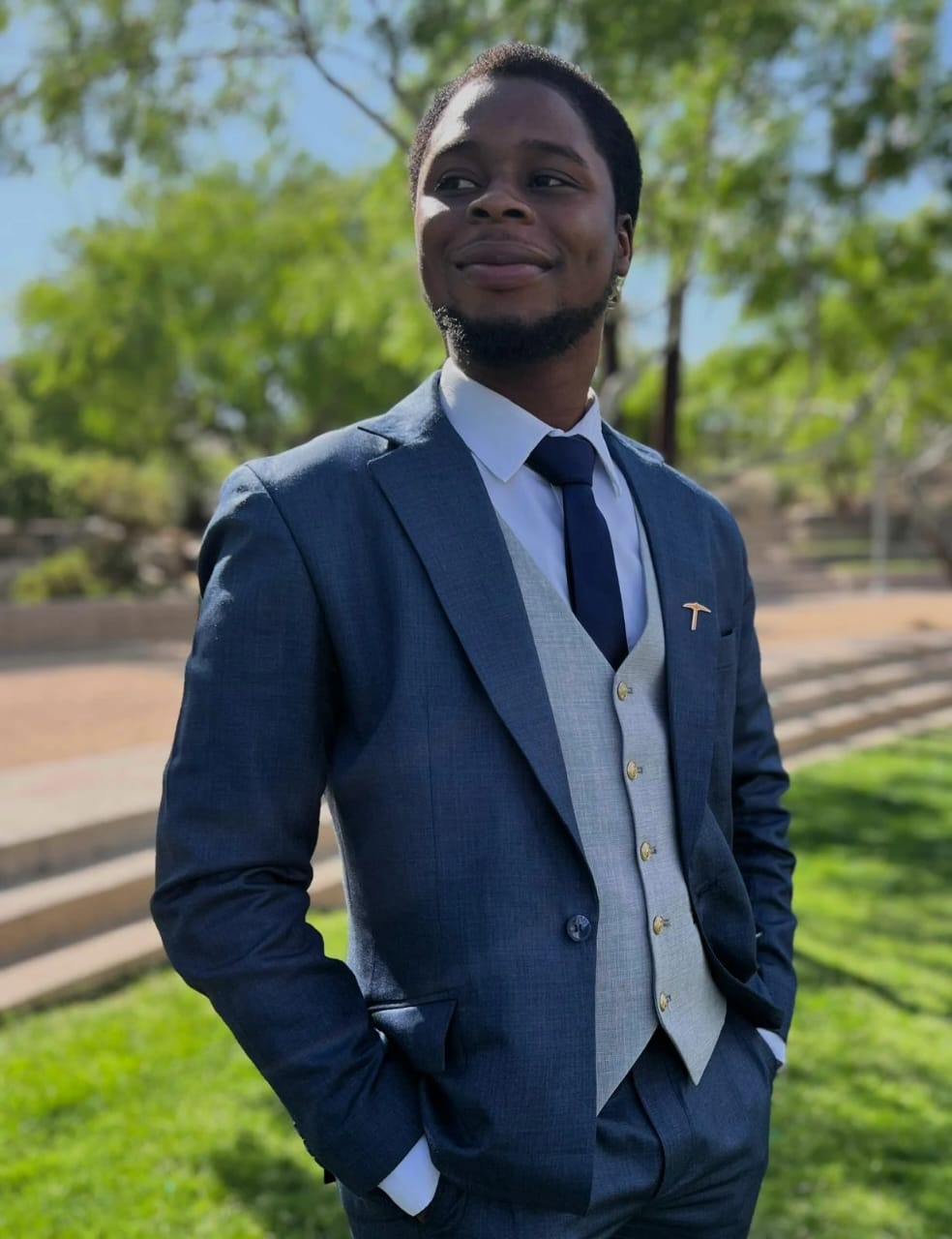
Tahiru Mahama doesn’t appear to be a disruptor. Soft-spoken, precise, and thoughtful, the Ghanaian statistician is likelier to ask a question than make a bold claim. But when he speaks about algorithmic bias and the rise of automated decision-making, his voice sharpens.
“We’re outsourcing judgment to models that don’t understand people,” he says. “And that should worry everyone.”
From healthcare eligibility to student admissions, machine learning models are increasingly shaping outcomes that were once left to human discretion. But Mahama, whose academic work straddles robust inference and statistical ethics, warns against placing blind trust in algorithms.
“They’re trained on historical data,” he explains, “but history is full of inequality. Models don’t fix that. They repeat it.”
During his studies at the University of Texas at El Paso, Mahama reviewed predictive systems used in hospital triage. He noticed a troubling pattern: patients from marginalized backgrounds were consistently rated lower for urgent care. “They weren’t less sick,” he says. “They were just less visible in the training data.”
The problem, Mahama argues, isn’t necessarily the math; it’s how we use it. “There’s this belief that numbers are neutral,” says Dr. Karen Owens, a professor of ethics in data science at UTEP. “But models reflect the assumptions baked into them. Tahiru’s one of the few statisticians who’s really pushing back.”
His criticism goes beyond theory. Mahama mentors students in identifying bias in real-world datasets, encouraging them to question who’s represented, who’s left out, and why the model made a given decision.
“Tahiru made me realize that even Excel has power,” says Luis Martinez, one of his former students. “You start thinking twice about every column you build.”
Rather than abandoning algorithms, Mahama advocates for transparency and accountability. He’s developing workshops for NGOs and public institutions to help non-technical professionals understand how these models work and when they fail.
“Math should never silence common sense,” he says. “If a model tells us something that doesn’t feel right, we should be able to challenge it.”