Follow Us on Google

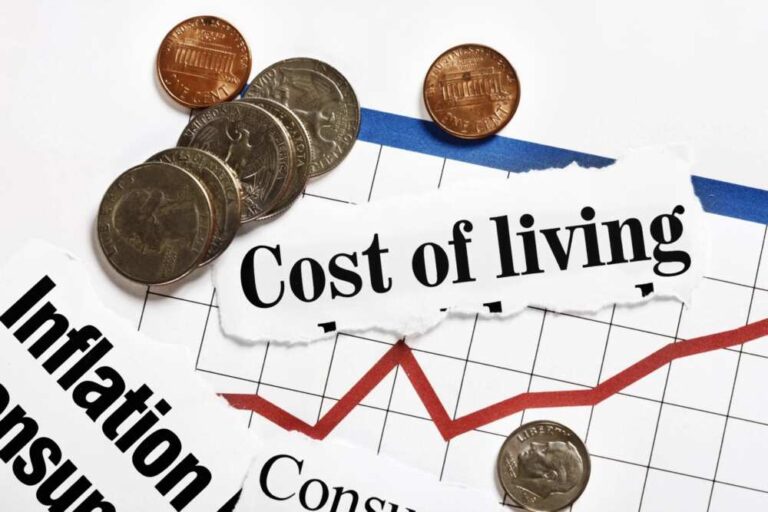
THE recent disclosure by the Minister of Humanitarian Affairs, Disaster Management and Social Development, Ms. Sadiya Farouq, that 90 million Nigerians are currently living in extreme poverty, is rather depressing. The damning statistics show that almost half of the country’s 200 million people live on $1.9 or less a day. Based on this, it is possible that the number of Nigerians that will be in extreme poverty by 2050, when the population is projected to hit 450 million, will be higher.
With annual population growth at three per cent and economic growth at less than two per cent, there is cause to worry. Nigeria’s growing army of poor people is a matter of great concern. It can precipitate social unrest if nothing is quickly done to lift those concerned out of poverty. The government should stop paying lip service to addressing the poverty challenge. It has come to a level that those in authorities should be worried. They should do something to drastically reduce poverty in the country.
In spite of the lamentable situation, it is, however, encouraging that the Sadiya Farouq has assured Nigerians of government’s determination to tackle the challenge and lift the 90 million Nigerians out of the extreme poverty trap. While it may not be so easy to achieve this lofty objective, it is not insurmountable. After all, other countries in Asia have done so even with limited resources at their disposal. There is a lot the country can learn from the Asian countries.
Lifting 90 million Nigerians out of poverty would require the concerted efforts of the federal, state and local governments to achieve. The organised private sector should also be involved. Government can also solicit the assistance of foreign countries and development agencies to tackle the poverty challenge.
We recall that President Muhammadu Buhari has expressed worry over the increasing poverty in the country. He has charged the state governors to ensure that they meet their obligations to their people. Former British Prime Minister, Theresa May and Bill Gates had decried the poverty level in the country. Both of them recommended that the government should put measures in place to aggressively address the problem. The federal and state governments have been advised to invest more on human capital development. Therefore, government must prioritise investment in education, health and critical infrastructure.
There is need to enhance the annual budgetary allocation to education and health. The inadequate funding of education and health sectors has contributed to, a large extent, the rising poverty in the country. Government must also increase the capital component of its budget. The current 20 per cent allocated to capital component cannot take the country away from poverty. The growing insecurity in the country cannot be divorced from the excruciating poverty.
There is no doubt that the work at hand requires the cooperation of all stakeholders in the Nigerian project. The present situation where one per cent of the population control 95 per cent of the nation’s wealth is neither desirable nor sustainable. There is urgent need to restructure the economy of the country in such a way that will be beneficial to most Nigerians. The country must, of necessity, embrace fiscal federalism. The current unitary federalism does not augur well for its rapid socio-economic development.
Government should expand its Social Investment Programmes (SIP) and other poverty alleviation measures to accommodate more people. We say this because the universities and other tertiary institutions are annually turning out more graduates that are in desperate need of jobs. While the SIP intervention is palliative, government should stimulate the economy through industrialisation. It is only through industrialisation that government can create more jobs for the unemployed masses.
The worthy examples of China, Indonesia, India and Australia show that it can be done with great commitment and planning by government and its development partners. The vision, which all stakeholders must subscribe to, must go beyond this administration. The 10-year plan of the Buhari administration to lift 100 million Nigerians out of poverty is good. But, it must be made attractive to all the stakeholders in the Nigerian project.