Follow Us on Google
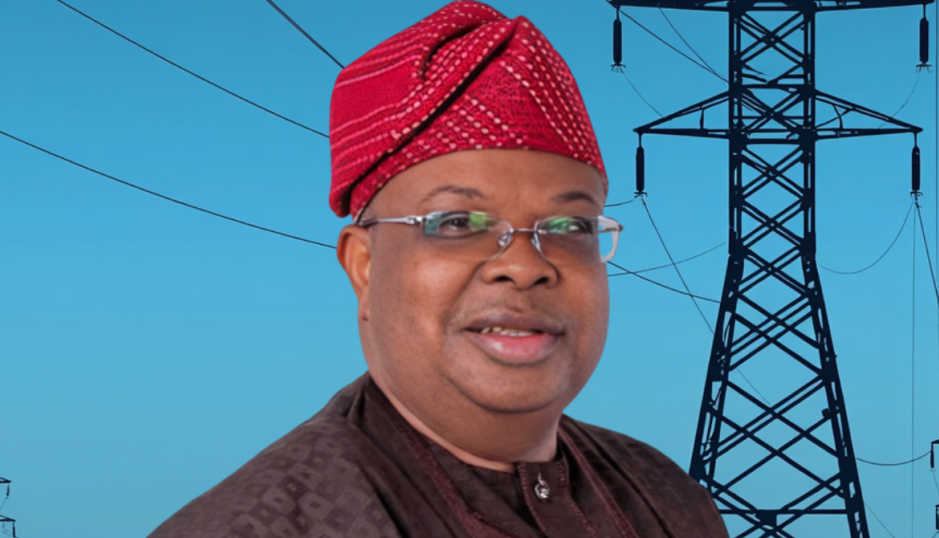
The federal government’s new plan to grow the nation’s installed power capacity to 277 gigawatts (GW) by 2060 is not only ambitious but also too far away. Minister of power, Joseph Tegbe, stated this major plan to transform the electricity sector last week at the Lagos Chamber of Commerce and Industry’s Renewable Energy Outlook Conference 2026 at Commerce House in Lagos. The minister explained that the government will leverage renewable energy and private investment to drive industrial competitiveness.
The conference theme was aptly titled “Nigeria’s Energy Transition Agenda: Power Sector Transformation for Industrial Competitiveness.” Tegbe also used the occasion to assure manufacturers, processors and other businesses that the era of relying on diesel generator as primary source of energy will soon be over.
The minister is also optimistic that the government is building a Nigeria in which a manufacturer in Apapa, a data centre in Lekki or a retail textile mill in Kano “can source clean, reliable electricity at a competitive cost-effective tariff; a Nigeria in which 277gigawatts of installed capacity, predominantly renewable energy, powers homes, industries, hospitals and digital infrastructure.”
There is no doubt that the minister has good ideas on how to transform the electricity sector. However, the problem with the nation’s electricity sector is never lack of ideas but seamless implantation of the ideas to achieve the desired results. According to a report, the Nigerian government has injected about N7trillion to N10trillion or over $25billion into the sector since 1999. Yet, Nigerians are victims of epileptic power supply, collapse of national grid and excessive billings and insufficient electricity meters. However, a new report has revealed that Sub-Saharan Africa will need about $15 billion in annual investments to achieve universal access to electricity by 2035. Regrettably, the report says that current funding levels cannot bridge the continent’s huge energy access gap.
Going by the minister’s pronouncement, it will take Nigeria about 34 years to generate 277GW or about 277,000 megawatts (MW) of electricity. To meet this target, Nigeria will only generate about 6,676MW of electricity per annum. Currently, the government says Nigeria has over 13,000MW of installed power generation capacity. However, it further explained that less than half of that capacity reaches consumers reliably.
Available statistics show that Nigeria currently generates about 4,330MW of electricity in spite of its installed grid capacity of roughly 13,625MW. Nigeria’s power generation challenge has been exacerbated by chronic gas supply shortages to thermal plants, transmission bottlenecks and general grid instability. While the thermal plants require about 1,620MMSCF of gas per day to function effectively, they receive less than 43 per cent of that amount.
Other News
Although the transmission wheeling capacity has been upgraded to about 8,700MW, its operation has been hampered by structural limits that hinder the full capacity from reaching consumers. The national grid has reportedly collapsed more than 100 times over the last decade. For instance, from 2015 to 2024, the Transmission Company of Nigeria (TCN) recorded 105 cases of total and partial grid collapse over a 10-year span. The national grid collapsed 12 times in 2024 alone. In 2026, the grid has suffered several incidents, including two major nationwide failures in January and others in some parts of the country.
While Nigeria is struggling to meet the 13,625MW power generation target, Egypt and South Africa, the continent’s top electricity producers, are generating over 60,000MW each year. According to reports, Egypt generates about 62,700MW as South Africa generates 61,200MW of electricity annually. Algeria generates 24,000MW of electricity and Morocco generates 12,016MW.
Even though the plan to generate the 277GW of electricity is commendable, we hasten to add that Nigeria cannot wait for a whopping 34 years to achieve that milestone. It can be achieved within a shorter timeframe if there is political will to do so. We can emulate the power model that worked for Egypt and South Africa to significantly boost our electricity generation and supply. Since we have abundant sunshine in almost all parts of the country annually, the government should prioritise solar energy as well as wind energy. As the minister suggested, we can deploy solar energy to power homes, industries, hospitals and digital infrastructure.
If Nigeria really wants the envisaged energy transformation to work, the federal government, the states and even some local governments and the private sector must participate actively in the power sector. Perhaps, this is the time to revisit the privatisation programme of the power sector and bring in more serious investors. Without addressing the power sector challenges, the government’s dream of achieving the $1trillion economy by 2030 will not be realised.
We say this because every sector that will contribute to growing the economy to that level will depend so much on electricity. No nation can be fully industrialised without adequate electricity. Nigeria cannot be an exception. To meet the 277GW target, the government must invest heavily in the power sector.