Follow Us on Google
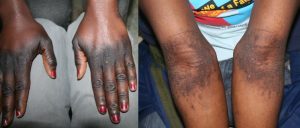
As a result of the dangers associated with skin bleaching, the Nigerian Association of Dermatologists (NAD) recently raised the alarm over the rising skin bleaching epidemic in the country. Apart from describing the menace as a growing public health crisis, it warned that the practice, which is driven by societal pressures to lighten the skin, has some health risks, including cancers, organ damage and treatment-resistant infections.
NAD also revealed that the prevalence of skin bleaching in Nigeria is estimated to reach as high as 84 per cent. The dermatologists in conjunction with Eucerin have launched a nationwide campaign with the theme: “Embrace Your Skin,” to stem the growing public health concern in the country.
During a press briefing to kick-off the campaign held at the Lagos University Teaching Hospital (LUTH) Dermatological Clinic Annex, Yaba, Lagos, dermatologists, public health experts and other stakeholders enlightened Nigerians on the dangers of skin bleaching. The President of NAD, Prof. Dasetima Altraide, warned that the practice of intentional lightening of skin through topical creams, cosmetic procedures, oral tablets and intravenous treatments is hazardous to health.
“Skin bleaching is a health risk with severe consequences. The practice has been linked to rising incidences of skin cancers, bizarre fungal infections that resist treatment, destruction of the skin, severe allergies, and damage to vital organs such as the liver and kidneys,” he stated. Quoting figures from the WHO Afro Region and integrated African Health Observatory (iAHO) 2023, NAD President disclosed that the prevalence of skin bleaching in Nigeria ranges from 40 to 84 per cent. According to NAD, this has earned Nigeria labels such as the “world capital of skin bleaching and ‘the skin-lightening hot house of the world,” reflecting the widespread of the practice in the country.
The National Agency for Food and drug Administration and Control (NAFDAC) last year raised the alarm over the pandemic of skin bleaching. It also declared the widespread use of unregulated, toxic skin-lightening creams as a national emergency.
Health experts have warned that skin bleaching is dangerous because the products often contain toxic chemicals, including mercury, hydroquinone and steroids. While mercury causes kidney damage, neurological problems and high blood pressure, hydroquinone, a paint stripper agent, can cause skin darkening, burning and cancer. Steroids can lead to skin thinning, infections and systemic diseases like diabetes.
Skin bleaching is a significant global public health concern with the World Health Organisation (WHO) reporting that 25 per cent to 80 per cent of women in various African countries regularly use skin-lightening products. Nigeria has the highest usage rate in Africa, with 77 per cent of women using these products, followed by Togo (59 per cent) and Senegal (27 per cent). While skin bleaching is more common among women (approximately 72-77 per cent, the practice also affects men (approximately 28 per cent) and is increasingly common among younger populations, with 55.9% per cent of users aged 30 and under.
Apart from Africa, there is high prevalence of skin bleaching in Asia, the Caribbean, and North America. For instance, India is a major market, with half of all skincare industry going toward skin-lightening products. The Philippines, Malaysia and Thailand have high usage rates, with studies estimating that one in two Filipino women use these products. The practice is widely reported in China, South Korea and Japan, where skin whitening is rooted in long-standing, sometimes ancient beauty ideals.
There is also childhood exposure to skin bleaching. A 2025 study found a 19.5 per cent prevalence of mothers using skin-lightening products on their children under five, with 80.6 per cent of those children being under two years old.
So far, the Nigerian government, through the Federal Ministry of Health and NAFDAC, has taken some measures to curb the high prevalence of skin bleaching in the country. The government has developed the Cosmetic Products (Prohibition of Bleaching Agents) Regulations 2019. The government says these regulations strictly ban the use of harmful substances like mercury and prohibit hydroquinone concentrations above 2 per cent in cosmetic products. On the other hand, NAFDAC has been raiding markets and seizing unauthorized, illegal skin-lightening products at the borders. The agency is striving to ensure that all cosmetic products sold in Nigeria are registered, tested and certified safe.
We abhor the rising skin bleaching practice in Nigeria. It is sad that Nigeria is now the world capital of skin bleaching. Whether it is driven by the desire for enhanced beauty or peer pressure, we condemn the practice, which is more common among women. We urge Nigerian women and others indulging in skin bleaching to love and embrace their skin. It is not true that lighter skin is more beautiful than black or chocolate skin. This hazardous practice of bleaching the skin is a cultural aberration and must be done away it forthwith.
There is need for more nationwide enlightenment campaigns against the dangers of skin bleaching. The campaign should be in English, Pidgin and major Nigerian major languages, Igbo, Hausa and Yoruba. The health authorities at the state and local governments should also join the campaign against skin bleaching. Let NAFDAC strictly enforce the ban on skin-lightening products across the country.