Follow Us on Google

From Fred Ezeh, Abuja
On October 16, 2026, the Federal University of Health Sciences, Azare (FUHSA), Bauchi State, witnessed a major milestone in its development as 13 landmark projects executed through interventions of the Tertiary Education Trust Fund (TETFund) were inaugurated, strengthening the institution’s capacity to train doctors and other health professionals for Nigeria and beyond.
The event showcased the impact of sustained public investment in a young university established in 2021 and which commenced operations in 2022, with a specialised mandate to produce highly skilled health professionals, advance medical research and improve healthcare delivery.

From modern faculty buildings and laboratories to lecture halls, student accommodation and other essential facilities, the projects represent a significant investment in the university’s academic and physical infrastructure.
Yet, beyond the new buildings, the event highlighted a bigger national challenge: how to expand Nigeria’s capacity to train medical personnel at a time when the country continues to grapple with shortages of health workers and the migration of skilled professionals abroad.
For FUHSA, the commissioning was an opportunity to celebrate progress, acknowledge TETFund’s contribution and press for further investment to expand medical training and improve student accommodation.
TETFUND’s INVESTMENT TRANSFORMS YOUNG UNIVERSITY
The Executive Secretary of TETFund, Arc. Sonny Echono, expressed satisfaction with the transformation of the university, recalling that he visited the institution about five years earlier when plans for its establishment were being consolidated.
He said the structures he encountered during the visit reflected the hard work and commitment of the governing council, Senate, management and staff, particularly the pioneer Vice-Chancellor, Professor Bala Mohammed Audu.
Echono commended the university leadership for laying a solid foundation for an institution designed to expand Nigeria’s capacity for medical education, research and healthcare delivery.
He explained that the establishment of specialised federal universities of health sciences formed part of a Federal Government initiative launched in 2021 to strengthen medical training across the country.
“The initiative followed the COVID-19 pandemic, which exposed weaknesses in healthcare systems worldwide and reinforced the need for countries to develop their own capacity to train medical personnel, conduct research and respond effectively to public health emergencies,” he said.
According to Echono, FUHSA’s rapid development demonstrates what purposeful investment, strategic planning and institutional commitment can achieve.
He said TETFund had supported the university from inception through funding for infrastructure, academic development, research facilities and other aspects of institutional growth.
In a significant disclosure, Echono said he signed another allocation for the university on October 15, a day before the commissioning.
He explained that the agency was prepared to reward institutions that utilised their allocations effectively and completed projects within schedule.
The disclosure reinforced TETFund’s commitment to sustaining investment in the university, while underscoring the importance of accountability and timely project delivery in the management of public funds.
MODERN FACILITIES STRENGTHEN MEDICAL TRAINING
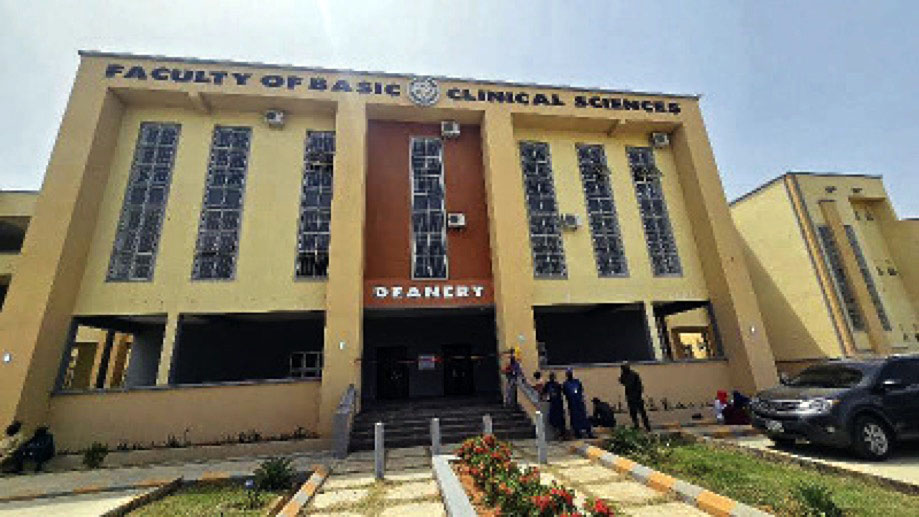
Among the facilities showcased during the visit were the Faculty of Clinical Sciences and the Faculty of Dentistry, alongside other academic and support infrastructure developed through TETFund interventions.
The Faculty of Clinical Sciences building was designed around a courtyard concept suited to the local climatic conditions. It provide spaces for lectures, seminars, laboratory work and academic offices.
The Faculty of Dentistry comprises five departments and four laboratories, including two for preclinical dentistry and two for clinical dentistry. Its lecture theatre has a seating capacity of 180.
The facilities are expected to support practical instruction and provide an environment suitable for the demands of specialised medical and dental education.
The university’s infrastructure development has also involved renovating and converting inherited buildings to meet its academic and administrative requirements.
Under the 2022 interventions, several existing structures were renovated, including two female students’ hostels, facilities for Basic Medical Sciences and Medicine, physiology and biochemistry laboratories, library spaces and administrative buildings.
Some former classroom spaces were converted into academic staff offices, while other buildings were adapted for administrative and procurement functions. Selected staff quarters were also renovated under the annual intervention.
Further interventions in 2023 included a 28-room student hostel at the clinical site, the completion of platforms at the teaching hospital’s clinical site and a solar-powered water project.
In 2024, the university embarked on a lecture hall complex comprising eight halls, each designed to accommodate 256 students, alongside eight academic staff offices.
The 2025 and 2026 intervention plans also provided for additional lecture halls of similar capacity and student accommodation at the clinical site.
These projects form part of a phased infrastructure development programme intended to accommodate the university’s expanding academic activities and strengthen its ability to deliver specialised health education.
REQUESTING FUNDS FOR EXPANSION
Despite the progress, Vice-Chancellor Professor Bala Mohammed Audu appealed to TETFund for additional special interventions to expand the university’s capacity to train more medical professionals.
He said the agency had supported more than 90 per cent of the institution’s infrastructure and equipment, describing its contribution as critical to FUHSA’s development.
Other News
Audu specifically requested additional support for the Faculty of Basic Medical Sciences and the Faculty of Clinical Sciences, explaining that both were essential to the university’s medical training programme.
“Students pursuing the Bachelor of Medicine and Bachelor of Surgery (MBBS) programme pass through the Faculty of Basic Medical Sciences, which houses departments including Anatomy, Physiology and Biochemistry, before proceeding to Clinical Sciences and its specialised departments at the hospital site.
The Vice-Chancellor argued that expanding these facilities would enable the institution to increase the number of medical professionals it produces in line with the Federal Government’s policy direction to double Nigeria’s health manpower training capacity.
He said the investment would provide more than additional buildings, creating the physical space and academic capacity required to train more doctors and other health professionals.
Audu also commended TETFund for supporting the university’s infrastructure from its inception, describing the Faculty of Clinical Sciences as a legacy project conceived at the institution’s early stage.
His appeal highlighted a central challenge facing Nigeria’s specialised health universities which is that infrastructure must grow alongside enrolment if the institutions are to contribute significantly to addressing the country’s shortage of medical personnel.
GOVERNING COUNCIL’s REQUEST
The Pro-Chancellor and Chairman of the Governing Council, Prof. Samuel Adejare, also appealed for further TETFund intervention, identifying student accommodation as one of the university’s major infrastructure needs.
He praised the agency for helping to sustain tertiary education in Nigeria, saying its investments had enabled universities to provide facilities that would otherwise be difficult to finance from their regular resources.
The chairman described the VC, Prof. Audu, as a workaholic who had worked tirelessly to move the institution forward. He also commended the relationship between the governing council and university management, saying their cooperation had created a stable environment for institutional development.
He particularly praised FUHSA students for their intelligence, enthusiasm and determination, following an interaction with them before the commissioning.
However, he said the university needed a large hostel capable of accommodating approximately 3,000 male and female students.
According to him, such a facility would address one of the institution’s major accommodation challenges and allow management to direct attention to other priorities.
The request complemented the Vice-Chancellor’s appeal for additional academic infrastructure, highlighting the need to expand both teaching facilities and student support services as the university grows.
The chairman expressed confidence in the institution’s future, adding that the governing council remained committed to working with management to ensure that public investments translated into meaningful benefits for students and the country.
ECHONO MAKES CASE FOR INCREASED MEDICAL INVESTMENT
Beyond infrastructure, Echono used the occasion to challenge Nigeria to reconsider its response to the migration of health professionals.
He argued that concerns about brain drain should not discourage the country from producing more doctors and other skilled health workers.
According to him, Nigerian medical professionals are highly valued internationally, and their expertise can generate benefits for the country through remittances, professional exchanges, research collaboration and eventual return to domestic service.
He cited the presence of Nigerian specialists in countries including Saudi Arabia and Kuwait, arguing that their international exposure could benefit Nigeria through knowledge transfer and collaboration, even while they remained abroad.
“Rather than lamenting the departure of health professionals, we should intensify investment in medical education and produce enough personnel to meet domestic and global needs,” he said.
He maintained that trained professionals working abroad could contribute to national development through earnings sent home, while those who returned could bring valuable experience and expertise.
Technology, he added, also offered opportunities for Nigerians abroad to support education and professional development at home.
Echono insisted that expanding the supply of qualified health professionals would give Nigeria a better chance of addressing its domestic healthcare needs, while enabling its medical expertise to contribute to global health services.
He also congratulated FUHSA on becoming the first among the specialised medical universities established under the initiative to graduate students, describing the achievement as evidence of the institution’s rapid progress.
He commended the Vice-Chancellor and other university officials for maintaining academic standards while developing the infrastructure needed to fulfil the institution’s mandate.
FROM INFRASTRUCTURE TO IMPROVED HEALTHCARE
Meanwhile, the commissioning of the 13 projects represents an important stage in FUHSA’s development. But the appeals made by the university’s leadership demonstrate that infrastructure expansion remains closely connected to Nigeria’s broader health workforce needs.
“The institution will need adequate teaching spaces, functional laboratories, clinical training facilities and student accommodation if it is to expand enrolment without compromising the quality of medical education.
“That challenge is particularly important for a country facing shortages of doctors and other health professionals, while trained personnel continue to seek opportunities abroad,” the university said.
Observers insisted that TETFund’s investment in FUHSA illustrates how targeted public funding can help a relatively young institution establish the physical foundations for specialised training and research.
“The next task is to sustain the investment, equip the facilities, strengthen teaching and research, and ensure that graduates contribute meaningfully to healthcare delivery,” one of the lecturers said.
For the university, the newly commissioned projects are both an achievement and a platform for further growth. For TETFund, they demonstrate the importance of linking funding to institutional development and effective project delivery.
Ultimately, the impact of the investment will be measured not only by the number of buildings commissioned at Azare, but also by the quality and number of health professionals trained there and their contribution to improving healthcare in Nigeria and beyond.