Follow Us on Google
• Says Nigeria facing serious, complex, interlinked challenges
From Aidoghie Paulinus, Abuja
The European Union (EU), has extended its sympathies to the families of victims who were abducted recently in Niger State and other victims of terrorist attacks in the country, saying that it shared in their anguish and pain.
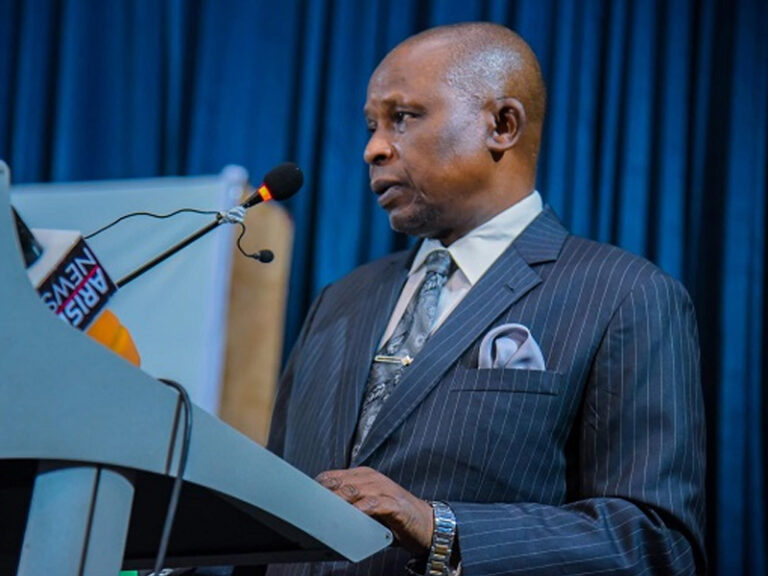
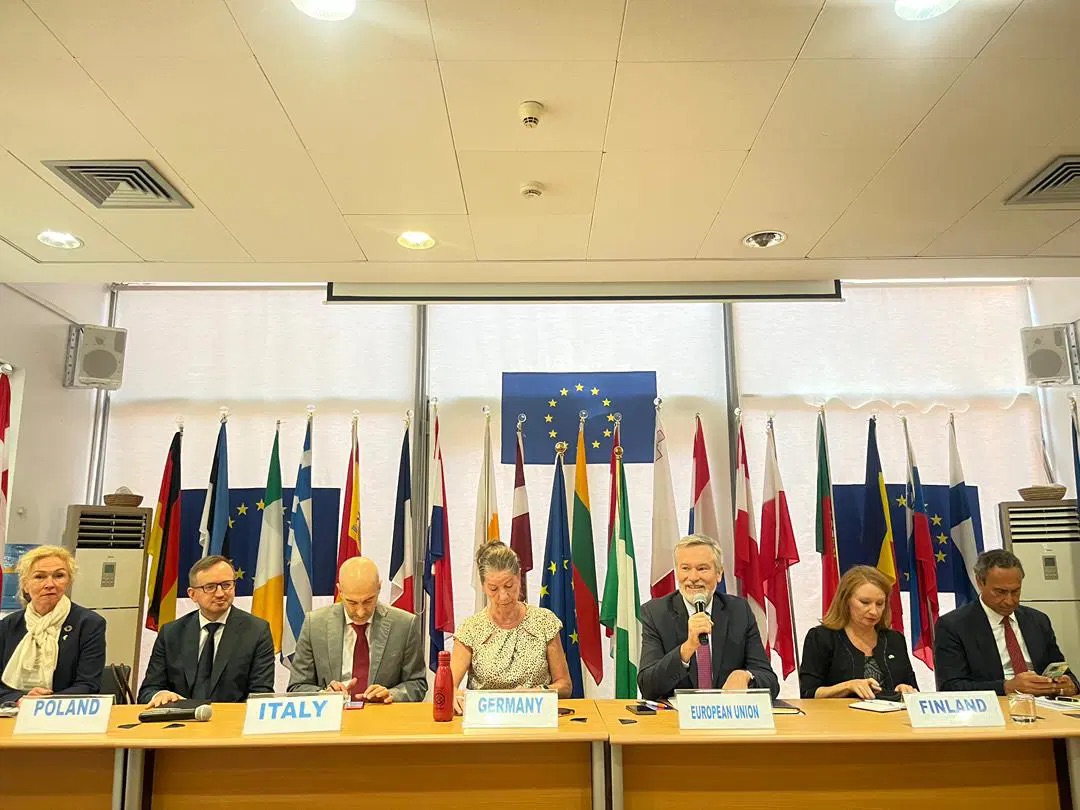
The Head of the European Union Delegation to Nigeria and the Economic Community of West African States (ECOWAS), Gautier Mignot, extended the sympathies during an end of year media parley with journalists in Abuja, alongside EU envoys to Nigeria.
EU ambassadors present at the media parley were those of the Czech Republic, Sweden, Poland, Italy, Germany, Finland, France, and Portugal.
Mignot, while answering questions on the EU’s security cooperation with Nigeria, said: “In terms of insecurity in particular, what I want to stress is that, first and foremost, our thoughts and our sympathy goes out to the victims. In particular, I am thinking of the victims of the abducted children in Niger State, who are still being held hostage and we share the anguish of the families of the parents and we also share the pain and the anguish of victims of other attacks in recent days in other regions of Nigeria.” Mignot however said what the EU is doing was to understand the complexity of the problem because there are many drivers for insecurity in Nigeria.
According to the EU envoy, “religion is certainly one of them, it is not the only one; there are many more.
“Of course, freedom of religion is very important and we also always condemn attacks again on places of worship in particular, but it is not the only dimension of insecurity and violence in Nigeria and I think it is very important to recognise this.”
Mignot further said what the EU is doing is to give support across the board such as supporting the victims, particularly in Benue State; support peace-building initiatives across the country. “We recently launched a new project in Katsina State for instance, and we are going to Zamfara soon because part of this project is also covering Zamfara State,” Mignot stated. He added that part of the support was demobilisation, deradicalization and reintegration programmes for members of non-state arms groups, including support to the Nigerian security forces, both on the kinetic and non kinetic dimension. “We are giving a sizable support to the Multinational Joint Task Force around Lake Chad,” the EU envoy also said.
Earlier, Mignot said the EU’s vision of Nigeria as a partner was based on many assessments and exchanges with all kinds of stakeholders and many field visits.
He said in less than one year, he had been in 16 different states from the six geopolitical zones and some of the visits were made jointly with some of member states colleagues, like in Sokoto last May, saying that the EU team has covered almost all of the rest of the states this year.
Mignot further said it was important to have a holistic and balanced vision of Nigeria, with its assets and its liabilities.
“Nigeria is a country facing serious, complex and interlinked challenges but at the same time, it is a country with great potential and some very positive trends. As far as challenges are concerned, and to name just a few, the spotlight has been very much on insecurity lately and for good reasons, but there are others like poverty and social inequalities.
“We have been also insisting very much on the need to urgently tackle with humanitarian and life-saving assistance the malnutrition crisis affecting particularly hundreds of thousands of children in Northwest and Northeast. But, we also see success and promising development on the macroeconomic front, in the digital sector to mention just one example, and with an incredible entrepreneurial spirit all over Nigeria. The Federal Government and many state governments we have met are very much trying to encourage this and build upon this entrepreneurial spirit to accelerate growth and sustainable development for all,” he added.
Also speaking, the German Ambassador to Nigeria, Annett Günther, said in the security sector, the German government is engaged particularly in the Northeast and in the Northwest in the Regional Stabilization Facility for the Lake Chad Region where Germany as the biggest donor, has contributed over the last few years, more than 120 million euro.
Günther also said out of the total sum, about 100 million euros were utilized for stabilization measures in the Northeast and in the BAY states.