Follow Us on Google
- Rejects claims of religious genocide in Nigeria
From Aidoghie Paulinus, Abuja
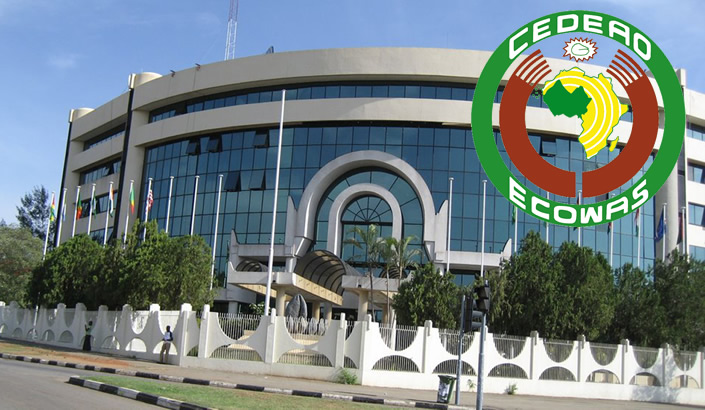
The Economic Community of West African States (ECOWAS) has told the international community that terrorist attacks in the sub-region were not targeted at a particular religion, but people of different faiths and religions.
The ECOWAS Commission, in a veiled response to the ongoing controversy over genocide against Christians in Nigeria and the threat by the United States President, Donald Trump’s military invasion of Nigeria, said perpetrators of the violence target innocent civilians of all religious denominations, including Muslims, Christians and adherents of other religions.
It further said terrorist-related violence does not discriminate on the basis of gender, religion, ethnicity or age.
“The Economic Community of West African States (ECOWAS) wishes to draw the attention of its partners and the international community as a whole to the growing level of violence that terrorist groups of different coloration have perpetrated in some countries in the West African region, including Nigeria.
“Perpetrators of this violence target innocent civilians of all religious denominations, including Muslims, Christians and adherents of other religions. As independent reports have confirmed over the years, terrorist-related violence does not discriminate on the basis of gender, religion, ethnicity or age,” ECOWAS said.
The regional economic body, however, called on the United Nations and all its partners to support member states in the fight against terrorists groups and to treat as false, any claims that the terrorist groups target one group, or that there is a genocide of one religious group in the region.
“ECOWAS strongly rejects these false and dangerous claims that seek to deepen insecurity in communities and weaken social cohesion in the region.
“ECOWAS calls on the whole world to stand by the countries in the region in their fight against terrorism that targets all communities,” it stated.
…Religion only one factor – EU
Meanwhile, the European Union (EU) has said that religion is just one of the factors behind the violence in Nigeria.
The EU Spokesperson for Foreign Affairs and Security, Anouar El Anouni, while responding to a question about Donald Trump’s recent remarks on Nigeria, said when it comes to Nigeria, the EU has taken note of the statements made by the American administration.
Anouni also said the EU expressed its solidarity with all the communities and families affected by the violence, including the recent large-scale attacks in the southern belt of Nigeria and in the North East.
He said: “The EU reaffirms its commitment to freedom of religion and belief, and to the protection of all communities, especially to minorities and we underline our commitment to the peaceful coexistence of the Nigerian population beyond geographical, ethnic, political or religious differences. We recognise the many factors behind the violence in Nigeria. Let us note that religion is only one of these factors, and only in certain instances.”
He further said the European Union cooperates with competent Nigerian authorities and implements multifaceted support in Nigeria to prevent violence, encourage the consolidation of peace and assist the victims of violence and forced displacement.
…Tinubu unshaken, rejects bias narratives, emphasises national unity, religious freedom
Other News
From Juliana Taiwo-Obalonye, Abuja
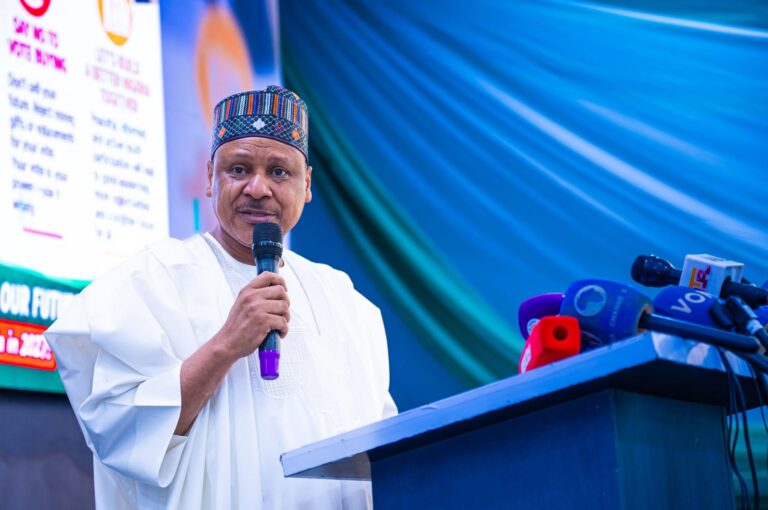
However, President Bola Tinubu has remained calm, unshaken and focused amid allegations by President Trump suggesting religious persecution and threat of military intervention in the country. The President’s stance was revealed by the Minister of Information and National Orientation, Mohammed Idris.
He stated this while briefing State House Correspondents after his routine briefing about President Tinubbu rejecting claims that the government shows bias or intolerance toward any religious group.
Idris revealed that the US threat was discussed in detail and that the Nigerian government was taking deliberate steps to correct the narrative.
He described Nigeria as a diverse, faith-inclusive nation where the constitution guarantees freedom of worship for all and where the presidency actively works to uphold that principle.
He asserted that the administration was engaged in proactive dialogue to quell misperceptions and to reinforce national unity. “It is a routine that we always have with Mr President and as the Minister of Information, I need to consult with Mr President from time to time, and this is exactly what we have done,” he stated.
He added that the President was calm and focused on ensuring that the international community understands Nigeria’s actions and commitments.
“Mr. President is calm. He’s looking at the whole situation and exploring ways to ensure that the international community understands what Nigeria has been doing,” he said.
Responding to external concerns, Idris stressed that the government had not singled out any faith as a target. He pointed to recent security and governance measures as evidence of a balanced approach designed to protect all Nigerians, regardless of religious affiliation. “What has happened is that we have these extremists that are driving this narrative and their desired outcome is to see that this country is divided,” he cautioned, highlighting that the country’s leadership rejects division and rhetoric that threaten unity.
The minister drew a clear line between extremism and legitimate religious practice, stating, “Nigeria has Muslims and Christians and even those who do not believe in either of the two religions and our constitution guarantees that everyone should practise his or her faith without hindrance and Mr President is going to respect that to the letter.”
He underscored that the government’s aim was to rid the country of criminal elements while preserving religious liberty and social cohesion.
He attributed misinformation to a subset of actors spreading a divisive narrative and called on Nigerians to focus on shared ideals. He urged citizens to reflect on nationhood and unity, describing this moment as an opportunity to strengthen rather than fracture the social fabric. “This is not the time for division, this is not the time for rhetoric,” he said, reiterating the government’s commitment to inclusive governance.
On policy actions, he reiterated a multi-layered engagement strategy that includes continuous dialogue with religious leadership and ongoing international outreach.
He noted: “Discussions with the leadership of religious groups is an ongoing effort. Mr President has been meeting with them and he will continue to do so, framing these conversations as essential to maintaining trust and collaboration across communities.”
The minister also stressed that Nigeria engages with the international community beyond the United States, including regional and continental bodies, to explain Nigeria’s approach to security and governance.
He described these efforts as essential to counter mischaracterization and to demonstrate Nigeria’s dedication to rule of law and constitutional rights for all.
He concluded by reinforcing the President’s steady approach to governance, stressing that Mr President was calm and taking the matter seriously, with all relevant institutions bearing responsibility and depth in their analysis.
He expressed confidence that the nation would emerge stronger from the current challenges and reiterated the administration’s commitment to a Nigeria, where every citizen can live without fear of discrimination or coercion.