Follow Us on Google
By Uche Usim
The resurgence of banditry and terror attacks, especially in the North East and North West regions of Nigeria, is giving parents and wards sleepless nights.
More worrisome is the fact the federal government’s Safe Schools Initiative, hitherto touted to be a reliable insulation from attacks and abduction of vulnerable pupils, has fallen frighteningly short of delivering on its core promise.
Last year, the Minister of Women Affairs and Social Development, Imaan Suleiman-Ibrahim, announced that the federal government allocated N112 billion through the National Plan for Financing Safe Schools to safeguard learning environments over the next three years.
“Through the National Plan for Financing Safe Schools, over N112 billion has been allocated to safeguard learning environments over the next three years.
“This ensures that schools remain safe and inclusive spaces for all children, regardless of background or circumstance,” she disclosed.
However, with the resurgence of terror, parents and students are taking her story with a pinch of salt.
Between 2014 and 2024, there have been scores of documented school-attack incidents across Nigeria, resulting in approximately 2,496 students kidnapped (in the verified cases), though analysts believe the real figure may be considerably higher, as many attacks, especially in remote areas, go unreported.
Beyond students, school staff have also been targeted in several attacks.
The horror started with the abduction of 276 Chibok Schoolgirls in Borno State on April 14, 2014. Since then, it has spread but predominantly in the northern part of the country where Boko Haram terrorists and other feared groups reside. They had vowed to stamp out western education from the country.
On May 25, 2017, six students of Igbonla Model College, Epe, Lagos, were kidnapped and later released after ransom payment.
On February, 19, 2018, 110 students from Government Girls’ Science & Technical College, Dapchi, Yobe State, were abducted.
On December 11, 2020 over 300 boys were kidnapped at Government Science Secondary School, Kankara, Katsina State.
Other News
The wave intensified in February 2021 when gunmen attacked Government Science College, Kagara in Niger State on February 17, abducting 27 students along with several staff members. Just nine days later, the nation was shaken again as bandits stormed the Government Girls Science Secondary School in Jangebe, Zamfara State, and kidnapped between 279 and 317 girls on February 26.
Barely weeks passed before another assault: on March 11, 2021, 39 students, 23 females and 16 males, were seized from the Federal College of Forestry Mechanization, Afaka in Kaduna State.
The violence spread further on April 20, when about 20 students were abducted from Greenfield University, also in Kaduna, an attack that caused widespread national outrage.
The year continued to record mass abductions. On May 30, around 200 pupils were kidnapped from an Islamic school in Tegina, Niger State, followed by the abduction of 11 students from a school in Yauri, Kebbi State on June 17. The violence peaked on July 5 at Bethel Baptist High School in Chikun, Kaduna State, where more than 120 students were taken in one of the year’s largest attacks.
After a temporary lull, the kidnappings resurfaced with alarming force in 2024.
On March 7, nearly 287 students were abducted from the LEA Primary and Secondary School in Kuriga, Kaduna State. Two days later, about 15 pupils were taken from a Tsangaya Islamic school in Gidan Bakuso, Sokoto State, highlighting how widespread the threat had become.
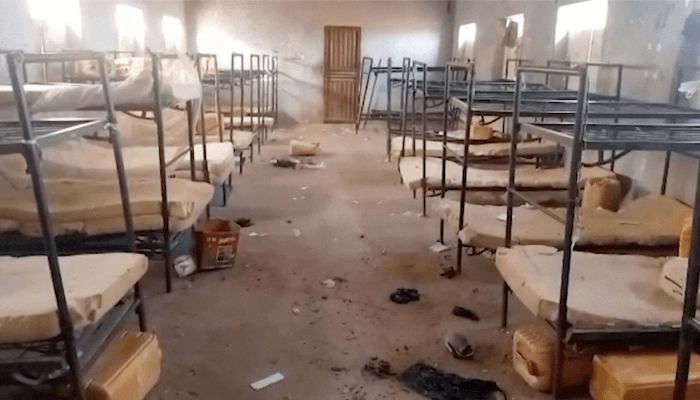
The trend continued into 2025. On November 17, 25 students were seized from Government Girls Secondary School, Maga in Kebbi State. Four days later, on November 21, gunmen struck St. Mary’s School in Papiri, Niger State, abducting 303 students and 12 staff members, a combined total of roughly 315 people. It stands as one of the largest school kidnappings ever recorded in Nigeria.
The ugly development is deterring parents from sending their wards to school and forcing many learning centers to shut down abruptly, a situation experts insist is a deceleration in the nation’s momentum to build its future manpower stock.
On the other hand the lax security system is bolstering the terrorists’ confidence to sustain the attacks and flaunt them as both the aggressor and victor.
Meanwhile, the Minister of Women Affairs and Social Development, Imaan Suleiman-Ibrahim, lauded the enforcement of the Violence Against Persons Prohibition (VAPP) Act, noting that it has strengthened policies designed to shield children from violence and abuse.
According to her, the legislation has become a crucial tool in reinforcing child-protection systems and safeguarding the welfare of young Nigerians.
The Minister explained that these measures mark meaningful progress toward building a safer and more inclusive environment for children, with an emphasis on long-term, sustainable improvements in their lives and futures.
She added that the initiative reflects the government’s sustained commitment to upholding children’s rights and prioritising their safety, an essential step in advancing national development goals for the next generation.