Follow Us on Google
From Molly Kilete, Abuja.
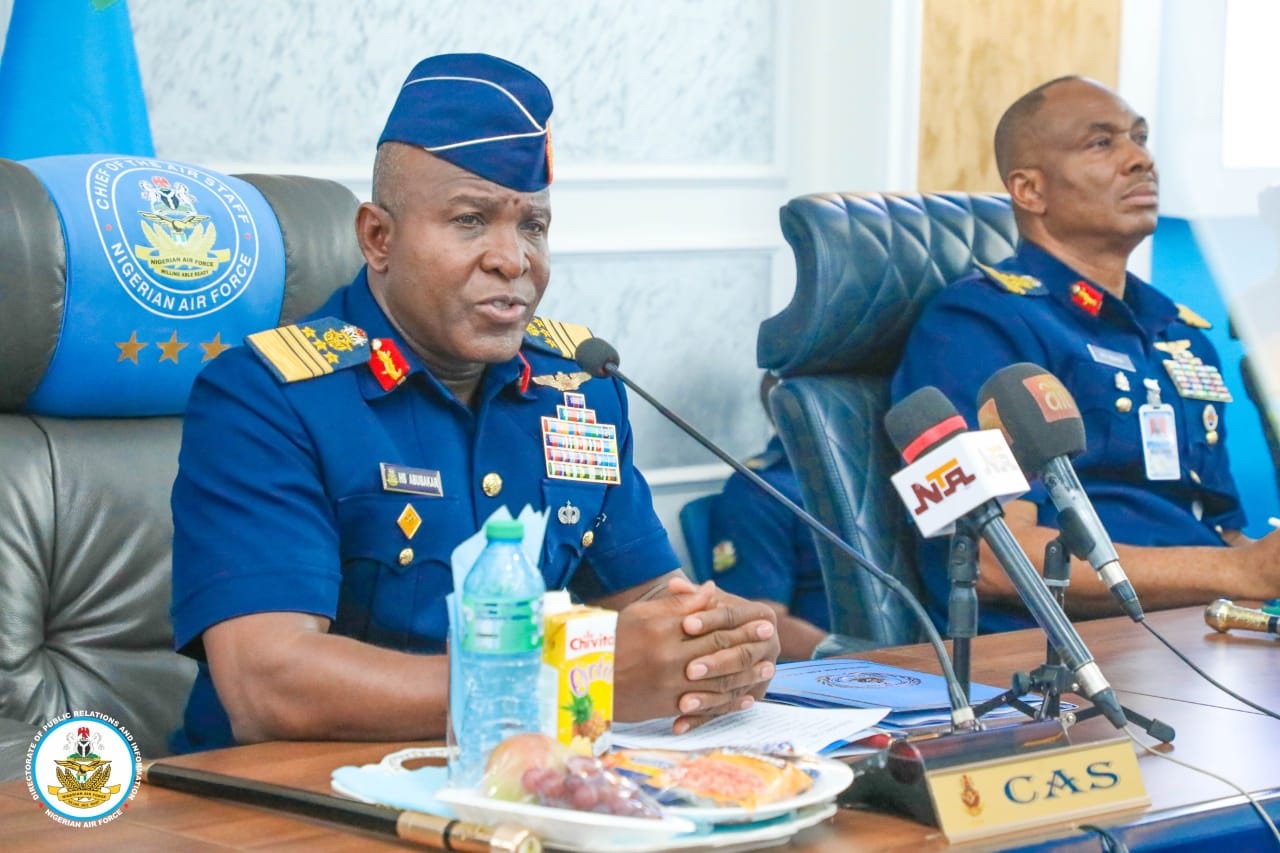
The Chief of Air Staff (CAS), Air Marshall Hassan Abubakar, yesterday said that the exit of Burkina Faso, Niger and Mali from the Economic Countries of West Africans States(ECOWAS), has increased the responsibility of the Armed Forces of Nigeria, in its ongoing counter insurgency war.
Abubakar, said that the recent withdrawal of the Alliance of Sahel States (AES) from the existing security frameworks had disrupted the already existing security frameworks in the sub-region.
The NAF chief who made this known at the opening of the first Quarter meeting with branch Chiefs’, Air Officers Commanding and Commanders of the various units and commands of the NAF, held in Abuja.
Abubakar, said their exit has direct implications for the Multinational Joint Task Force (MNJTF), which plays a crucial role in countering Boko Haram and ISWAP across Nigeria, Niger, Chad, and Cameroon.
He said:“With AES member states opting out and Chad considering withdrawal, the MNJTF’s capacity to conduct joint operations is now significantly affected.
Other News
“As a result, the burden on the Armed Forces of Nigeria to support the MNJTF will increase, demanding a more robust, agile, and adaptive response from the Nigerian Air Force (NAF).
“Strengthening operational readiness, enhancing inter-agency coordination, and leveraging advanced air power will be critical in mitigating these evolving threats as we progress through 2025,”.
Abubakar, while noting that the Sahel region had continued to be a focal point for terrorism and insurgency, with Al-Qaeda-affiliated extremist groups exploiting weak governance structures to expand their influence, said the porous borders in the Lake Chad Basin, had also allowed the extremist elements to sustain their activities, posing a persistent threat to regional stability.
According to him, the Gulf of Guinea also remained vulnerable to maritime crimes, including piracy and illegal oil bunkering, necessitating sustained aerial surveillance and stronger regional cooperation to bolster maritime security.
To stop the menace, according to him, requires a unified approach, emphasising coordinated air operations, intelligence sharing, and strategic partnerships.
He said the meeting is aimed at reviewing the security landscape of Nigeria in 2024, critically to assess their operational successes and challenges, and project actionable strategies for the NAF operations in 2025, and charged participants to engage in meaningful discussions with the utmost commitment, foresight, and resolve.
“As the senior leadership of the NAF, we shoulder the vital responsibility of ensuring the effective deployment of air power in support of national security objectives”.