Follow Us on Google
•Economists, industrialists, maritime operators set agenda for Oyedele
•He should tackle high cost of living, strengthen fiscal discipline, reduce debt profile, address budget cycle – Policy analysts
•High Customs duty, cost of doing business must be addressed – Importers
•His reforms must address challenges of SMEs, manufacturing – Industrialists
From Adanna Nnamani (Abuja), Steve Agbota (Lagos) and Merit Ibe (Lagos)
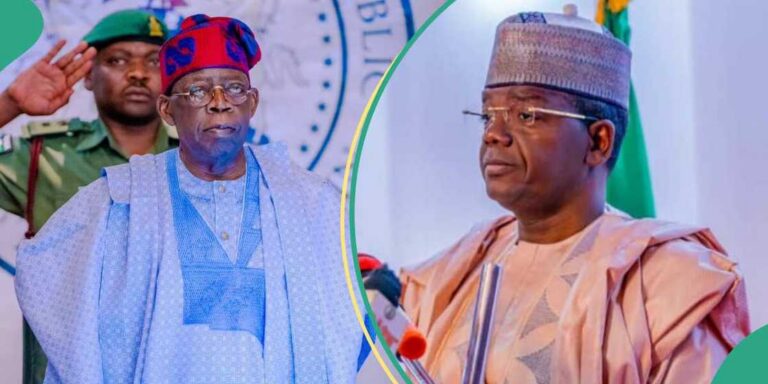
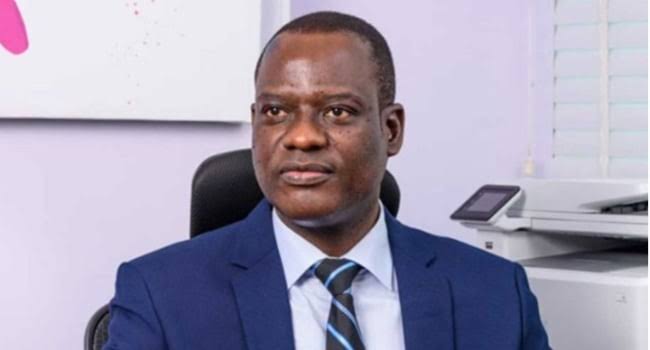
The appointment of Taiwo Oyedele as Nigeria’s new finance minister has raised expectations among economists, policy analysts, and key industry players who say urgent reforms are needed to stabilise the economy, manage rising debt, and ease cost of living pressures.
Oyedele takes over from Wale Edun, whose tenure drew mixed reactions. While some analysts credit him with initiating key reforms, others argue that some of the policies President Bola Tinubu’s administration introduced under his watch worsened inflation and deepened poverty.
While Oyedele’s appointment has generated cautious optimism in some quarters due to his strong background in tax reform, concerns mount over structural barriers such as poor infrastructure, unreliable power supply, insecurity, and weak policy execution.
Economic experts, policy analysts outline areas of concern
Executive Chairman of the Foundation for Economic Research and Training, Akpan Ekpo, a professor of economics, said the new minister must urgently strengthen fiscal discipline, reduce deficits, and build buffers to protect the economy from external shocks.
He warned that the country’s rising debt profile and high cost of governance pose serious risks to long-term stability, stressing the need for tighter coordination across all tiers of government.
Ekpo also highlighted delays in budget implementation as a recurring weakness that undermines investor confidence and slows economic growth, noting that capital spending must be prioritised over recurrent expenditure.
He said: “The new minister should ensure that we try to have fiscal buffers so that we can absorb any shock that goes on. He should reduce the deficit because Nigeria has been experiencing fiscal deficits over the years. If you look at our expenditures, the cost of governance is very high, and our debt profile is becoming alarming and disturbing. We are borrowing too much externally without clarity on how productive those borrowings are. We are not even sure whether some of these debts are tied to real infrastructure or just consumption. That is why fiscal consolidation is important.
“He must also work closely with states and local governments so that their fiscal operations do not overwhelm the centre. On the budget cycle, delay is a big problem. When the budget is not passed on time, it affects investor confidence and market stability. We are practically running multiple budgets at the same time, and that is not healthy. What matters most is timely release of capital expenditure because that is what drives growth, not recurrent spending.”
Also speaking, Economic and Development Expert, Aliyu Ilias, said the new minister has wide fiscal influence to improve efficiency in trade, strengthen transparency, and reduce the cost of living.
He urged reforms in import duties and faster implementation of the National Single Window system to reduce trade bottlenecks and lower business costs.
He also recommended policy continuity, arguing that positive reforms should be sustained while ineffective ones are scrapped, just as transparency in revenue allocation remains critical to public trust and accountability.
On inflation, he listed interest rates, supply chain inefficiencies, and transport costs as major drivers of hardship, urging coordinated interventions, including wider adoption of CNG.
He said: “Inasmuch as the fiscal part of Nigeria is under his purview, he has a lot of things to control. He can actually use his office to reduce bottlenecks in the economy. For instance, import duties are too expensive, and something needs to be done to make them more efficient and less burdensome on businesses.
“He should also ensure the National Single Window is fully functional so that importation and exportation processes become faster and cheaper. On policy continuity, I think the last minister initiated a number of reforms. The new minister should carefully study them; retain the ones that are working and remove those that are not effective.
“There is also a need for transparency. Every allocation should be published and made accessible so people can track what is going to federal, state, and local governments. That level of openness builds trust. On cost of living, we must address interest rates, supply chains, and transportation costs. If we improve logistics and encourage the use of CNG, transportation costs will reduce significantly. Government can even support adoption by making CNG kits more accessible to reduce dependence on petrol.”
On the other hand, the Nigeria Labour Congress (NLC) urged caution in setting expectations for the new finance minister, stressing that his role is largely to implement existing government economic policies rather than introduce a fresh direction.
Maritime operators list high Customs duty, cost of doing business as tasks before finance minister
Shippers, comprising importers, exporters, and other stakeholders in the nation’s maritime sector, have outlined Customs duty, unstable foreign exchange, high cost of doing business as some of the challenges before the new Minister of Finance.
The stakeholders also highlighted their expectations from the minister as he takes over the leadership position.
Some importers who spoke to Saturday Sun believe that some of the policies made under the former minister failed to achieve positive results, especially in the importation of essential items.
They lamented high Customs duties, and the inability of genuine importers to access foreign exchange to bring in goods.
The importers made reference to a 6-month, 150-day duty-free import window for essential food items in July 2024 to reduce high food inflation, which was announced by the Federal Government. The initiative faced significant delays due to bureaucratic bottlenecks within the Ministry of Finance, which failed to promptly provide the Nigeria Customs Service (NCS) with the necessary list of importers.
Felix Kingsley, an importer, said that the first thing the minister should do is to organise a stakeholders meeting where all the importers of various items and clearing agents in the maritime industry will discuss how to improve import and export trade in the country.
“Stakeholder engagement is very important for him to succeed. But if he decides to take the way of the former minister, we are here to count his failures and rub it in his face.
“The problem we are facing today is that policymakers don’t engage the real people who are in the systems when formulating policies. We are the ones on the field. We are the ones who know where the shoes pinch. You need to carry us along.
“He must look for a way to bring down Customs duty. The duty we are paying on our consignment is far too high compared to what our counterparts pay in Ghana, the Benin Republic, and Togo,” he said.
He urged the minister to reintroduce the 6-month, 150-day duty-free import window for essential food items.
A former President of the Shippers Association of Lagos State (SALS), Rev. Jonathan Nicol, said that at some points, the federal government showed interest in reviewing Customs duty on so many items, and that ought to bring some kind of relief to citizens if those goods arrive in Nigeria and are cleared.
Other News
“We expect the new minister to bring down the costs of doing business in Nigeria. Furthermore, the finance ministry should encourage the government to further reduce the costs of food items for Nigerians because some of these items are difficult to come by.
Prince Ajibola Adedoyin, National President of the Association of Motor Dealers of Nigeria (AMDON), said with reference to the import of vehicles, importers have been demanding that the government bring down the duty and tariffs on imported vehicles.
He urged the finance minister to look at the issues surrounding Customs valuation for imported vehicles and perfect it to boost the automotive sector in Nigeria.
The importer also called on the minister to remove the human factor from the valuation of vehicles, saying that once Customs has the price of the vehicle as it is, they should be able to compute it and give the exact price to the importer.
Finance Minister’s reforms must address SMEs, manufacturing challenges – Industrialists
Beyond stabilising Nigeria’s macroeconomic environment, stakeholders in the industrial sector say the real test for the new Minister of Finance will be how his policies impact small and medium-sized enterprises (SMEs) and the manufacturing sector.
The minister is expected to streamline Nigeria’s tax system by harmonising levies across federal, state, and local governments. Simplifying tax procedures and introducing digital filing systems could reduce compliance costs and allow small businesses to focus on growth rather than bureaucracy.
Access to finance remains a major hurdle for SMEs. Experts suggest that targeted tax incentives, such as reduced corporate tax rates for small businesses and credits for reinvested profits, could improve cash flow and encourage expansion. Additionally, formalising more businesses through simplified tax regimes may widen the tax net without overburdening existing taxpayers.
Importers, on the other hand, continue to struggle with high duties, foreign exchange volatility, and port inefficiencies. Analysts argue that Oyedele’s reforms could include rationalising import duties, eliminating overlapping charges, and improving transparency in customs processes. These measures, they say, would reduce the cost of bringing goods into the country and stabilise supply chains.
For manufacturers, the stakes are even higher. Nigeria’s manufacturing sector has long been constrained by high production costs, driven by expensive imports of raw materials, energy challenges, and inconsistent policies. By offering tax relief on essential raw materials and machinery, as well as incentives for local production, the government could boost industrial output. There are also calls for policies that encourage backward integration—supporting local sourcing of inputs to reduce dependence on imports.
Beyond sector-specific interventions, Oyedele’s broader fiscal reforms could enhance investor confidence. A predictable and transparent tax environment would attract both local and foreign investments, fostering job creation and economic diversification.
Analysts caution that policy design alone is not enough. Effective implementation, inter-agency coordination, and political will are critical to ensuring that reforms translate into tangible benefits for businesses.
Daniel Dickson-Okezie, an SMEs expert and member of the Lagos Chamber of Commerce and Industry (LCCI), says Oyedele assumed office as Finance Minister at a time Nigeria is facing difficult economic conditions. He noted that the country’s major challenges include a deepening fiscal crisis driven by rising debt servicing costs, which continue to strain government revenue and limit fiscal flexibility.
According to him, Oyedele is expected to prioritise expanding the revenue base by bringing more individuals and businesses into the tax net and improving tax collection efficiency. Other urgent priorities include stabilising the foreign exchange market, addressing persistent inflation, and restoring investor confidence and economic predictability.
Dickson-Okezie also stressed the need for stronger focus on economic diversification away from oil dependence, with greater support for agriculture, manufacturing, and technology. He highlighted the importance of reducing waste in government spending, improving budget implementation, and resolving long-standing concerns about transparency and inefficiency in Nigeria’s capital budget system.
He added that once key macroeconomic issues are addressed, attention must shift toward production and enterprise support. Proposed measures include tax incentives such as tax holidays for manufacturers dependent on imported raw materials, as well as improved access to affordable finance for SMEs and manufacturers to support expansion, job creation, and competitiveness.
Nigeria’s ongoing shift from import dependence to local production requires strong policy continuity, sustained reforms, and deeper private sector participation, according to David Etim, Project Lead, Calabar and Gulf of Guinea Municipal and Trade Centre.
Etim noted that recent economic reforms, largely driven under the fiscal coordination of Wale Edun and monetary adjustments under Olayemi Cardoso, are aimed at building a stronger domestic production base across manufacturing, agriculture, and industry.
He noted that the responsibility of the new Minister of Finance is not necessarily to reinvent the economic direction, but to stay the course and strengthen it, warning that policy continuity is essential.
He explained that policies on taxation, regulation, and ease of doing business are part of a broader effort to strengthen Nigeria’s production ecosystem rather than isolated interventions.
According to him, taxation is only one component of competitiveness, with access to finance, infrastructure, regulatory efficiency, and access to justice playing equally critical roles. He added that recent foreign exchange reforms and subsidy removal under President Bola Tinubu have made imports more expensive, pushing businesses toward local alternatives and supporting early gains in sectors such as cassava processing and fertiliser production. However, he stressed that the transition remains gradual, with experts estimating a full shift to local production could take five to ten years.
NLC urges caution, raises alarm over budgeting process
NLC spokesperson, Benson Upah, said the minister’s mandate is already defined within the broader market reform agenda of the current administration, leaving little room for independent policy shifts.
He noted that the responsibility for the country’s economic direction lies primarily with the government that appointed the minister, and not the officeholder himself.
Upah maintained that no fundamentally new direction should be anticipated.
“We have no new expectations. The minister is an appointee of this government mandated to implement its market reform agenda. He has no powers to alter the trajectory,” the labour leader said, insisting that such concerns should be directed to the presidency, which remains the ultimate decision-making authority on fiscal direction.
On Nigeria’s budget cycle, Upah described it as ineffective and largely ceremonial. He argued that persistent implementation failures, including alleged padding, diversion of funds, and non-execution of approved projects, have weakened the credibility of the national budgeting process.
He further expressed concern over what he described as contradictory fiscal behaviour, where the government continues to borrow heavily to finance budgets, yet Ministries, Departments and Agencies (MDAs) still struggle to access allocated funds.
According to him, “The budget cycle has been a mere ritual that delivers nothing. The offenses should be criminalised, they are legion, from padding to diversion, withholding, and knowing full well in advance it would not be implemented. Much more worrisome is the continuous borrowing to fund the budget yet MDAs are not funded.”
On efforts to reduce the cost of living, he said such outcomes were possible but questioned the political will to implement necessary reforms, suggesting the minister may be aligned with tough revenue-focused policymakers within government.