Follow Us on Google
By Lukman Olabiyi
For millions of Nigerian families, rice is more than a meal. It is breakfast, lunch or dinner; a companion at celebrations and ceremonies and, for many households, one of the few food staples that can stretch across several plates when money is tight.
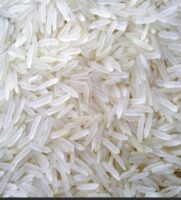
But behind the popularity of the grain lies a nutritional paradox. A plate of rice may fill the stomach without necessarily providing all the vitamins and minerals the body needs to grow, work and remain healthy.
This is where rice fortification is attracting growing attention from nutrition experts, food regulators, development organisations and other stakeholders as a possible weapon against Nigeria’s persistent micronutrient deficiencies.
Rather than asking Nigerians to abandon a familiar staple or dramatically change their eating habits, fortification seeks to add essential vitamins and minerals to a food staple already consumed by large sections of the population.
Stakeholders advocating the initiative believe that this simple approach could provide an important nutritional boost, particularly for vulnerable populations, if properly implemented and supported by sustained public awareness.
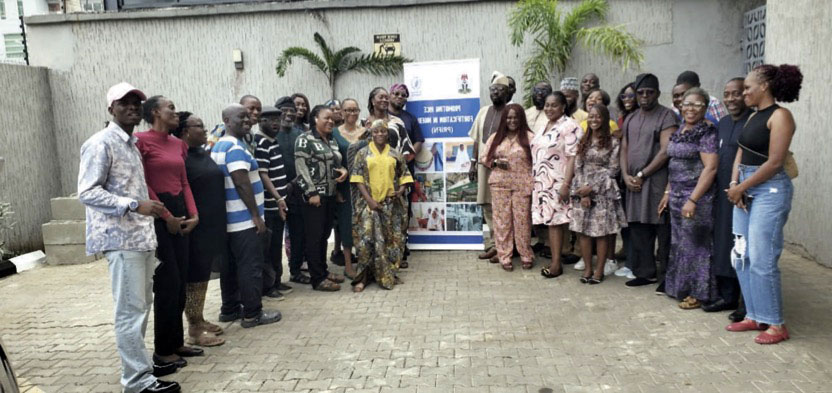
At a media training on rice fortification organised by the United Nations World Food Programme (WFP) and TechnoServe in Ikeja, Lagos, stakeholders stressed that public understanding would be critical to the success of the initiative.
The training was designed to equip journalists with the knowledge required to report accurately on fortified rice and help Nigerians understand what it is, why it matters and whether it is safe.
The urgency is underscored by Nigeria’s continuing nutrition challenges.
Robert Irimat, Food Safety and Quality Officer at WFP, said malnutrition remains a major public health concern in the country. According to him, approximately 33 per cent of Nigerian children under five are affected by stunting, while 49 per cent of women of childbearing age suffer from anaemia.
Behind such statistics are children whose physical and cognitive development may be compromised, women struggling with the consequences of iron deficiency, and families confronting nutritional deficiencies that may not always be visible.
Micronutrient deficiencies are often described as “hidden hunger” because a person may consume enough food to feel full while still lacking essential nutrients such as iron, folic acid, vitamin A, zinc and other micronutrients.
It is this hidden dimension of malnutrition that makes fortification particularly important. The principle behind rice fortification is relatively straightforward. Rice that people already consume can be fortified with essential vitamins and minerals, providing additional nutrients without requiring consumers to completely change their eating habits.
Irimat explained that because rice is widely consumed in Nigeria, fortification presents an opportunity to improve dietary intake through a familiar staple.
The attraction is obvious: instead of waiting for every Nigerian to acquire the knowledge, income and opportunity to consistently consume a diverse diet, fortification can use an existing food system to deliver specific nutrients to a large population.
Seun Elere, Project Manager of the Promoting Rice Fortification in Nigeria Project at TechnoServe, said virtually any type of rice could be fortified, depending on the technology and process used. This means fortification is not necessarily about replacing the rice Nigerians know with a strange or entirely different product.
Rather, it is about improving the nutritional value of a food that is already deeply embedded in the country’s food culture. For some consumers, the word “fortified” may immediately raise questions.
Will it taste different? Will it look different? Is it safe? Will it require special preparation? Could the added nutrients be harmful?
Elere sought to dispel such concerns, assuring consumers that fortified rice is safe and does not require a special cooking method. He said it is not significantly different from the unfortified rice commonly available in the market.
This distinction is important because misinformation can undermine otherwise well-intentioned public-health interventions. If consumers believe fortified rice is artificial, unsafe or difficult to prepare, they may reject it before understanding its potential benefits.
One of the biggest challenges facing rice fortification may therefore not be the technology itself, but public perception. Fortified rice should not be confused with genetically modified rice. Fortification is a process of adding specified vitamins and minerals to food to improve its nutritional value.
Nor does eating fortified rice mean that consumers can abandon other nutritious foods. Fortified rice is not a magic cure for malnutrition. It is a complementary intervention.
Other News
A balanced diet remains essential. Nigerians still need vegetables, fruits, legumes, animal-source foods and other nutritious foods where available. The strength of fortification is that it can provide an additional source of selected micronutrients through a staple that people already eat.
There is also no basis for assuming that fortified rice requires a completely different cooking culture. According to stakeholders at the training, consumers can prepare it without adopting a special cooking method.
These facts, however, must reach consumers in the language they understand. For a food-based intervention to earn public confidence, safety and quality cannot be treated as afterthoughts.
Nnenne Obianwu, Deputy Director and Head of the Food and Agriculture Group of the Standards Development Department of the Standards Organisation of Nigeria (SON), explained that the agency has a responsibility to establish and promote standards while ensuring their implementation. The objective, she said, includes quality assurance, consumer safety, consumer protection and fair trade.
Obianwu disclosed that SON worked with relevant stakeholders, including academics, industry representatives, rice millers, the National Agency for Food and Drug Administration and Control (NAFDAC), the Institute of Public Analysts of Nigeria (IPAN), the Federal Institute of Industrial Research, Oshodi (FIIRO), other government agencies and experts in developing standards for fortified rice.
Following the development of a Code of Practice, she said, the next stage was the development of the standard for Fortified Rice Kernel (FRK).
The regulatory framework matters because Nigerians need more than assurances that fortified rice is beneficial. They need confidence that what reaches the market meets established safety and quality requirements.
The strongest argument for rice fortification is perhaps its reach. Nutrition interventions often struggle when they depend entirely on individuals changing long-established eating habits. But when a nutrient can be delivered through a commonly consumed staple, the possibility of reaching large numbers of people increases.
For children, adequate intake of essential micronutrients is critical for healthy growth and development.
For women of reproductive age, preventing and addressing micronutrient deficiencies, particularly iron deficiency, can have important implications for health and well-being.
For the wider population, better nutrition can contribute to healthier lives and improved human capacity.
Rice fortification therefore sits at the intersection of food, health and development. It is not merely about adding nutrients to grains. It is about asking how Nigeria can use its existing food systems to confront a problem that continues to affect millions.
But there is another ingredient the initiative needs: information.
Stakeholders at the Lagos training urged journalists to play a greater role in educating the public, correcting misconceptions and ensuring that reporting on rice fortification is accurate and evidence-based.
According to the stakeholders, poor reporting can create unnecessary fear. Sensational headlines can transform legitimate questions about food safety into public distrust.
Conversely, responsible journalism can explain complicated nutritional science in ways that ordinary consumers can understand. The media can also ask the difficult questions: Are the standards being enforced? Are fortified products reaching consumers? Are vulnerable populations benefiting? Are rice millers equipped to participate? How will compliance be monitored? What happens when products fail to meet the required standards?
Public awareness should not mean simply telling Nigerians to eat fortified rice. It should mean giving consumers enough reliable information to understand what they are buying and why it matters.
Malnutrition is shaped by poverty, food insecurity, access to healthcare, sanitation, education, dietary diversity and other social and economic factors. But that does not diminish the potential value of fortification.
Sometimes, public-health progress begins by looking differently at something already sitting on the nation’s dinner table.
Nigeria does not have to invent a completely new food to reach millions of people. It can also explore ways of making familiar foods more nutritious.
For a country where rice is eaten across income groups, age brackets and regions, that possibility is difficult to ignore.
The challenge now is to ensure that fortified rice moves beyond conference rooms, technical standards and policy discussions and becomes properly understood by the people it is intended to benefit.
The message is simple: fortified rice is not a replacement for a balanced diet, and it is not a miracle cure for malnutrition. It is a potentially powerful nutritional tool, one that could help Nigeria tackle hidden hunger through a food already on millions of plates.
What Nigerians need next is not fear or misinformation, but knowledge, credible standards, effective implementation and the confidence to make informed choices.