Follow Us on Google
From Fred Ezeh, Abuja
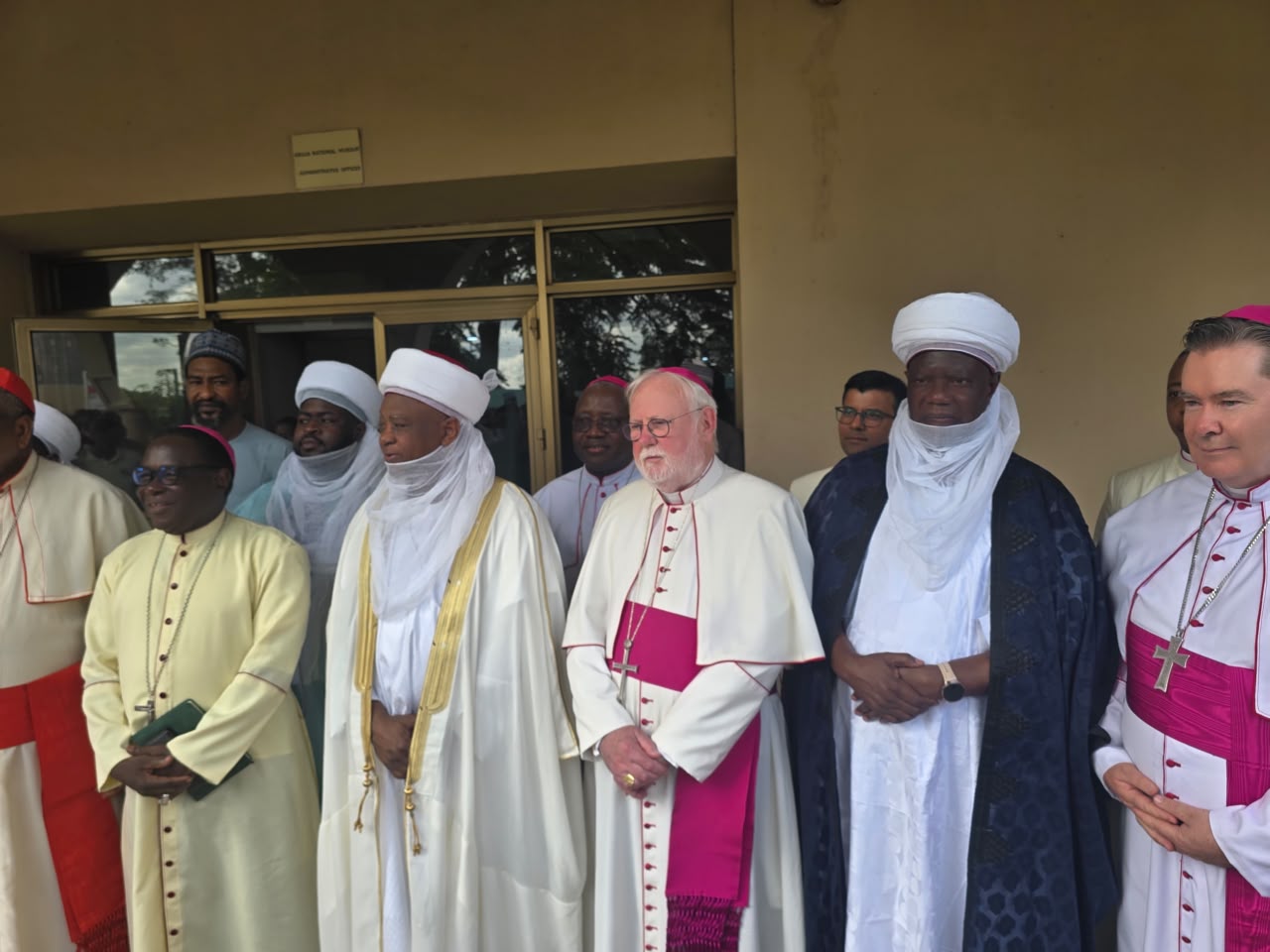
The Sultan of Sokoto and President-General of the Nigerian Supreme Council for Islamic Affairs (NSCIA), His Eminence Muhammadu Sa’ad Abubakar III, and the Vatican’s Secretary for Relations with States and International Organisations, Archbishop Paul Richard Gallagher, have expressed concern over the rising threats of religious intolerance, hate speech, fake news and moral decline in Nigeria and, perhaps, beyond.
They warned that such growing trends could pose serious dangers to Nigeria’s unity and peaceful coexistence.
The two religious leaders made the call during a meeting in Abuja, where they reaffirmed the need for stronger collaboration between Christian and Muslim leaders in promoting peace, mutual respect and national cohesion.
Speaking after the meeting, the Deputy Secretary-General of the NSCIA, Prof. Salisu Shehu, said the visit by Archbishop Gallagher was aimed at strengthening mutual understanding and fostering cooperation among faith communities in promoting peace and improving security in Nigeria and beyond.
He explained that the Vatican envoy, who oversees the Holy See’s diplomatic relations and international engagements, was accompanied by officials from the Vatican and leaders of the Catholic Church in Nigeria.
According to Shehu, the Sultan warmly received the delegation and commended the Catholic community in Nigeria for its commitment to peaceful coexistence and its active participation in interfaith initiatives aimed at strengthening national unity.
He said one of the major concerns raised during the meeting was the growing menace of hate speech, which both leaders identified as a major obstacle to harmonious relations among Nigeria’s religious communities. “Hate speech has been most injurious to peaceful coexistence in the country. It has created perceptual and relational crises among faith communities in Nigeria,” Shehu said.
He noted that both leaders condemned the increasing trend of individuals publicly insulting respected religious leaders, describing such conduct as dangerous and capable of inflaming religious tensions.
“There was a strong call for all religious and faith communities to work together to combat hate speech, especially the growing and unfortunate phenomenon whereby some individuals openly insult religious leaders who are highly respected within their various faith communities.
“There was also a call to ensure that people refrain from insulting not only important religious figures but even ordinary individuals, who equally deserve respect,” he added.
The meeting also highlighted the growing threat posed by fake news, with the religious leaders warning that the spread of false information has continued to fuel tension, mistrust and conflict across the country.
Shehu said both leaders agreed that religious organisations, government institutions and the media must work together to curb misinformation and promote responsible public communication.
The discussions further focused on what the participants described as worsening moral degeneration across the world. “To this end, religious institutions have a responsibility to promote sound moral values and provide ethical guidance capable of reversing the trend.”
They also expressed concern over the growing rejection of religious values among young people, urging greater efforts to strengthen faith formation and moral education within Muslim and Christian communities.
Speaking with journalists after the meeting, Archbishop Gallagher described his discussions with the Sultan as “very frank and illuminating”, adding, “the visit has been very, very good. I was delighted to be invited by His Eminence, the Sultan. We had a very frank and illuminating conversation,” he said.
The Vatican envoy said he was encouraged by the level of agreement between Christian and Muslim leaders on issues affecting peace and national development. “It was good to hear that many of our positions regarding the role of religious leaders, both on the Catholic side and the Muslim side, coincide.
“For me, this is a reason for optimism regarding the religious cohesion of the country and our shared commitment to working for the good of all Nigerians,” he said.
Gallagher added that the meeting reinforced a shared conviction that Christians and Muslims must continue to work together in addressing the country’s challenges. “There is a common view and a common conviction that Christians and Muslims, particularly their leaders, must work together for the common good of all Nigerians,” he said.
The meeting underscored the commitment of the NSCIA and the Vatican to deepening interfaith dialogue and strengthening collaboration in addressing issues that threaten peace, religious harmony and national development.