Follow Us on Google
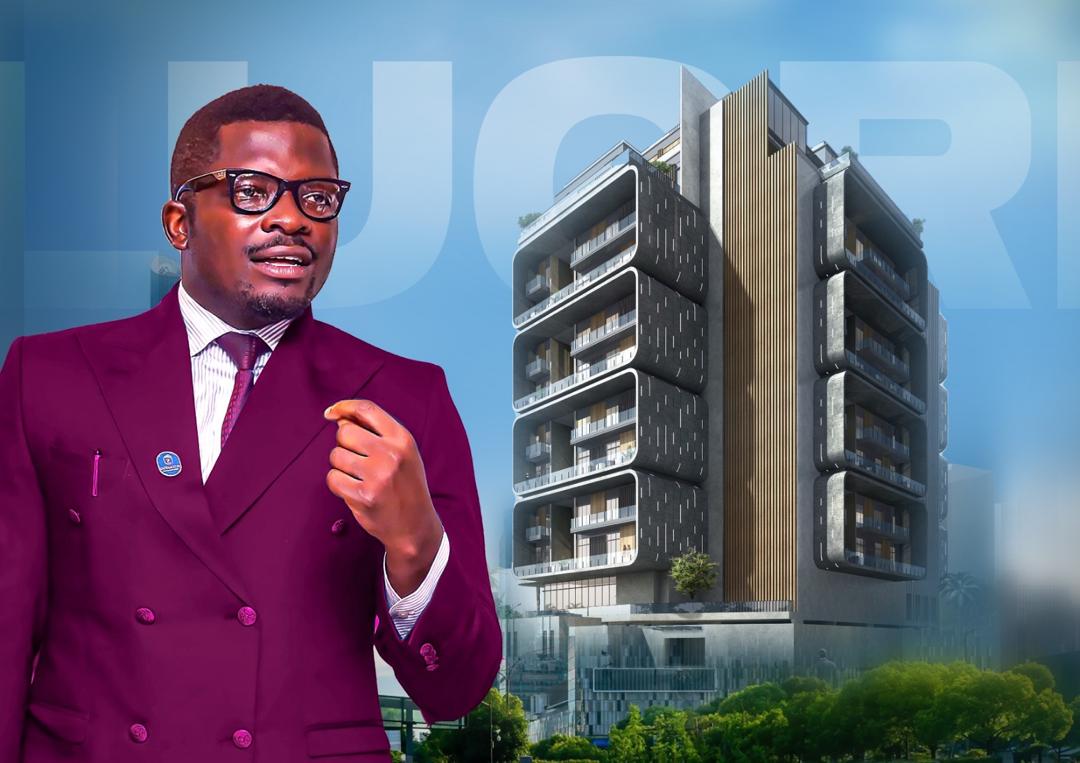
Sujimoto Group is pushing toward reclaiming its market dominance as its flagship luxury project, LucreziaBySujimoto, nears completion despite industry-wide challenges that have stalled most high-rise developments in Lagos. In a sector where fewer than 20 percent of luxury towers announced in the past decade reach completion, the 15-storey Lucrezia tower has continued to rise, defying forex instability, soaring import costs, and prolonged port delays.
Standing today as Banana Island’s tallest and most luxurious residential building, the project is widely considered one that “should never have existed,” given the financial and engineering demands. Yet Sujimoto’s Group Managing Director, Dr. Sijibomi Ogundele, said the tower represents both a personal and national milestone. “No one can design your destiny except you,” he said.
“Whatever the Almighty has for everyone will surely come to pass.” According to him, Lagos has long had mansions and villas but no true monuments. Lucrezia, named after Renaissance heiress Lucrezia de’ Medici, was conceived as a statement that Nigeria can produce architectural landmarks comparable to those in Dubai and New York.
At the announcement stage, many investors dismissed the project as unrealistic. But the engineering works soon silenced critics. Twenty-five thousand cubic metres of soil were excavated and replaced with over 11,500 cubic metres of C40 concrete. Piles 900 mm wide and 45 metres deep were driven into the bedrock, forming some of the largest pile caps in the world.
Sujimoto completed in 5.5 months the structural progress that normally takes other developers up to 18 months, setting a national record for the fastest construction of its scale. Investors who entered at $850,000 per unit in 2020 have since seen prices rise above $2.5 million, with projections above $3 million. “They called early buyers reckless,” Ogundele noted. “Today, they look like prophets.”
The project weathered severe economic pressures, including steep inflation, forex shocks, and shipping gridlocks that left more than 400 containers of materials stuck at the ports. Clearing a single container surged from ₦4 million to ₦24 million, threatening the project’s financial stability. But Sujimoto maintained its pace, settling salaries and sustaining procurement. “Where others saw obstacles, we saw a chance to prove resilience,” Ogundele said.
Lucrezia has been described as a building of many firsts in Africa. It introduces a Glass Reinforced Concrete façade, an interactive lobby, a virtual golf bar offering 2,500 global courses, private IMAX cinema, EV charging stations, and Crestron home automation that controls lighting, blinds and security. The 22 residences are expansive 600-square-metre maisonettes with premium fittings and private parking, while the penthouse spans three levels with a rooftop pool, elevator, Swarovski chandeliers, Bang & Olufsen audio, and access to a Michelin-standard private chef.
Ogundele’s journey from hawking souvenirs in Paris and working with his mother in Oke-Arin market to reshaping Banana Island’s skyline underscores the symbolism behind the tower. “If no one will give you a seat at the table, create your own,” he said. “Lucrezia is that declaration.”
The developer is now advancing two major projects: LeonardoBySujimoto, a 37-storey waterfront tower, and Sujimoto Smart City Abuja, described as a “mini Banana Island” blending luxury, technology, and mixed-use infrastructure. Ogundele says Lucrezia proved what a tower could be, Leonardo will redefine off-plan investment, and Smart City Abuja will demonstrate that entire cities can embody innovation and ambition.
As dusk settles over Lagos Lagoon, the tower that many once believed impossible now gleams unmistakably on the skyline. Locals who once questioned the young developer’s audacity now point to the structure as evidence of fulfilled ambition. “That is Lucrezia,” one resident said. “The tower that shouldn’t exist — but does.”