Follow Us on Google
By Vivian Onyebukwa
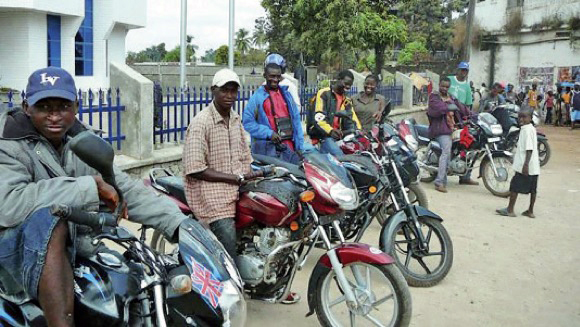
For nearly two decades, successive Lagos State governments have sustained a crackdown on commercial motorcycle operators, popularly called okada for offences ranging from criminality to reckless ridding, lawlessness, disobedience of traffic rules, and lots more.
On several occasions, the government had cracked down on them by confiscating their bikes and arresting the riders. Some of them were even charged to court and sentenced.
To further curtail their excesses in 2006 the government came up with a night-time ban, followed by the then Lagos State Governor, Babatunde Fashola’s 2012 Lagos State Road Traffic Law, which barred motorcycles below 200cc from major highways.
The Lagos State Transport Sector Reform Law 2018 further criminalised okada on highways, with violators facing three-year jail terms and forfeiture of their motorcycles.
In 2020, the state banned them from six local government areas, nine LCDAs, 10 highways, and 40 bridges and flyovers.
Governor Babajide Sanwo-Olu has repeatedly reaffirmed the ban, with periodic enforcement raids. Effective from June 1, 2022, the governor directed security operatives to enforce the proscription order across the listed councils.
The affected local government areas and local council development areas include Apapa, Apapa Iganmu LCDA, Ikeja, Ojodu LCDA, Onigbongbo LCDA, Lagos Island, Lagos Island West LCDA, Lagos Island East LCDA, Lagos Mainland, Yaba LCDA, Surulere, Coker Aguda LCDA, Itire-Ikate LCDA, Eti-Osa, Eti-Osa East, LCDA, Eti-Osa West LCDA, Iru Victoria Island LCDA, Ikoyi-Obalende LCDA.
Despite these repeated crackdowns, defiance persists. Egbeda, Ikotun, Mile 2, FESTAC, Fagba, Cele, Obalende, and Ikoyi are some of the areas they still operate.
Some of the operators who spoke to Saturday Sun explained why they have continued to operate despite government’s restriction order.
Jude Okhai, a father of three who operates between Ijegun and Mushin, said that he couldn’t continue to be jobless while responsibilities continued to wait for him at home.
“I am the breadwinner in my family, and I have to take care of my wife and three children. I have school fees to settle. My children can’t afford to drop out of school. I also need to provide food and clothing for them.
“What if they fall sick? This is the only way I can easily make money to be able to take care of them,” Okhai explained.
Joseph Okon, another commercial motorcycle operator, told Saturday Sun that: “I have tried to do some other things after the ban, such as conductor, but it was not easy for me. I make more money operating Okada business.
Other News
“I know the dangers associated with it such as accidents, but I try to be more careful, especially because of my family. My children are still young. If something terrible happens to me, no one else would take care of my family.”
Another rider, Chike Okonkwo, who operates at the Egbeda axis, has attributed the continuous flouting of the government order on the state of the economy. He lamented that a lot of families can’t afford to have even a meal a day.
“Some families feed from hand to mouth. Some hardly feed if they don’t go out in a day. Some of us see this okada business as one of the easiest ways to make money to feed our families. After all said and done, I make about N10, 000 every day,” Okonkwo claimed.
One of the problems associated with commercial motorcycle business in Lagos is crime, as some of the operators have often been linked with armed robberies.
Beyond crime, some of them usually ride against traffic, ignoring traffic lights and endangering lives on highways.
There have been several cases where their recklessness has led to avoidable accidents, overwhelming hospitals such as the National Orthopaedic Hospital, Igbobi, and Lagos, which at some point created a dedicated ward for okada accident victims.
Official figures show that between 2016 and 2019, Lagos recorded over 10,000 okada and tricycle-related accidents, leaving more than 600 people dead.
Despite the odds, some Lagos residents applaud the re-emergence of okada on some roads, insisting that plying okada has done them more good than harm.
Ijeoma Okonkwo, who lives in the FESTAC area, lamented the deplorable state of some roads, stressing that it’s quite unreasonable to ban okada in such places.
Okonkwo described the use of okada as one of the easiest ways of transport to beat the city’s traffic jams, especially during rush hours.
She said: “It makes it easier to weave through the tight spaces and find your way out, especially when one is running late to the office or to meet an appointment.”
For Okagbue Chika, a resident of Isolo, who works in Yaba, the ban means getting to work late. She stated that motorcycles help speed one through the city’s early morning traffic. “I live a bit far away from the bus stop from where I can take a tricycle. So banning okada means my walking down to the bus stop. It’s a bit stressful, and not also when one is going late to work.”
John Okeahia, a Lagos resident said the government has been advised to scale up buses, rail, and ferry systems to save the lives of individuals, and also enforce its own laws across the state without compromise.