Follow Us on Google
• Why 2027 election may favour Obi over Tinubu, Atiku
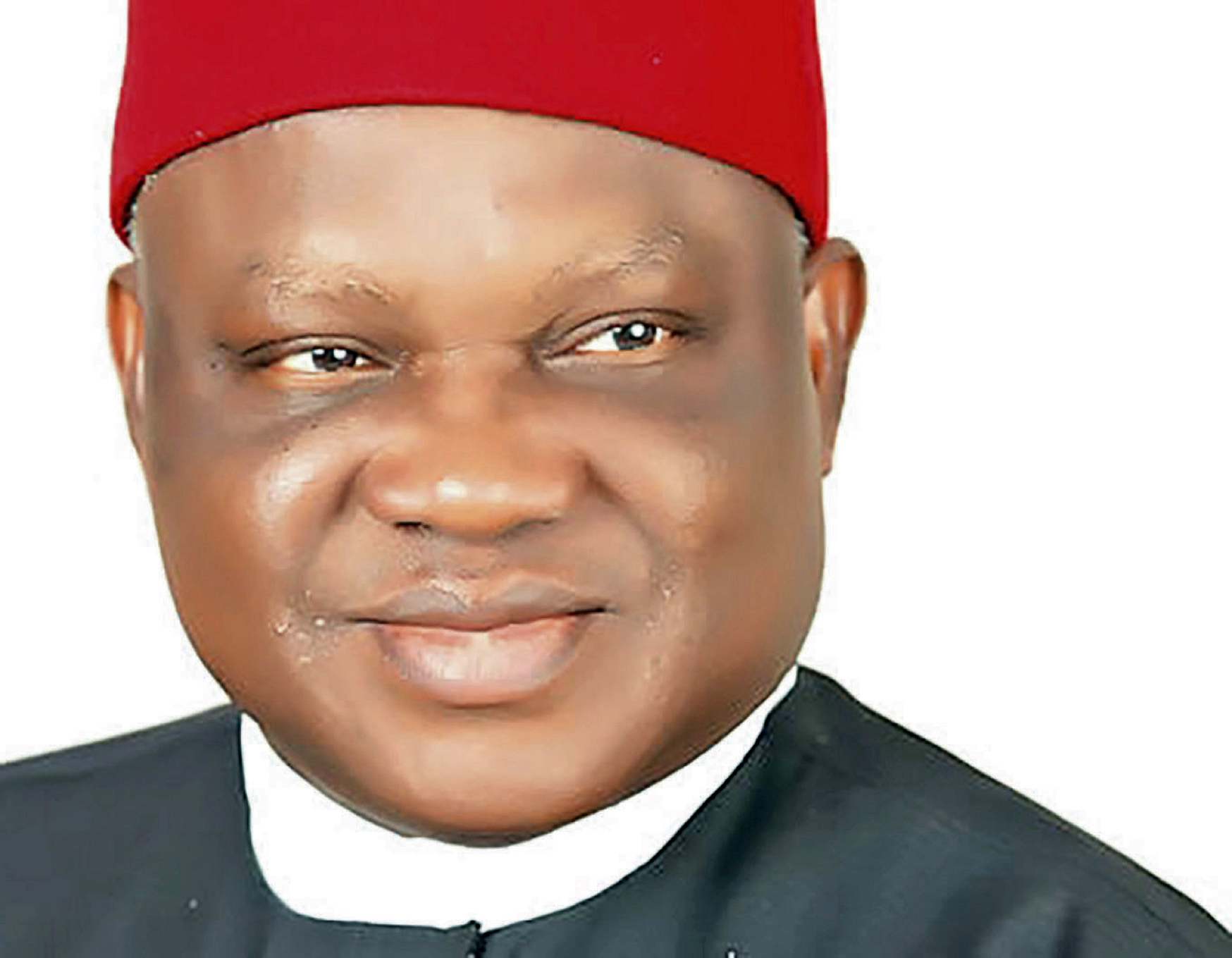
Convener / National Chairman of Igbo Agenda Dialogue (IAD), Chief Chekwas Okorie, has sad that the rate of borrowing by the government is scary and unhealthy even for the survival of the country.
According to him, the future looks bleak with this type of borrowing, because there isn’t anything on ground to show income generation with which to service the debt and still survive as a country.
In an interview with VINCENT KALU, the founder of the All Progressives Grand Alliance (APGA), noted that the just concluded political party primaries show that Nigeria’s democracy is still far from attaining that status of a democracy.
What are your expectations of 2027 general elections?
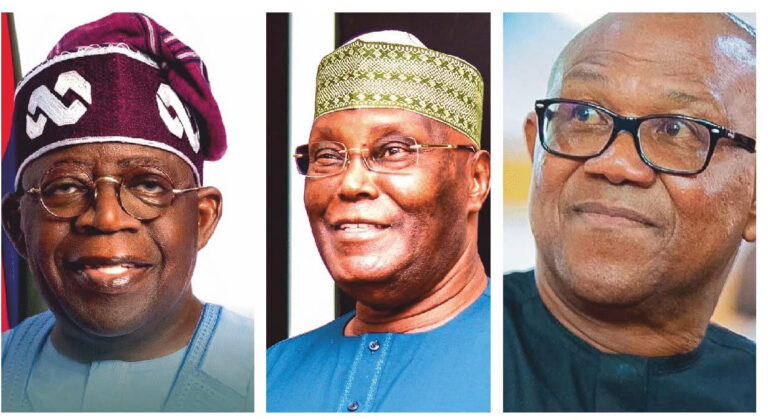
It is going to be majorly a three-horse race and that will be Obi, Atiku and Tinubu; not necessarily in that order, but there are the three major contenders for that election. It is not going to be a walk in the park for any of them; it is going to be an epic battle.
I see a clear regional divide in this election; more of regional than religion, even though the religious aspect cannot be ruled out, but it will be more of a regional, because in the North West and North East, majority of them feel that they made a major mistake by supporting Tinubu to become the president, and he did not reciprocate the gesture. These are people, who over the years have had this sense of entitlement and so they believe that they decide who wins and who doesn’t win.
Their decision not to support Tinubu appears total because any person who is not following the feeling in the north is not being sincere to himself.
The incumbency factor is there for Tinubu, and there is no doubt that he has amassed almost inexhaustible war chests over the period he has been the president. So, there will be a lot of money to throw around to corner the election, but the extent to which the money will be tolerated by the people is yet to be seen.
Then, for Peter Obi, two things are going for him. This time he has Kwankwaso and Kwankwasiyya Movement; so, two popular youth movements in Nigeria – the Obidient and the Kwankwasiyya movements are working together for the ticket of Obi and Kwankwaso.
The Hausa people in Nigeria, excluding Fulani, are buying into the propaganda that no Hausa person has had the opportunity to provide leadership at national level, and they have their reasons.
Even when you talk of Abacha, who was supposed to come from Kano, he was an immigrant; his father was an immigrant from Borno, and he wasn’t Hausa. So, they hang on to the propaganda going on and the sentiment is deep. Their young ones believe that Peter Obi promises a hope that would make life better for them based on what Peter Obi has been able to connote consistently.
Then, the Igbo people, not just in the South East, but are also all over the country, feel that their leaders contributed more than any other section to win independence for the country, and between 1960 and now, no Igbo person has become an elected president of Nigeria.
So, the sentiment is quite deep and the issue of Nnamdi Kano is one other aspect that the average Igbo man is so very emotional and sentimental about, and they believe that the only person who can set Nnamdi Kanu free is Obi, and fortuitously, he has already mentioned it even without going fully into campaign.
There is another angle that many people are not seeing, it is the NDC, whose acronym belongs to Niger Delta Congress, an organisation founded by Harold Dappa-Biriye, who founded it in 1958, before independence to use it to fight for Niger Delta interests.
And the person who founded this National Democratic Congress, of course, claimed to be one of the mentees of the late Chief Dappa-Biriye, and so he derived his motivation from that man.
Forming a party with acronym NDC was not something that was done per chance. It was deliberate. For the first time in Nigeria, the Niger Delta people can say they have contributed a political party to the Nigerian political process just like APGA was the first Igbo contribution to Nigeria’s political party system. So, that sentiment is also going to be played up when the campaign starts. I see a clear advantage that Obi has over the other two I mentioned.
You just mentioned Obi and Tinubu, but you didn’t mention Atiku, since you said it’s going to be a three-horse?
When I said the North West, North East and part of Middle Belt, I was referring to Atiku. However, Middle Belt is the battle ground for the three of them. Atiku is concentrating his game in the north. By the way, there is no other standing northerner who is running for president. So, for the north that boasts of a number in terms of those who come out to vote, he seems to have an advantage because there is no other major person; all the major candidates are in the south. But be that as it may, it is between Obi and Tinubu from the south; but then, there are the others who may not be much so consequential, but Atiku is again, the man to watch in the north. That’s why I said it would be an epic battle.
Where lies the gentleman’s agreement of power rotation between north and south?
Times without number, Atiku has never failed to contest any election; it never mattered to him whether it’s for north or for south, he always contested.
When we found APGA, the very first policy we made was that the party’s presidential ticket would come from the South East; the Igbo man would be the presidential candidate repeatedly until the objective was actualised, and that was how Ojukwu became sole candidate for 2010 election. When people say Peter moves from one party to another, they don’t understand the dilemma of the Igbo man in this country. If you put a competent Igbo man to contest for primaries with even a lame duck from another place, they will choose the lame duck.
In terms of democratic credentials, Obasanjo was never to be compared with Ekwueme, but they made up their minds that this is who they wanted in spite of Ekwueme’s high profile, both intellectually and otherwise, including having an experience as vice president; despite his being promised that he was going to get the ticket based on his loyalty to Shehu Shagari.
He came to the South East and convinced us, and everybody supported the Peoples Democratic Party (PDP), only to be short-changed.
PDP went to Jos, Plateau State, for its convention. Before we went our different ways, Ekwueme came to Enugu and invited all the Igbo leaders; all of us were there. Of course, many who were there have died. At his hotel, Modotel Hotel, he said to us that PDP had passed a policy that any person who was not able to win his ward during those elections would not be eligible to contest for the president. The military was handing over, and even took control of INEC. What the military did through INEC was to make sure that the timetable allowed the state assembly, the governorship and the national assembly elections to take place before the presidential primaries. When that was arranged in that manner, the impression was given that for presidential primaries, you would have won the other elections at least in your ward to show the loyalty of your people to the party where you are coming to run for president, and we bought into that. It was the first political 419 done on Igbo people.
At Modotel Hotel, Enugu, we all agreed that even if that was needed for an Igbo man to become president of Nigeria, that Ekwueme would not only win his ward, he would deliver as much as possible the whole South East. Everybody went with that understanding, and when that election took place, PDP won all the state assemblies in South East, all the House of Representatives and all the governors.
As PDP was going to Jos, All Peoples Party (APP) was also going to Kaduna to do their convention and presidential primaries the same day; all arranged by the military, but we didn’t know. A day to PDP Convention, the party changed that same policy because Obasanjo, whom they wanted to make the candidate and to make president lost his polling unit, lost his ward, and lost all the states in the South West, as Alliance for Democracy (AD) won the entire six states in the region. He didn’t even win a polling unit.
The same PDP changed that policy, and said it would no longer count, and they dropped the policy and short-changed Ekwueme. It was so embarrassing and so provocative, but they went about laughing at us for our stupidity that we bought into their game plan. By then, the entire South East has been shot into PDP; all our political capital, electoral capital has been invested into the PDP.
When I formed APGA, its policy was not zone anything outside the South East until an Igbo man became president, but unfortunately see what they did to APGA; that one is a different story.
It’s not only now that the issue of rotation was jettisoned because it’s not in any of our statute books. There’s nothing like rotation; it doesn’t work.
Other News
What of the country’s unity, considering its plurality?
Which unity are we talking about? The only unity we can talk about is a unity that is promoted by a president, who will see himself as a father of the nation. Did Buhari promote unity?
He didn’t; he mismanaged our diversity, and we thought we have seen the worst of it until Tinubu came, and he is even trying to tell Buhari that he was a learner when it comes to mismanaging our diversity and our ethnicity. Nigeria is fragile, but if we have a president that sees Nigeria as his constituency, unity is possible.
All the parties have concluded their primaries. How can you describe the outcome of the exercises?
Looking at the primaries, you will say that we have done nothing about democracy because there isn’t any political party that conducted what they are referring to as primaries in any sense of the definition of the word.
They said they were going to do primaries, but no primaries took place. We saw the comedy where people were counting from 100 and jumped to 1, 000, and all of that. This was shown on the national televisions, and nobody even apologised, and they still allowed the figures to stand. When the primaries didn’t work, we saw those who said they were doing consensus.
The unfortunate thing is that the ordinary people who believed there would be primaries spent their money, and many of the aspirants are licking their wounds now.
In the APC, many were assured that if they left their former parties to join APC that they would be given automatic tickets, and many of them are crying. People who never knew they could ever win any election in their lifetime, their names were placed on Labour Party tickets and they became members of House of Representatives and senators. Instead of showing loyalty to the man on whose back they went there, but they began to defect to the ruling party and today the same people have been short-changed, and they are now like sheep without shepherd and they have all lost out. They can’t even contest, they’re just waiting for their tenure to end and would go home and rest. Our democracy is still far from attaining that status of a democracy.
What is your view over the insecurity in the country?
On the issue of insecurity, I am on record to have for more than 30 years, even before the formation of APGA, been advocating state and community policing.
I knew that if you don’t take the people to take control of their environment and their space, in terms of security; security will never work.
And I have also travelled around the world, both for my business and for other things, like going to meet Igbo people, which I have done for several years, in many countries where they are residing, I have seen that it’s only in Nigeria that is as large as it is that is running a centralised police system.
More people began to join in that advocacy and now even as we seem to be nearing the implementation of state police, the lawmakers are not even giving us the details of what they are trying to pass, and secondly, there’s no mention of community policing.
Without community policing, you can never achieve security in a place as large as Nigeria.
For example, in Abia State, last week, Fulani people rounded up a young man and his mother returning from farm and phoned the family to bring N10 million ransom. In the course of making that phone call, the man used his local dialect to tell them where they were being kept.
Of course, their abductors beat him mercilessly because they didn’t understand what he said. Within that short moment, while they were there waiting for the ransom to come, the local people mobilised themselves and cordoned off that area, and rescued them. If you were waiting for your police to come from Abuja or from Umuahia, they would have even killed them if the money was not coming.
Every day we see evidence that the state police and community policing are the answer, but those in authority know why they don’t want to toe that line. Why is it that we don’t have police architecture down to the lowest level? In some countries, university campuses have police, not to talk of local government police. Community police has always been there even before the war, and we had our local arrangement which we used to manage our security and things didn’t generate into this level.
For the 2027 elections, don’t you entertain any fears over this escalating insecurity?
Any person who is not afraid of the insecurity that has overwhelmed our security agencies is living in outer planet. But my greatest fear with regard to the 2027 elections is the desperate attempt by people who want to remain in power, who want to tamper with or manipulate the election.
I wrote an open letter to the president, and it was widely published. I cautioned him to try everything within his powers to ensure that the election will be free, fair and credible; that if attempt was made to manipulate the election that people may react violently to that, and anarchy that will ensure will overwhelm the security agencies we have today.
And it stands to reason, if we don’t have enough security forces to deal with insurgents, where will you bring in the forces to control an insurrection of a nationwide dimension?
So, the answer is to allow the people’s will to prevail, let the people be the ones that win that election. If an individual wins and the people now know that they have lost, they may not be prepared to wait for another four years before they are given a chance to make a change, and they’ll take the law into their hands, and we don’t have enough police and everything put together to contain what I described as anarchy. In that open letter, I told the president to stop the brewing anarchy. That was my caption.
What is your take on the escalating debt profile of the country? People are accusing the government of persistent borrowing?
It’s scary and unhealthy even for the survival of the country. The future will obviously be bleak with this type of borrowing because there isn’t anything on ground to show income generation with which you can service the debt and still survive as a country.
To me and too many people, a lot of these borrowings are being channelled to projects that have ended up in a few hands, and those few hands are known to be closely associated with the president right now. The impression is that all of those things are being done to build a war chest to buy or purchase the next election; that is what everybody is seeing and saying because there is nothing that has shown commitment to using the so-called borrowed money for our development.
Look at the kind of budget allocation that goes to critical sectors like education, health and even security. Many of the sectors talk about 10 per cent allocation out of whatever amount that was budgeted.
I don’t know any sector, including the critical defence sector that can say it has got up to 30 per cent of what was budgeted, and that was for last year. We have a situation where we’re even implementing three years budget at the same time; they are running for a pari passu.
In budgeting, there will be margin of error, but it doesn’t have to be that wide. Is it a guess work? The budget must be based on something. If there is margin of error, it should be between five and 10 per cent, but here, you have almost 70 per cent margin or more.
So, it means that somebody somewhere is not being sincere with the people and it is worse now because it wasn’t even like during the previous governments down to Buhari, and there is no logical reason being advanced to convince people that the loans have been invested in regenerative ventures that will bring out steady income to service the debt.