Follow Us on Google
• Denies deals with terrorists for release of Oriire abductees • Makinde probes abduction
From Juliana Taiwo-Obalonye, Abuja
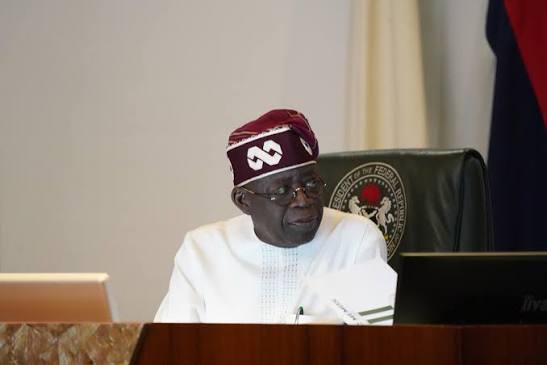
For the umpteenth time, President Bola Tinubu has assured that the Federal Government would establish state police with constitutional safeguards against abuse
He also ruled out negotiations with kidnappers and terrorists, declaring that his administration would neither pay ransom nor bargain with criminal groups, even when they demand the release of detained gang members.
Tinubu spoke at the Presidential Villa, Abuja, yesterday when he received a delegation of traditional rulers from Oyo State led by the Olubadan of Ibadanland, Oba Rashidi Adewolu Ladoja.
“There will be state police and there will be guardrails against abuse. We will protect the system from misuse, and our traditional rulers will also have important roles to play.”
He also announced plans to strengthen the Forest Guard by expanding its mandate beyond wildlife protection to combating criminal elements operating in forests.
“We are enhancing the capacity and capability of the forest guards. They are not just to chase antelopes and other animals. They will also pursue criminals and flush them out of our forests.”
Commending the armed forces for the rescue of abducted victims in Oriire Local Government Area of Oyo State, President Tinubu attributed the success to the professionalism of the military and the support and prayers of Nigerians.
“Congratulations on the Oriire rescue. I think we succeeded with your support and prayers. We should commend the men and women of the Armed Forces for their excellent performance,” he said.
Tinubu disclosed that the abductors had demanded not only ransom but also the release of their detained accomplices, a request the government rejected outright.
“We refused to pay ransom. These criminals wanted us to release members of their criminal gangs already in detention, and we said, ‘No deal.’ We are not going to negotiate with criminals.”
He said the government was continuously reviewing its security architecture to respond more effectively to evolving threats.
“As we emphasise security, every incident teaches us new methods. It challenges us to examine and re-examine our architecture, our strategy, our operational map and deployment.”
He said the expansion of the Nigerian Army from eight to 12 divisions was meant to improve response time and intensify the fight against terrorism and banditry.
“From eight divisions, we are now moving to 12 divisions to shorten response time and give our security forces the capacity needed to defeat terrorism and banditry.”
He called for stronger community participation in intelligence gathering and urged traditional rulers to mobilise residents to remain vigilant and report suspicious movements to security agencies.
Other News
“I want you to tell our people to be extra vigilant. Know your neighbourhoods, know your communities and report strange faces and suspicious activities.”
President Tinubu noted that insecurity in neighbouring Mali, Burkina Faso and Niger had compounded Nigeria’s security challenges, with foreign criminal elements infiltrating the country.
“Some of these criminals are not Nigerians. The insecurity in Mali, Burkina Faso and Niger Republic is adding fuel to our own security challenges.”
On the economy, Tinubu challenged state governments to channel increased federal allocations into infrastructure that would improve security and stimulate economic growth rather than embark on prestige projects.
“The states are now receiving four to five times what they used to get. Nobody is borrowing to pay salaries anymore, and pensioners are receiving their entitlements. They should invest more in roads and infrastructure that improve security and economic activities instead of constructing flyovers where traffic does not justify them.”
He also disclosed plans to hold regular consultations with traditional rulers across the country to obtain grassroots perspectives on governance and national security.
“I will continue to meet with our traditional rulers across Nigeria to listen to your advice and benefit from your experience.”
Although he acknowledged that insecurity remained a major challenge, Tinubu expressed optimism that government efforts were producing results.
“The challenge is enormous. It is not an easy job, but I asked for the job and Nigerians gave it to me. I accept both the assets and liabilities of my predecessor.”
He added: “Security is improving. We are getting a better handle on the situation. Whenever you see our soldiers and police officers, please pat them on the back and thank them for the sacrifices they are making.”
Earlier, the Olubadan of Ibadanland, Oba Rashidi Adewolu Ladoja, praised the President’s handling of security, particularly the recent rescue operation in Oriire, describing it as a major turning point in the fight against kidnapping in Oyo State.
He said the Federal Government’s refusal to pay ransom had sent a strong signal that criminality would no longer be rewarded.
“The President’s decision not to negotiate with kidnappers has demonstrated leadership and restored public confidence in government’s resolve to tackle insecurity.”
The monarch, however, urged the Federal Government to sustain security operations in the expansive forest corridor stretching through parts of Oyo, Niger and Kwara states, warning that abandoning the area could allow criminal groups to regroup.
He identified communities such as Iseyin, Igboho, Kishi and Baruten as strategic locations requiring continuous security presence.
On infrastructure, the Olubadan commended the Tinubu administration for ongoing federal road projects in Oyo State, particularly the reconstruction of the Ibadan-Ife Road and the road corridor linking Ilesa and Akure, describing them as projects that would transform transportation, enhance security and stimulate economic development in the region.