Follow Us on Google

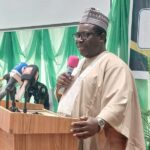
Retired Deputy Inspector General of Police (DIG), Mr. Mohammed Usaini Gumel, has tasked the Federal Government to establish state police with mechanisms to confront worsening insecurity in the country. He spoke at a workshop titled, “State Police Debate: A Point of Reflection for Nigeria Policy Makers Building Institutions for Tomorrow Without Forgetting the Lessons of Yesterday,” in Abuja.
He said: “We believe that decentralised policing will strengthen community security, improve intelligence gathering and bring law enforcement closer to the people. Others worry that devolving policing powers could expose the system to political interference, weaken national cohesion, or recreate challenges associated with Nigeria’s earlier experience with regional policing.
“Constitutional reform should never be driven by political expediency. Nigeria today is not Nigeria of five or six decades ago. Nigeria should therefore approach this reform with confidence, caution and constitutional discipline, not fear. Democratic governance has become more deeply rooted. Constitutional awareness has expanded considerably; judicial independence has grown stronger; legislative oversight has improved. The media have become more vibrant, civil society more active and citizens more informed and engaged in public affairs than ever before.
“These institutional developments provide a significantly stronger democratic environment within which constitutional reforms can be designed, implemented and continually improved. Many Federal democratic across the world successfully operate policing systems in which national and sub-national police organisations coexist within a carefully designed constitutional framework. IT should be to develop a uniquely Nigerian policing framework that reflects our constitutional structure, accommodates our diversity and responds effectively to our security realities.
“Today, security threats are increasingly local in their manifestation but national in their consequences. Terrorism, kidnapping, banditry, violent extremism, cybercrime, organized criminal networks, communal conflict, and other emerging threats require timely intelligence, stronger community relationships, rapid operational response, and seamless coordination in all levels of government.
“The National Assembly is not the replacement of the Nigeria police force but the creation of a complementary policing framework. Under the proposed constitutional arrangement, the federal police and state police would coexist, each exercising clearly defined constitutional responsibilities while cooperating through established mechanisms of coordination and accountability.
“One of the most frequently expressed fears is that state police could be abused by political office holders. That concern should never be dismissed. However, the possibility of abuse is not unique to state police. All constitutional institutional carries inherit risks that executive authority can be abused. Legislative powers can be misused. Electoral processes can be manipulated, yet democratic societies do not abolish these institutions because of those risks. Instead, they strengthen constitutional safeguards, independent oversight, judicial review and public accountability.
“The federal police would continue to shoulder responsibility for national security terrorism, transnational and interstate crimes, border security, organised criminal networks and other federal offences. State police on the other hand, would concentrate on community policing, local intelligence, enforcement of state law, neighbourhood crime prevention, and local rapid response to local security challenges.
“An effective policing architecture must therefore combine strategic, national co-ordination with efficient local responsiveness. The proposal under consideration envisions a policing system in which federal and state police institutions operate within clearly defined constitutional mandates while complementing one another in the collective pursuit of public safety. Such an arrangement has the potential to strengthen national security by allowing each institution to focus on responsibilities best suited to its constitutional competence.
“Constitutional reform is an ongoing democratic process rather than a single legislative event. If practical experience reveals operational shortcomings after implementation, democratic institutions possess both the authority and the responsibility to strengthen safeguards, refine operational arrangements and improve institutional performance.
“The future cannot be secured by institutions designed solely for the past. Our responsibility is to build policing institutions capable of confronting tomorrow’s security challenges. While remaining faithful to enduring principles of constitutionalism, federalism, democratic governance, professionalism, accountability, the rule of law and unwavering respect for human dignity.”
Gumel, who is National Secretary, Project 774 Network, concluded: “History should remain our teacher. The Constitution should remain our compass. The security, liberty and welfare of the Nigerian people should remain our highest purpose.”