Follow Us on Google
By Lukman Olabiyi
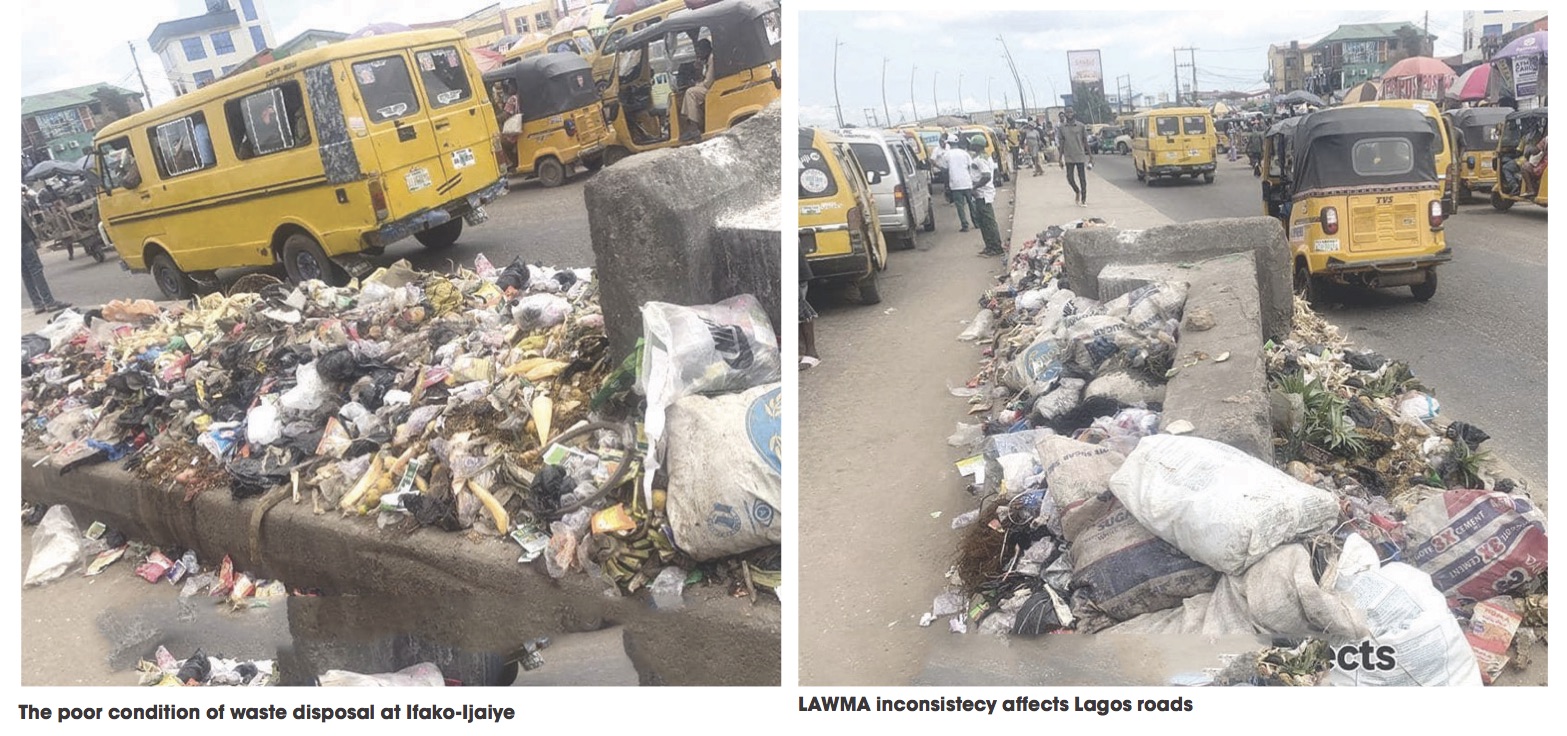
A silent but deadly crisis is unfolding in Nigeria’s commercial capital as Lagos State battles a near-collapse of its waste management system. Piles of uncollected refuse now line major roads, turning once-bustling highways into sprawling dumpsites.

For the city’s over 21 million residents, the mounting waste has become more than an eyesore, it’s a growing threat to public health and the environment. Across several areas, including Ikorodu, Mushin, Oshodi, Surulere, Ibeju-Lekki, Iyana-Ipaja, Ikotun, Ejigbo, Egbeda, Mile 2, Mile 12, Okoko, Iyana-Iba, Abule Egba, Meiran, Alakuko, Agege, and Apapa, heaps of garbage spill onto roads and sidewalks.
The stench of decay mixes with exhaust fumes, while pedestrians navigate mounds of filth that block walkways and choke drainages.
“This isn’t just a sanitation issue anymore; it’s a full-blown crisis. With this level of exposure, we’re looking at an outbreak waiting to happen- cholera, typhoid, dysentery. It’s only a matter of time,” warned Dr. Raheem Adeoye, a public health specialist.
At Ketu Market, a trader, Mariam, lamented the worsening condition: “It’s sickening. Every day I open my shop to piles of plastic, rotting food, and used diapers. The smell is unbearable. It’s like we’re living in a dumpsite.
Once frequent, Lagos Waste Management Authority (LAWMA) trucks have now become a rare sight. “We used to see LAWMA trucks almost daily. Now it’s like they’ve disappeared. People have no choice but to dump their waste anywhere,” said Emma Oke, a resident of Mushin.
In many communities, overflowing bins, clogged gutters, and illegal dumps have become common features. According to LAWMA, Lagos generates over 13,000 metric tonnes of waste daily, a volume requiring an intricate network of trucks, landfills, and personnel. But insiders say the system is buckling.
“There are many issues ranging from funding, PSP operator disputes, shortage of staff, and equipment breakdowns. We’re trying to manage, but the resources just aren’t enough,” a senior LAWMA official revealed anonymously.
Private Sector Participants (PSPs), who partner with LAWMA for waste collection, claim they are being sidelined or underpaid. Others say deteriorating roads and surging fuel costs have made many routes unsustainable. The recent closure of major dumpsites such as Olusosun has further worsened the situation.
The blame game between LAWMA and PSP operators has compounded the crisis. Despite arrests of illegal dumpers, many continue to devise new ways to evade enforcement.
Meanwhile, Lagos’ rapid population growth, urban expansion, and rising consumption are intensifying the problem.
Residents interviewed expressed deep frustration. Many complained of health hazards from the foul odour, blocked drainages, and refuse piles near markets and schools. Experts warn that the combination of open waste, stagnant water, and blocked drainage during the rainy season could trigger disease outbreaks.
“Accumulated waste leads to blocked drainage, which causes flooding. Flooding then spreads contaminated water and waste into homes, it’s a dangerous cycle,” Benedict Johnson, an environmental analyst explained.
Environmental activists argue that Lagos needs a long-term plan focusing on public education, recycling infrastructure, and stronger enforcement of sanitation laws.
Olamide Martins Ogunlade, an Associate Director (Climate and Environment) at Corporate Accountability and Public Participation Africa (CAPPA), criticized both the government’s approach and residents’ attitudes.
According to Ogunlade, the sight of mounting waste heaps across the city reflects deep flaws in both the government’s approach to environmental management and the attitude of many residents toward basic sanitation.
He criticized the state’s privatization of waste collection, saying it has failed to yield meaningful results due to “poor consultation, absence of local oversight, and weak enforcement.”
Ogunlade called for the establishment of communal watchdogs to help maintain clean environments and report infractions or deliberate violations of environmental laws.
“Also concerning is the transparency of the state’s waste collection process, which is currently shrouded in political influence and used as economic compensation for political actors,” he said, noting that this has led to widespread inefficiency.
Ogunlade added that while residents are willing to pay for effective waste collection, confidence in the system remains low because the value for their payments is not guaranteed.
He urged the government to prioritize public education on the health and environmental dangers posed by the growing number of informal dump sites across the state.
“The government must reorient citizens on the environmental and health implications of poor waste management and take urgent steps to restore efficiency and accountability in the system,” he said.
A resident of Meiran, Mr, Shina Lawal, said the problem reflects a deeper issue of inconsistency and poor planning in the state’s waste management system.
“From what I have seen, this is not just about Abule Egba, it’s happening in many parts of Lagos. Government should put proper waste bins at strategic points and ensure LAWMA is consistent,” he said.
He added that the lack of regulatory enforcement encourages people to dump refuse indiscriminately.
“If LAWMA were coming regularly, and there were penalties for illegal dumping, we wouldn’t have this mess. They used to provide bins in some areas before, but now people just drop their waste anywhere,” Lawal lamented.
Mrs. Ademide, who trades at Abule Egba bus stop, said poor waste collection has affected their daily business and created serious health concerns.
“Sometimes, it takes up to two weeks before they come. The dirt piles up, and it will be smelling. They even came to lock our shops once because of it,” she said.
She explained that the situation is worsened when dead animals are dumped by the roadside and left unattended.
“One day, a cow died and they didn’t carry it. The smell was terrible. This is a bus stop where people sell food and drinks. LAWMA should be coming at least twice a week so this doesn’t happen again,” she added.
Michael, a trader at Abule Egba, said the situation has gone from bad to worse. “The smell is too much. LAWMA only comes about twice a week. They should be coming more often to clear the refuse,” she complained.
Another trader, Mrs. Moji Ibitoye at Meiran bus stop, expressed similar frustration. “The waste is always there. If they were coming regularly, the environment wouldn’t be this dirty. It’s affecting our health and customers too,” she noted.
The state government has already acknowledged the crisis. At a recent stakeholders’ meeting, the Commissioner for the Environment and Water Resources, Tokunbo Wahab, blamed illegal dumping, sabotage of waste trucks, and urban migration for the worsening situation.
He said the government is working with local council chairmen to tackle environmental challenges collaboratively. “We must identify the gaps and inject new life into LAWMA’s operations. Council chairmen must assist to ensure a cleaner Lagos,” Wahab stated.
Speaking for the 57 council chairmen, Mr. Sesan Olowa of Ibeju-Lekki pointed out major inefficiencies in waste collection and disposal.
“In my local government, we procured 20 tricycles and collected 12,000 bags of waste in two months. The inefficiencies in the value chain are a big challenge. Local governments have the capacity to clean Lagos, but we need more disposal hubs and state support,” he said.
He also called for investment in waste-to-wealth initiatives to create jobs for unemployed youths.
Speaking on the situation, LAWMA’s Director of Public Affairs, Mrs. Folashade Kadiri, assured residents that the agency is taking proactive steps to restore normalcy and improve waste evacuation services.
“LAWMA has already intensified monitoring and enforcement across the state to address these lapses. Our operations personnel are working closely with PSP operators to realign collection routes, resolve logistical challenges, and ensure consistent service delivery, especially in densely populated areas such as Ikorodu, Mushin, Lagos Island, and Agege.”
To address the backlog, she disclosed that LAWMA has deployed intervention trucks to strategic locations across the city to support the efforts of PSPs. Adding that the authority is also collaborating with market leaders, community heads, and local government councils to curb indiscriminate dumping of refuse on roadsides, in markets and open spaces and environmental health officers are also playing a key role in the crackdown.
Mrs. Kadiri emphasized the importance of public cooperation, urging residents to pay for waste collection services and adhere to proper waste disposal practices.
She stated that waste management is a shared responsibility: “Waste management is not a social service. Residents must bag and containerize their waste properly, avoid illegal dumping, and report non-performing PSPs via our toll-free numbers — 07080601020 and 617 — or email [email protected].”
She said:”Over 300 violators have been arrested since February for waste-related offences, with fines ranging from N30,000 to N50,000, while others were sentenced to community service. LAWMA will continues to engage directly with market leaders through regular meetings aimed at educating traders on proper waste management.
“Some markets found in breach of environmental standards have been temporarily shut down in the past, with reopening contingent on meeting laid-down conditions, including the appointment of bin keepers and signing undertakings”.
Mrs. Kadiri reiterated LAWMA’s commitment to a cleaner and healthier Lagos, thanking residents for their continued support and cooperation.
Stating his group’s position on the issue, the chairman of the Private Sector Partnership (PSP) operators in the state, Mr. Olugbenga Adebola absolved his members of blame over the collapse of waste management across the state, stressing that the challenges go far beyond the scope of waste collection.
The chairman stated categorically that the current problems confronting waste management in Lagos are not the fault of the PSP operators, who remain responsible for house-to-house refuse collection.
“First of all, I’d like to state categorically that the problem facing waste management in Lagos goes beyond ordinary collection. It is not the fault of the PSP operators who are in charge of house-to-house waste collection,” he said.
He explained that the fundamental issues affecting effective and efficient waste disposal are already being discussed with the state government at the highest level. According to him, certain factors necessary to create an enabling environment for efficient waste evacuation must be put in place by the authorities.
“I’d like to refrain from commenting further because the fundamental problems are currently being discussed with the government, which has the responsibility to put measures in place to enhance efficiency,” he noted.
While urging the public to remain patient, the chairman emphasized the commitment of PSP operators to delivering quality service across the state.
“Every waste manager, the so-called PSP operator, is committed to serving the entire people of Lagos State effectively and efficiently,” he added.
He called on all stakeholders to work together to ensure improved service delivery, stressing that effective waste management requires collective effort and the provision of the right support systems.
“All hands must be on deck to ensure effective service delivery. There are fundamental issues and factors an enabling environment that must be available to support the quick removal of waste,” he said.
*With additional reports from Oyinlola Arolawun and Marvelous Udoruisi