Follow Us on Google
By Omoniyi Salaudeen
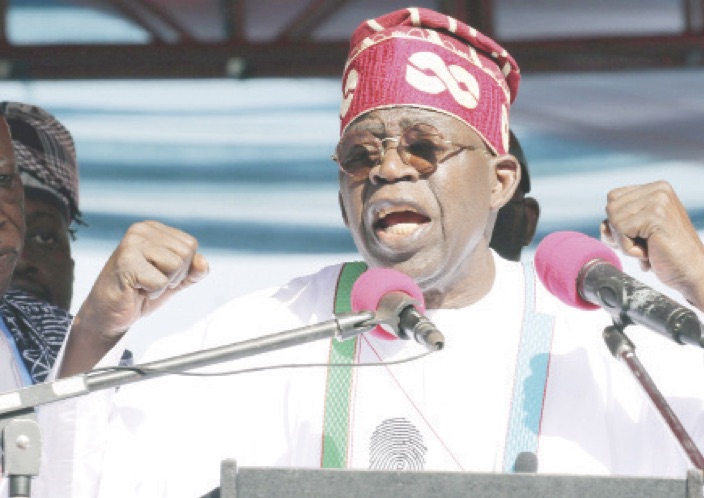
Being in a hurry to perform, President Bola Ahmed Tinubu has continued to tickle the excitement of Nigerians on two main fronts. One is the energy he has brought into governance, churning out reform policies with an alarming profusion. The other is the boldness and the courage with which he took the bull by the horns and announced a total removal of fuel subsidy to save the nation’s economy from further bleeding.

For one vested interest or the other, all his predecessors had failed to demonstrate enough political will to deal with the fuel subsidy monster. Though some may not agree with the sudden removal, but everybody agrees that it is the right way to go.
He is not done yet, neither is he about to relent in his moving speed to ensure the delivery of deliverables. Just as people are anxiously looking forward to the short and long-term benefits of this seemingly controversial new policy direction, on Thursday, he took another step forward by declaring a state of emergency on food security. By so doing, he has recorded yet another milestone, as the announcement continues to resonate among different stakeholders along the food production and the value chain.
The National Secretary of All Farmers’ Association of Nigeria, Dr Yunusa Halidu, while commending the president’s bold initiative, described the declaration as a welcome development. Beyond the declaration, however, he urged the Federal Government to set up an all-inclusive committee to work with the farmers to monitor the success of the policy implementation.
He said: “It is a welcome development. We had expected the state of emergency on food security in Nigeria earlier since Buhari came into power. But unfortunately, it did not get the attention of the government. From the new president too, we have been expecting it because access to food has become so difficult in the country to the extent that nobody can afford it any longer. So, it is a welcome development that the president has put a state of emergency in place to address the problem of food security in the country.”
He expressed optimism that successful implementation of the policy would enhance production, security, the food market, and a host of other things.
“There is food insecurity because a lot of people have abandoned farming for other businesses. So, we appreciate the president for this and I hope he is going to set up relevant committees that will include the farmers’ organizations in Nigeria, the smallholder farmers, the service providers, the input providers, and other stakeholders because there has been a missing link between the farmers and the service providers. With that, there will be a strong synergy between the farmers, the service providers, and the security agencies. If there is an understanding among the various stakeholders, everything will work.
“Farming has been politicized, that is why everything went wrong. But with this, if everybody is brought together under one roof to discuss with one mind, we are going to see the success of the project,” he enthused.
To surmount the challenge of insecurity as a major threat to farming activities, Halidu called on all relevant stakeholders to join hands with the Federal Government to tackle the problems of terrorism, banditry, and kidnapping, among others. “We know, of course, that insecurity is the primary problem of food self-sufficiency. Security is everybody’s concern; it is not only for the government. That is why I said that all the relevant stakeholders, the security agencies, the farmers, politicians, and community leaders, should be brought together to find a solution. It’s a very simple problem,” he posited.
Apart from insecurity, he identified other challenges militating against farming, including the high cost of inputs, corruption in the distribution channel, mismanagement and politicization of agric funds, as well as evacuation of produce.
“Everybody in this world needs food. But production of food is the primary concern, it is not the processing, it is not the marketing. Once we have good production, there is no problem because people are looking for food everywhere. In Nigeria, people want to invest in the processing and marketing of food. But everybody is running away from production. They want to go into processing. That is why we are in this deep shit. Whosoever wants to invest in agriculture should be encouraged to invest in production.
“Government has always spent a lot of money on inputs and distribution. But at the end of the day, most of these things go to the wrong channel. If the kind of money the past government had injected into agriculture was properly utilized, there would have been no food insecurity in Nigeria. How can you invest N80 billion in rice production and a bag of rice will remain N40,000 in a country like this? Do you know how many millions of bags of rice N80 billion can produce in a year? We are going to tell the government how to do it. There should be proper monitoring and evaluation of every project of the government.
“We have told the government from the beginning that they don’t need to subsidize agricultural inputs. Rather, they should subsidize the price. If you are not a farmer, you cannot enjoy the subsidy. If you are subsidizing input, you will bring 10 trailers of fertilizer from the Ministry of Agriculture or any agency, before that fertilizer leaves that office, half of it has been shared among the people who have never been to the farm. They will collect and go and sell to farmers at exorbitant prices. They should stop distributing from the warehouse. Instead, inputs should be distributed at the farm gate. We are the All Farmers’ Association of Nigeria covering about 52 commodities associations. We also have small cooperatives that are registered under us. If the government reaches us, we know how to reach every single farmer, monitor their production, and give their evaluation reports to people like you who can tell the world,” he declared.
Prof Segun Ajibola, who is also into commercial farming, while applauding the president’s declaration, gave a long list of disincentives discouraging investment in the business of farming in the country.
His words: “Food security is of national concern and no country can claim to be secure if the people are hungry. As it is often said, a hungry person is an angry person. Hunger pushes people into so many things that are untoward. If there is hunger in any land, insecurity will threaten the peace and unity of such a country because it becomes easy to draw people to criminalities when they are hungry.
“Hunger has no respect for virtues. As Maslow’s theory of needs says, ‘Man will do everything to cater for his basic necessity.’ So, if it is obvious that Nigeria cannot feed itself, which is a fact, then something must be done. Now, it is obvious that President Tinubu means business. If you are talking about security, you have to secure the stomach of the masses. Then, it becomes easy to dissuade them from doing things that are untoward like terrorism, banditry, kidnapping, cultism etcetera. With a plan on the ground to cultivate hundreds of thousands of land to provide food for the people, I think it is a step in the right direction. At the end of the day, the country will be better off in terms of provision of basic needs.”
According to him, for government to guarantee sustainable food production for the citizenry, some drastic measures have to be taken to address the fundamental problems militating against production such as farmer/herder clashes, funds and input distribution, unfriendly environment, climate change, problem of transportation, lack of storage facilities, deficient infrastructure and multiple barriers, among others.
He lamented: “Despite the humongous budget on agriculture, for 15 years I have been in farming, I have not got a bag of fertilizer as support from my government either at the state or local government level. They know my farm, they come there occasionally, but nobody has given me a carton of herbicides. Let them come out in Oyo State and give the names of farmers, their addresses or location of the farms that they have supported, and the kind of support given to them. To me, we are still far from where we should be.
“If we are battling with the problem of food insufficiency, it means we are battling with the problem of food production. I am involved in oil palm production, cassava, beans, citrus, and others. There are so many issues confronting agriculture and food insecurity that we are talking about. There are challenges of infrastructure, rural facilities, and ease of transportation. Speaking from the position of knowledge, it is not food production that is the problem, it is how to move what is produced from the hinterland to where the food items are needed. From my experience, about 30 to 40 per cent of what is produced is wasted due to the problem of transport and storage facilities. Even with the bad condition of the roads, farmers are confronted with so many other obstacles like produce inspectors, local government tax collectors, road safety operatives, police, VIO and so many other things that can discourage an average person from going into farming.
“We also have the challenge of what is happening to the farmers on the field like the natural weather. To produce on the farm, you pay through your nose. Getting inputs like herbicides and fertilizer is a problem. Combating pestilence is wahala. After producing, to evacuate from your farm to town is another wahala. If you see what is happening at Berger, every vehicle bringing food to Lagos is harassed. To look for hawkers who will buy from you is also wahala.
“At the end of the day, a substantial portion of what is produced is wasted even before leaving the farm. How are we going to address all these issues? These are some of the challenges those in the business of producing food either at the commercial or subsistence level can be helped out. So, under the renewed effort aimed at assuring food security, all these issues need to be addressed so that at the end of the day, the objectives can be achieved. Something drastic has to be done and sustained to end farmers/herdsmen clashes and other forms of conflicts.
“Irrespective of whatever anybody is saying about rice production, foreign rice in various species still finds its way into the country to the detriment of Abakaliki, Kano, and Igbimo rice in Nigeria that is even said to be more nutritious than the imported ones. It is also the same story with palm oil. In palm oil production, despite what local manufacturers are doing, some individuals will still secure import licences to bring in palm produce under the guise of raw materials. At the end of the day, a substantial part of it will find its way into the open market for consumption contrary to the approval they secured. So, they spoil the open market for producers because they brought it in cheaper on concession for factory use. If these kinds of policies are not harmonized, they will spoil production.”
To move beyond rhetoric, he said, there must be a complete change of attitude toward food production.
“For the current effort to have a desired impact in boosting local production and ensuring food security, policies that are deceptive, policies that hurt local capacity and waste foreign exchange at the expense of local production should be dispensed with. We need a holistic review of some of these policies. All of these things cannot help local production. But with a new Sheriff now in town, we know it can no longer be business as usual,” he said.
In the same vein, another stakeholder in the security sector, Jackson Olalekan-Ojo, added a safety dimension to the issue, urging the new Service Chiefs to immediately swing into action and ensure that bandits were neutralized to give farmers the needed encouragement to go back to their farms without fear of harassment.
“The president’s declaration of a state of emergency on food security is a welcome development. It is a good policy that has come to play, but the success of it depends on the implementation. The first thing to do is to increase food production. We have some states we can call food producers of Nigeria like Kaduna State, Benue State, Niger State, Zamfara State, Katsina State, and Kebbi State. But how many of these states can go to farms without being taxed by bandits? For them to plant, they tax them. After planting, before they allow them to go for routine maintenance or weeding, they pay taxes to non-state actors. During the harvest, they pay taxes to non-state actors. By the time you cumulatively put all these taxes together, it will definitely reflect on the cost of food production and the prices.
“I think the first thing is to neutralize all the bandits in these areas to create an enabling environment for our farmers to do their farming. No president has declared a state of emergency on food before. This man has done it. They must fight insecurity head-on. They must be highly decisive. And the political will must be there to achieve it. If the Chief Security Officers and the police fail to achieve this within the stipulated time, he should fire them. The government has done well by declaring a state of emergency on food security,” he submitted.