Follow Us on Google
By Henry Uche
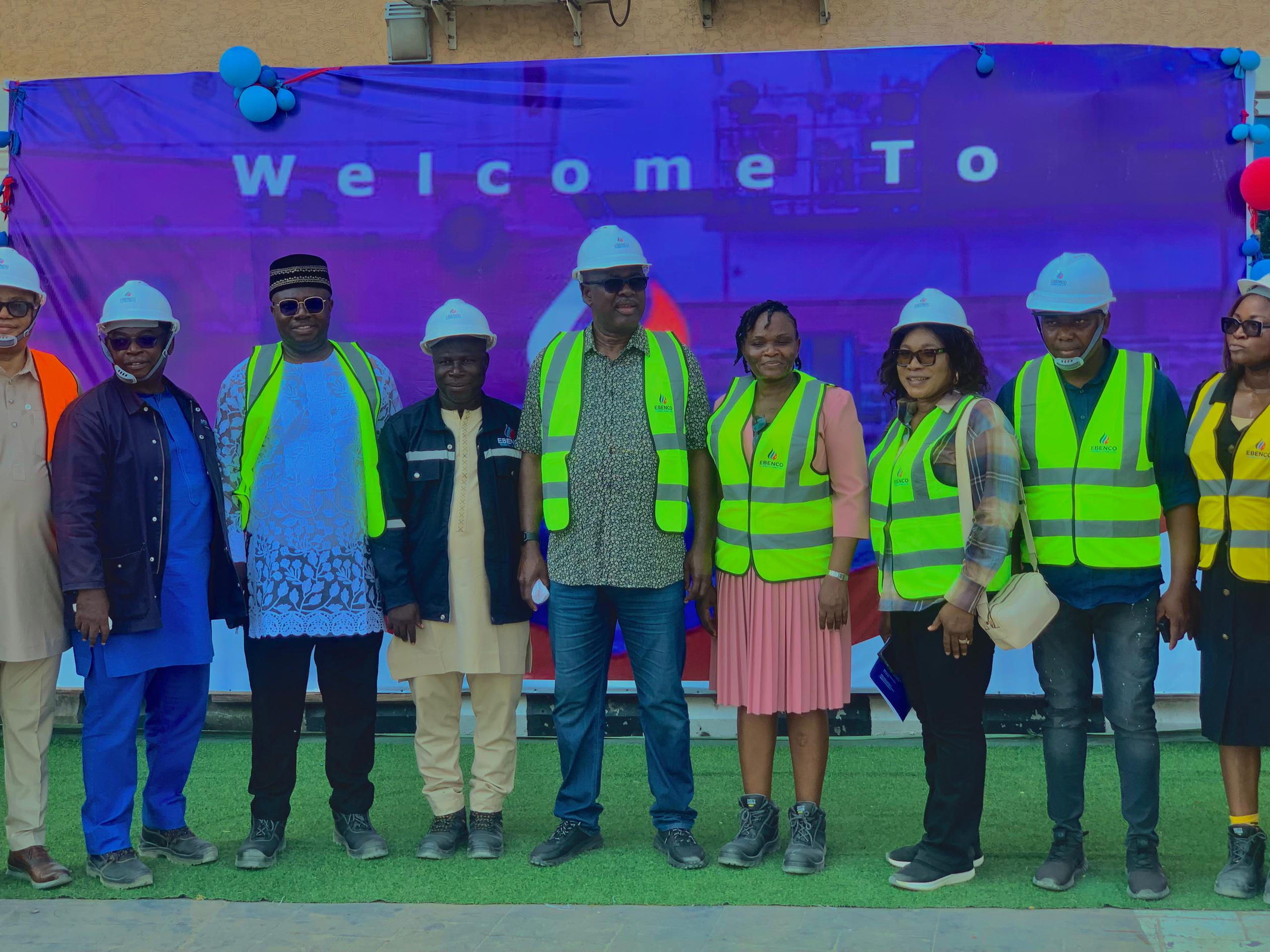
The Minister of State for Petroleum Resources, Senator Heineken Lokpobiri, inspects facilities as Ebenco Global Link Limited, an indigenous Nigerian energy and industrial services company, makes significant advancement in its ongoing construction of a 30,000-barrel-per-day modular refinery project in Koko, Delta State.
This inspection positions the project as one of Nigeria’s most consequential indigenous refining initiatives in decades, which has drawn high-level commendation from the Federal Government.
Ebenco’s modular refinery was designed to expand Nigeria’s domestic refining capacity, reduce fuel scarcity, curb crude oil theft and illegal bunkering, and strengthen energy security through a fully indigenous, locally fabricated facility.
During the inspection, Senator Lokpobiri described the project as a strong indicator of renewed investor confidence in indigenous energy infrastructure, aligning with the Federal Government’s ongoing petroleum sector reforms under the Renewed Hope agenda. The minister also highlighted the refinery’s potential role in a broader strategy to address pipeline vandalism and illegal refining by providing legitimate, scalable alternatives within the value chain.
Lokpobiri reiterated that the Tinubu administration’s reforms are deliberately structured to unlock private capital and accelerate projects that advance national energy resilience. He emphasised that modular refining, when executed with strong governance and local fabrication, provides a practical pathway to bridging Nigeria’s supply gaps while advancing economic growth.
Speaking on the progress at the site, Ebenco’s Chief Executive Officer, Dr Ebenezer Oluwagbemiga, affirmed that the refinery is on course and will come on stream in phased capacity. “We are taking this stage by stage. For now, we are starting with 5,000 barrels of stream per day,” Oluwagbemiga affirmed.
Other News
He added that beyond refining petroleum products, the project is expected to catalyse jobs, deepen local content, and materially reduce the incentives that drive illegal bunkering once full operations commence.
From a project governance and value-chain standpoint, Dr Peter Akindeju, Ebenco’s Management Consultant, said the refinery’s modular, batch-based production architecture represents a rare leap in indigenous engineering and commercialisation, with strong potential to shorten delivery cycles and improve operational flexibility.
He praised the Executive Chairman, Oluwagbemiga, for the strategic clarity and persistence that have sustained momentum and appealed to the Federal Government to classify the project under pioneer status as a catalytic investment aligned with national refining, jobs, and energy-security priorities.
Dr Omonigho, Associate Professor at the Federal University of Petroleum Resources Effurun (FUPRE), on the visit praised Ebenco’s investment as a landmark contribution to Nigeria’s industrial self-reliance. He thanked President Bola Ahmed Tinubu for providing the right policy framework, which has enabled such innovations as this modular refinery.
He further noted that the Koko refinery embodies the growing capacity of Nigerian firms to lead complex midstream and downstream infrastructure development, rather than rely primarily on imported solutions.
A guided tour of the facility concluded the inspection, showcasing installed refining units and ongoing fabrication works that underscore Ebenco’s commitment to indigenous innovation and Nigeria’s energy future.