Follow Us on Google
By Maduka Nweke
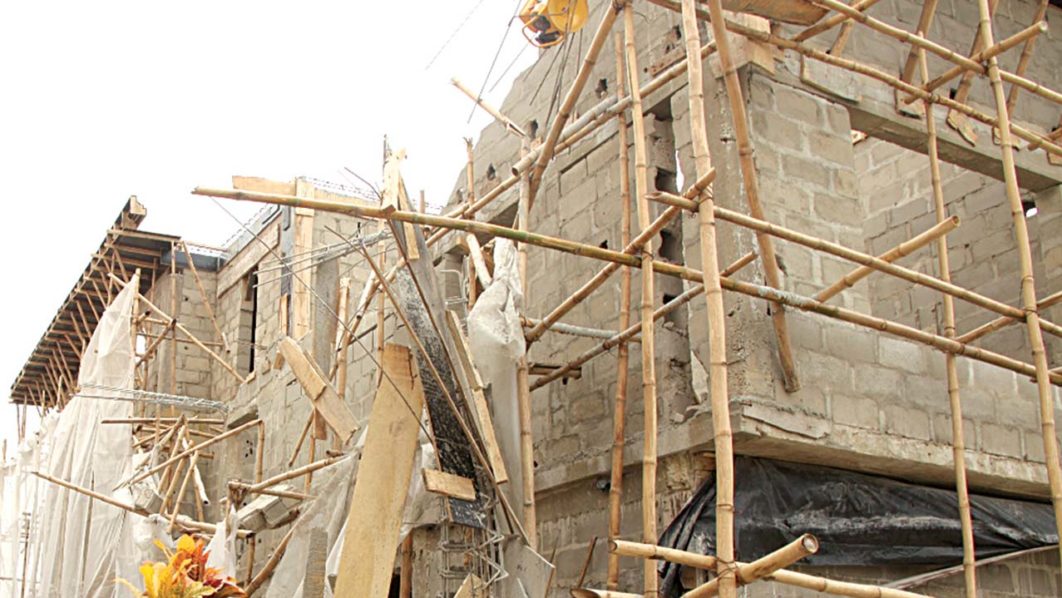
Stakeholders in Nigeria’s built environment have called on the the federal government to declare a statement of emergency on building materials, warning that spiralling costs are worsening the country’s housing deficit and pushing home ownership further out of reach.In separate interviews, property developers and industry players said the cost of construction, and by extension rent and property prices, has surged primarily because raw materials remain prohibitively expensive. They stressed that the building materials market is the backbone of housing delivery and must not be left entirely to volatile market forces.
Chief Paul Okoye, a property developer based in Amuwo-Odofin, said building materials account for between 30 and 50 per cent of total project costs and determine up to 80 per cent of project timelines.
“In Nigeria, private individuals control the building material market, which makes it prone to market forces (supply and demand) and dealings of private players, especially middlemen,” he said. While acknowledging the role of private enterprise, he argued that critics are right to question whether essential materials for shelter, a basic human need after food and clothing, should be left solely to the dynamics of demand and supply.
According to him, inflation in building materials is driven by a cocktail of fiscal policies, hoarding, foreign exchange volatility, high fuel and power costs, poor infrastructure, interest rates, and corruption. Nigeria, he noted, still imports most conventional materials aside from cement, leaving the sector exposed to exchange rate shocks.
“Investigation has shown that the rising cost of the building materials has high implications on affordable housing provision… risk of project abandonment due to delay in project completion, construction of substandard houses as well as increase in the price of rent,” Okoye stated.
He explained that while developers adopt careful financial planning, drawing up detailed budgets, prioritising essential spending, and trimming non-critical expenses, inflation often erodes projections.
“But in all these, government intervention will go a long way because inflation could rubbish whatever plan you made,” he said, warning that the consequences include unemployment, abandoned projects, and broader economic strain.
The situation, he added, raises questions about the sustainability of previous housing drives, including the social housing initiative under the administration of former President , implemented through the to deliver 200,000 affordable homes. With current material costs, stakeholders fear such ambitions could be undermined.
Dr. Doherty Oyelese, another property developer, said the crisis has pushed industry players to explore alternative building materials.
“These problems have led industry players to challenge researchers to look into providing sustainable alternative building materials to conventional building materials,” he said, citing polished bamboo flooring as a cheaper substitute for ceramic or vitrified tiles.
He also highlighted waste management as a critical issue. “Waste is also a problem property developers have and use effective project management techniques and construction equipment to minimize waste of building materials on site,” he noted.
Other News
Yet, even with improved efficiency and innovation, instability in the materials market continues to create tension between developers and buyers.
“This uncertain and unstable building materials market has caused a lot of headaches for property developers, making them constantly review their projections and change their sales prices to reflect current realities,” Oyelese said. The frequent adjustments, he added, sometimes breed distrust among off-takers who accuse developers of “shifting the goal post.”
In extreme cases, some developers resort to lower-quality inputs to stay afloat, a development stakeholders warn could compromise safety and standards.
Oyelese advised developers to maintain transparency with clients and build buffers into pricing models to absorb future shocks. However, he maintained that private strategies alone cannot solve the problem.
“Despite all these strategies, there is still a need for the government to introduce a price control policy; incentives should be given to local manufacturers to improve their output to meet local consumption. Both private developers and the government have to collaborate to achieve a stable building materials market in the country,” he said.
On the cement front, the Chairman of BUA Group, Abdul Rabiu, recently addressed concerns over rising prices, linking them largely to foreign exchange volatility.
“At N10,000 per bag, I do not think the price is high, considering the exchange rate moved from N300 to over N1,000 to the dollar. Even when it was N300, cement was N4,000 to N5,000. So if you look at it, this is not exploitation,” Rabiu said after the company’s Annual General Meeting.
He explained that expansion projects initiated when the exchange rate hovered around N400–N500 per dollar were completed when the naira had depreciated sharply, driving up capital, raw material, and energy costs.
“Before, we had to go to the central bank to get forex, but that has now changed. Now all the banks have foreign exchange, and the dollar rate is the same… Before, it was not like that,” he said.
Rabiu expressed optimism that as the naira strengthens, potentially to N1,000 per dollar, cement prices would ease. “The prices you are seeing now are real prices, not anticipation prices… We just need to be patient; things will get better,” he added.
He disclosed that BUA Cement is finalising a three-million-ton expansion line expected to raise total capacity to about 20 million tons annually by the first quarter of 2027.
For stakeholders, however, patience may not be enough. Without decisive intervention to stabilise input costs, they warn that Nigeria’s dream of affordable housing will remain elusive, and the deficit will continue to widen.