Follow Us on Google
By Fidelis Ugbomeh
Concerned about traffic gridlock that has tacitly resurfaced along port access roads in Lagos, stakeholders in the transport and logistics chain have called on Federal government to revive railways, construct superhighways and grant incentives for eastern ports operations.
The resurgence of long queues has affected vehicular movement and port operations especially in the evenings when truck and tanker drivers swam port access roads.
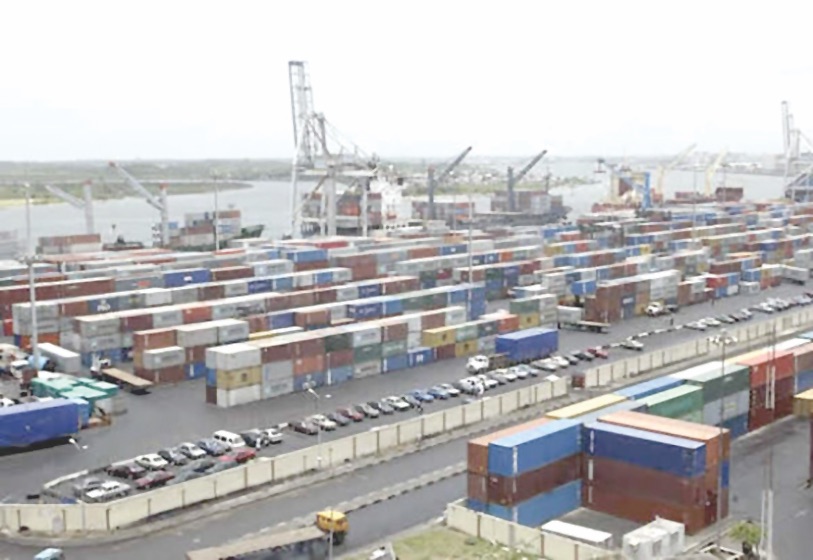
Investigations by DAILY SUN reveals that while port access at Apapa remain relatively free during the day, long queue of trucks begins to form by evenings from both Costain and Mile 2 axis of the port access roads while barely few vessels berth at eastern ports of Port-Harcourt, Onne and Calabar.
It was gathered that from Ijora-Olopa Bridge to Apapa and from Coconut Bus Stop to Tin Can Island’s port gates, long queue of truck drivers are allegedly convinced to pay between N30,000 and N50,000 to secure a spot on the queue.
The most affected areas include Wharf road, Warehouse road, Commercial road, Burma road, and Creek Road as vehicle owners often abandon their cars and resort to motorcycles to escape the gridlock.
Sources alleged that some officials of key agencies including: Nigerian Ports Authority (NPA), Nigerian Shippers Council (NSC), Lagos State Traffic Management Authority (LASTMA), Federal Road Safety Corps (FRSC), and the Nigeria Police—are complicit in the illegal toll collection, turning a blind eye as the situation worsens.
Mr.Moses Fadipe, former National Coordinator of Port Standing Task Team (PSTT), said the resurgence can be attributed to return of vested interests who previously profited from the initial chaos.
Prioritise rail in moving bulky goods
Meanwhile, a Licensed Customs Agent and Managing Director, Allworld Freight and Logistics Services Limited, Mr. Eric Umezurike confirmed that a syndicate involving both state and non-state actors profiting from the illegal tolls collected from truckers thereby exacerbating the traffic crisis.
He called for extension of Lagos-Ibadan standard gauge railway line from Ibadan to Kano and from Kano to Maiduguri/Port-Harcourt adding that the existing narrow gauge connecting these corridors should also be revived.
Umezurike averred that Nigerians have no business evacuating bulky goods by road if successive governments had been consistent in the development of the rail sector.
He noted that for instance since the inception of the present administration of President Bola Tinubu there has not been any meaningful development in terms of provision of rail infrastructure and rolling stocks but rather there has been doctored reports and speculations about approval of ₦1billion for revival of eastern railway corridor and plan to extend Lagos-Ibadan standard gauge railway line from Ibadan to Osogbo as part of third phase of construction of Lagos-Kano standard gauge railway line.
He called for urgent Federal and Lagos state government intervention to dismantle the alleged racketeering network and restore sanity to Apapa’s transport corridors.
President, Nigerian Institute of Shipping (NIS) and Nigerian Licensed Ship Chandlers Association (NILSCA), Mr. Martin’s Enebeli in his remarks faulted government insincerity for the relapse.
He urged relevant government agencies especially now that rail development has been removed from exclusive to concurrent list to prioritise rail transport for cargo evacuation from the two ports in Lagos.
Enebeli called for revival of the Eastern and Delta ports through modernisation, channelisattion and incentives to shippers so as to enhance shipping and create jobs for youths in the region.
He also advised that bonded terminals connected by railways should be relocated far from the port in order to reduce the persistent traffic gridlock within the seaport and environs.
NPA allays fear of road traffic gridlock
However, contrary to the views expressed, by some stakeholders in the logistics chain on the return of traffic gridlock to Apapa access roads, Nigerian Ports Authority (NPA) said it has in collaboration with Truck Transit Parks (TTP) recorded major improvements in port traffic management following full deployment of electronic electronic barrier systems across all terminal access points within Lagos port complex
The Ètò Electronic Call-Up System, developed and managed by Trucks Transit Parks Limited, is a digital truck scheduling and access management platform designed to streamline traffic into and out of Nigerian ports.
According to the authority electronic barrier systems at port access roads offer enhanced security, improved traffic management, increased efficiency, and significant cost savings.
To implement the electronic call-up system, NPA, in collaboration with Lagos State Government and other relevant stakeholders, developed about 29 truck parks across Lagos State.
All of the 29 truck parks have fully deployed the Eto infrastructure, which includes automated gating systems and other information technology (IT) equipment.
The authority reaffirmed that electronic call-up system has been able to streamline cargo evacuation and truck movements, thereby bringing a level of sanity to the roads
SWDCs trust fund, rail interconnectivity.
In its own submission, Managing Director, South West Development Commission, Charles Akinola stated that the Commission had a broader agenda to promote inclusive growth and shared prosperity across the region and aimed to strengthen infrastructure linkages, boost trade, and enhance economic cooperation within the region to accelerate sustainable growth.
He said, “The development commissions, like South West Development Commission, seek to see how those projects that are regional in nature, that are often left unattended, are given focus, pride of place
“We’re looking at, for example, regional connectivity by rail. How do we get the region connected through highways, superhighways?
“We are looking at a very, very best-in-class fund, SouthWest Investment Fund, which will be pretty much private sector-driven and will be able to help catalyse private sector investment from all over. So that some of those kinds of projects that really are outstanding, those kinds of projects that the region is so much in need of, get funded.”
He also disclosed that the commission had begun consultations with development partners and private investors to design a framework for issues such as intra-regional transportation corridors, agricultural value chain enhancement, and technology-driven industrial clusters that would connect major cities and rural communities.