Follow Us on Google
By Steve Agbota
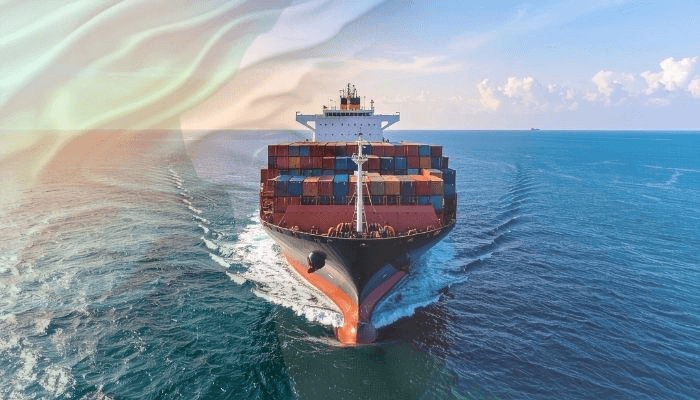
Stakeholders in Nigeria’s maritime industry have renewed calls for urgent and massive investment in port infrastructure, warning that the country is haemorrhaging about N20 billion every day as cargo is diverted to neighbouring ports with better facilities.
Industry operators say Nigeria should naturally dominate container traffic in West and Central Africa, as nearly 80 per cent of cargo bound for the region is ultimately destined for the Nigerian market. Yet, less than 20 per cent of these containers actually berth at Nigerian ports, a situation blamed squarely on ageing infrastructure and persistent inefficiencies at key gateways such as Lagos and Port Harcourt.
According to the stakeholders, congested port corridors, deteriorated access roads, shallow channels, obsolete cargo-handling equipment and slow documentation processes have combined to make Nigerian ports uncompetitive. Shipping lines, faced with delays and rising costs, increasingly prefer nearby ports where turnaround times are faster and operations more predictable, even when the final destination of the cargo is Nigeria.
They warned that the diversion of cargo has far-reaching consequences beyond lost port revenues. It inflates the cost of imports, weakens local manufacturing, erodes government earnings, and leads to job losses across the logistics and maritime value chain. From truck operators and freight forwarders to warehouse operators and factory workers, the ripple effects are being felt across the economy.
Stakeholders stressed that neighbouring countries have seized the opportunity created by Nigeria’s infrastructure gaps, investing heavily in modern ports, seamless logistics networks and investor-friendly policies. Without decisive action, they cautioned, Nigeria risks losing its long-held position as the maritime hub of the region.
To reverse the trend, the industry is calling for a coordinated overhaul of port infrastructure, combining public investment with private-sector participation. Priority areas include rehabilitating and expanding port access roads, upgrading cargo-handling equipment, deepening channels, and deploying fully digital port community systems to reduce delays and costs.
They noted that modern, efficient ports would not only stem the daily revenue losses but also unlock the full potential of Nigeria’s blue economy, attract transshipment business, and restore investor confidence. Ultimately, stakeholders believe that fixing the ports is not just a maritime issue but an economic imperative critical to Nigeria’s growth and regional leadership.
Confirming the losses, a recent report by Dynanmar, a Dutch consultancy firm, shows that Nigeria loses approximately N20 billion daily at the ports due to poor infrastructure and inefficiencies, with most revenue flowing to neighbouring ports, particularly Cotonou, Tema, and Lomé.
Speaking with Daily Sun, The former Association of Nigerian Licensed Customs Agents (ANLCA) and MD/CEO, Mikky Excellency Nigeria Limited, Alhaji Abdulazeez Babatunde Mukaila, said there is need to invest in port infrastructure.
“Since 1954, when the Nigerian port came to be, what has been the major investment that Nigeria’s government has made that you have seen? Practically nothing. The closest to all that was when the port was concessioned. And whatever the agreement that was reached between the Bureau of Public Enterprise and the concessionaires, you can see clearly that nothing was added in the area of infrastructure development.
“They only come here, establish, and take money away. They are not investing here. They are not investing. And the Nigerian government needs to, importantly, put a political will and do a massive renewal of our infrastructure. That is the only way. Both the physical solid infrastructure and the digital one. Customs are talking about digitalization, then we still have downtime every day, no server. So, the government needs to invest heavily to make our port competitive. The port is still not lit up,” he said.
According to him, there are parts of the port that are not lit up at all, adding that the concessionaires, whatever the agreement they reached, were powering their equipment by diesel.
“So all this shows that we have not done much to put the port in a competitive place. So, the government needs to invest heavily to renew the infrastructure in the port, both physical and digital. That’s it,” he said.
Other News
Meanwhile, the founder and first President of the Nigerian Shipping Chamber of Commerce and Senior Partner at Olisa Agbakoba Legal (OAL), Dr Olisa Agbakoba (SAN), said ports are critical to the development of any economy. If people produce goods but cannot move them, the economy cannot get ahead, saying port infrastructure development will attract N14 trillion. He added that Nigeria should be a maritime hub like Morocco, which is building one of the biggest sea ports to trade effectively with Europe, the Middle East, and North Africa. But we cannot be a maritime hub if our ports are in a bad state.
“Yet the Lekki Deep Sea Port demonstrates the transformative potential—it is already attracting over $20 billion in investment and provides a replicable model for port modernization across Nigeria. Imagine what would come if all other ports were operating optimally. The Apapa City Port requires massive overhaul.
“Strategic ports remain grossly underdeveloped or abandoned. The Onitsha River Port lies idle despite its potential to transform inland cargo movement and decongest Lagos ports. New ports at Azumiri and Oraji are underdeveloped. Port development projects in Akwa Ibom and Ogun states are commendable, but much more needs to be done,” he said.
To unlock the opportunity, he said it requires enacting the Ports and Inland Waterways Development Act to modernise port operations, establish legal backing for Public-Private Partnerships (PPPs) in port development, reform governance of the Nigerian Ports Authority to improve efficiency and competitiveness, regulate inland waterway transport ensuring safe navigation and infrastructure investment, and provide incentives for private sector investment in modern port infrastructure and smart port technology.
He said amending the Nigerian Ports Authority (NPA) Act (1999) to enhance private sector participation through robust PPP frameworks; and amending the National Inland Waterways Authority (NIWA) Act (1997) to mandate systematic dredging programmes, establish inland port development frameworks, and enable private sector participation in waterway management.
“Achieving cargo dwell time of 48 hours or less and port throughput growth of 15% yearly or more are critical performance indicators. Revenue streams include port tariffs and cargo handling fees from vessels using Nigerian ports, berthing and anchorage fees, container storage fees, transit trade fees for landlocked countries using Nigerian ports, and special economic zones for shipbuilding, repairs, and logistics,” he added.
The Head of Sea Empowerment and Research Centre (SEREC), Eugene Nweke, said from an industry and professional standpoint, SEREC believes Nigeria can achieve measurable and transformative gains in the short to medium term if these reforms are pursued with discipline.
According to him, incremental improvements in trade efficiency, revenue consolidation, and institutional coordination could unlock several trillions of naira annually in additional value, progressively scaling toward the higher end of the projected potential.
He said Nigeria must replicate the investment in port infrastructure in other neigbouring ports to be efficient and competitive.
He explained that Port automation, streamlined Customs procedures, and public–private investment have transformed Tema into a leading West African hub, significantly increasing cargo throughput and Customs revenue efficiency relative to port size.
He revealed that Lomé has leveraged deep-sea port infrastructure, fast vessel turnaround, and competitive tariffs to become a major transshipment center, capturing cargo volumes diverted from larger economies.
In South Africa (Durban Port Complex), he said that integrated port–rail logistics, advanced Customs systems, and strong regulatory enforcement enable the maritime sector to contribute materially to national GDP and industrial output.
While in Morocco (Tangier-Med Port), he added that Tangier-Med demonstrates how policy coherence, port efficiency, and logistics integration can position a maritime hub as a major driver of exports, industrial clusters, and foreign direct investment.
“Lesson for Nigeria: These benchmarks illustrate that scale alone does not determine maritime value. Rather, efficiency, automation, regulatory certainty, and inter-agency coordination are decisive factors in converting maritime activity into sustained national revenue and economic growth,” he added.