Follow Us on Google
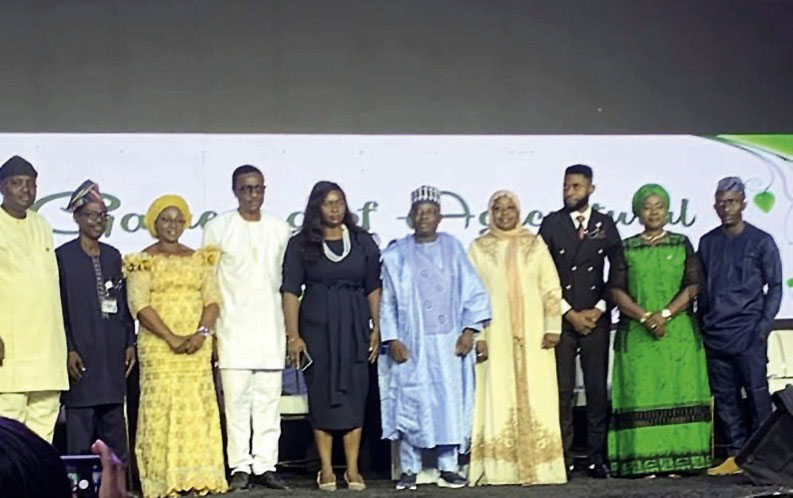
Thousands of agricultural science teachers and other stakeholders in the sector, including consultants, education minister and commissioners across the 36 states of Nigeria, recently gathered in Lagos to reinvent and reengineer young people’s perception towards agriculture.
The event, tagged, “National Agricultural Teachers Summit,” which was put together by Paradise Dynamic Farms Limited, attracted over 3,000 teachers as well as students from across Nigeria, with many joining online.
Themed “From Agricultural Theory to Production,” the central idea of the summit was how to change the perception of young people towards agriculture so that they would stop seeing it as a profession for the poor, and accept it as a profitable business venture.
Stakeholders agreed that, for young people to embrace agriculture, their mindset must be changed to understand that agriculture is not for the poor.
They argued that laboratories should not only be built for medical students but also for students of agricultural science. They insisted that agricultural science students should be attached to farms as it is done in countries like Brazil, so that the students can appreciate that agriculture is an industry.
In her welcome address, the Executive Director of Paradise Dynamic Farms, Mrs. Erica Okorodudu, noted that agriculture is so important to the future of Nigeria but wondered if the generation that will inherit it is being prepared for that.
She lamented that despite Nigeria’s enormous agricultural potential, cutting across fertile lands to diverse climates, a young population, farmers, entrepreneurs, researchers and innovators as well as a large domestic market and the opportunity to become a major force in African agriculture, many young Nigerians still see agriculture as something old-fashioned, difficult, or something one enters only when other opportunities have failed.
She attributed the trend to perception, saying that Agricultural Science is taught in our schools, but too often the realities of modern agriculture remain outside the classroom.
“We have dedicated teachers doing their best, sometimes without adequate laboratories, demonstration farms, equipment or exposure to the technologies transforming agriculture around the world.
“We have students learning about agriculture without always having the opportunity to touch the soil, operate a production system, monitor a crop, manage livestock, analyse data or experience agriculture as a business,” she stated
She, however, noted that the summit aims to change the way an entire generation sees agriculture, which must begin by changing the way agriculture is taught.
She argued that the agriculture of tomorrow would not be defined only by land and labour, but also technology, data, irrigation, protected agriculture, hydroponics, aquaculture, climate-smart production, precision agriculture, digital platforms, mechanisation, processing, logistics, finance and entrepreneurship.
She posited that teachers must be equipped to introduce young Nigerians to agricultural science education through practical knowledge, modern technology and school-based agricultural enterprise.
“Today, thousands of agricultural science teachers are gathered here in Lagos, while teachers from across the states of the Federation and the Federal Capital Territory are joining us through designated viewing centres. They are not merely watching a programme; they are participating in the same national experience, receiving the same knowledge, engaging with the same conversations and becoming part of the same movement.
“Whether we are standing here in this hall or participating from a viewing centre hundreds of kilometres’ away, we are connected by one purpose, and that is to prepare the next generation for the agriculture that Nigeria needs,” she said.
She commended the agricultural science teachers for dedication and sacrifices, saying, “We see you. We see the dedication required to teach when resources are limited. We see the extra effort involved in preparing lessons, conducting practicals and inspiring students, often with tools and facilities that do not match the ambitions of the curriculum.
“We see teachers who continue to believe in their students even when the system makes their work difficult. Today, we want you to know that your work matters. You are not simply teaching a subject; you are shaping how the next generation understands one of the most important sectors of our national economy. You are the multiplier. What you learn today does not end with you; it moves from you to your students; from your students to their families; from their families into their communities and from those communities into the wider Nigerian economy. That is why investing in the teacher is an investment in the future.”
She urged them to leave this summit with more than a certificate or a training manual. “We want you to leave with knowledge you can demonstrate, skills you can teach, ideas you can implement and a vision you can take back to your school.
“We want the school farm to become more than a place where students are sent to work. We want it to become a living agricultural laboratory; a place where students can see modern agriculture, ask questions, experiment, measure results, solve problems and discover that agriculture is not merely a subject to pass but a world of possibilities,” she said.
She also urged teachers to the movement to their principals, students, parents and communities as well as education commissioners. “Take the knowledge, the enthusiasm and the vision from this room and turn it into action. Let today be the spark. Let our classrooms become the fire,” she added.
She called for the establishment of ‘School Demonstration Farms,’ where students can encounter modern agricultural systems in practical ways. “They can see protected cultivation, experience irrigation, understand hydroponics, learn livestock management and aquaculture, produce compost, explore climate-smart agriculture and digital agricultural tools, as well as begin to understand the relationship between production, value addition, markets and enterprise, because we do not want merely to produce students who know agriculture; we want to help produce a generation that can do agriculture and ultimately, a generation that can build businesses, create jobs, innovate and contribute to Nigeria’s food security.
She stressed that the summit has just opened a new chapter in Agricultural Science education in Nigeria, adding, “And if we get this right, the harvest will not only be measured in tonnes of food; it will be measured in young people equipped with knowledge, schools transformed into centres of practical learning, new agricultural enterprises, new jobs, new innovations and a stronger, more food-secure Nigeria.
“That is the future we are here to build and it begins with the teacher. It begins with the classroom and it begins today.”
An agricultural engineer and one of the panelists, Henry Nnanna lamented that agriculture, which used to 70 percent of the workforce in Nigeria had unconsciously relegated agriculture to the background; a development he attributed to the discovery of oil.
“Oil came and we forgot about agriculture. We stopped doing it the appropriate way, and that is why the next generation doesn’t seem to connect with it,” he said.
He commended the organisers of the event, saying, “Efforts like this are designed to bring agriculture to the forefront by catching them young from their teachers. That’s why we organize an agricultural summit.
“It is aimed at bringing the teachers together to inculcate in them the new agricultural technology, innovation and business because they will be the ones to groom the students that are going to be the next generation.
So this is just the first step. This is the first of its kind and then we’re aiming at making it a continuous process. The panel was drawn from all sectors ranging from technology to entrepreneurship, policy and government, as well as the educational sector. We had to bring everybody in to be able to hit the right chord,” he said.
He called for a change of mindset and reorientation towards agriculture, so that young people can get into it knowing that it is a profitable business.
“I have taught smart agro for quite some time. I changed my perspective on agriculture. Do you know that in your backyard, on your corridor and even where you park your car, if you just put 10 bags or sacks there and fill it with sand, you can get 10 to 20 tubers of yam from that place, from the leftovers of the yam you’re using. And all you need is just to occasionally come and water it.
“You also know that if you have a small plot of land in your backyard, cucumbers take only 45 days to mature. You can plant it today and by next month you are already going to the market.
“You can also start a poultry business today. Go to the bank and take a loan for the poultry business. Start today and by next week you start repaying your loan. It all depends on where you’re focusing,” he said.
Another panelist, Dr. Halima Sule Alhassan. who represented the Chairman of the Committee of State Commissioners of Education in Nigeria (COSCEN), commended the organisers for bringing together teachers and young Nigerians for such an educative event.
She noted that the committee of state commissioners of education organizes webinars every month, where they discuss matters that can move agriculture forward. She said the committee works in partnership with the governors’ forum.
The beauty of the association, according to her, is that if one state has a successful agricultural model, other states can key into that.
“If Lagos or any other state has a very successful agricultural model, it can be replicated in other states. We can bring up such a matter during our online meetings for discussion. And from there, we take records and where necessary, we can recommend it to be integrated into the country’s educational policy,” she stated.