Follow Us on Google
From Femi Folaranmi
Stakeholders in the Niger Delta have expressed concern over the Federal Government’s silence on the Bayelsa State Oil and Environmental Commission’s report on decades of oil pollution in Bayelsa.
Titled, “An Environmental Genocide: Counting the Human and Environmental Cost of Oil in Bayelsa, Nigeria”, the report was unveiled by the Bayelsa State Government on October 28, 2024, and presented to President Bola Tinubu on November 5, 2024.
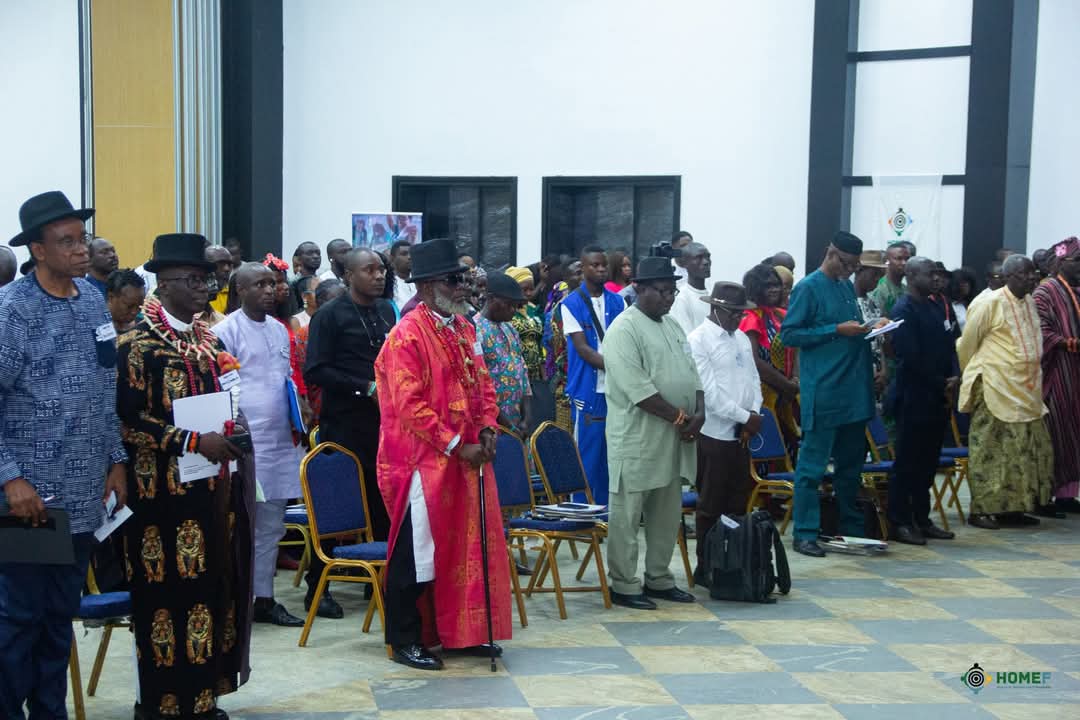
At the 4th Niger Delta Alternative Convergence (NDAC) in Yenagoa, themed *Environmental Genocide: Time for Remediation, Restoration and Reparation*, environmentalist Nnimmo Bassey, Director of Health of Mother Earth Foundation, criticised the lack of response six months after the report’s submission.
Bassey noted that Yenagoa hosted the event, as Bayelsa is the epicentre of ecological devastation in the Niger Delta. “Environmental and health audits of the entire Niger Delta are urgently needed considering the environmental genocide and the brevity of life in the region,” he said.
Other News
Bassey urged immediate action, warning that delays are costly given the severe harm to people and the environment. He highlighted the report’s call for $12 billion over 12 years to remediate Bayelsa, estimating $150 billion for the broader Niger Delta over five years, plus additional funds for human and ecological losses.
Dr Isaac Asume Osuoka, Coordinator of Social Action International, accused the Tinubu administration of showing “shocking disregard for the health, environment, and dignity of Niger Delta communities”. He compared its inaction to the Abacha regime’s disdain for environmental justice and blamed the 1999 Constitution for enabling regional inequalities.
“A just transition in Nigeria demands more than technical fixes or corporate pledges. It requires the transformation of the Nigerian state itself—from a vehicle of elite extraction to a platform for community sovereignty,” Osuoka stated.
The NDAC seeks to halt ecological destruction and promote urgent remediation across the Niger Delta.