Follow Us on Google
From Adesuwa Tsan, Abuja
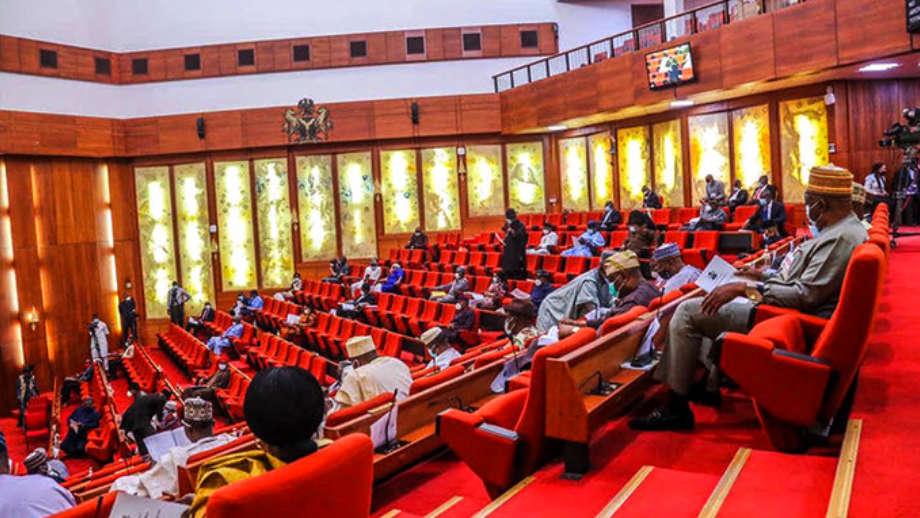
A bill seeking to compel social media platforms operating in Nigeria to establish physical offices in the country received overwhelming support from stakeholders yesterday during a public hearing organised by the Senate Committee on ICT and Cyber Security.
The proposed legislation, sponsored by Ned Nwoko, seeks to amend the Nigeria Data Protection Act, 2023, to make it mandatory for social media companies operating in Nigeria to maintain physical offices within the country’s territorial boundaries.
Stakeholders also endorsed a separate bill sponsored by Senate spokesman, Yemi Adaramodu, for the establishment of the Artificial Intelligence Academy in Omuo-Ekiti, Ekiti State, during the same public hearing.
Explaining the purpose of the proposed law, chairman of the Senate Committee on ICT and Cyber Security, Shuaib Salisu, said the two bills were designed to strengthen Nigeria’s digital future.
He explained that while the first bill is aimed at enhancing the protection of Nigeria’s cyberspace and improving regulatory engagement with global technology companies, the second seeks to create a centre of excellence for artificial intelligence education, research and innovation.
In his address, President of the Senate, Godswill Akpabio, represented by Deputy Senate Leader, Lola Ashiru, described both proposals as forward-looking and nationally significant, saying they reflected the Senate’s commitment to enacting laws that support innovation, economic development and good governance. While acknowledging concerns that the bill could discourage investment or restrict digital innovation, Akpabio stressed that the proposal was not intended to stifle social media platforms but to ensure they have a stronger institutional presence in Nigeria.
Echoing the same position, Nwoko insisted that the legislation was not punitive, saying, “This Bill is neither punitive nor hostile to innovation. It is not designed to frustrate investment or discourage technology companies from operating in Nigeria.
Other News
“On the contrary, it seeks to deepen their engagement with Nigeria by encouraging them to become true corporate citizens of our country.”
The lawmaker argued that major technology companies already maintain offices in several countries with smaller economies and populations than Nigeria, citing the United Kingdom, Ireland, the Netherlands, Spain, Singapore, India, the United Arab Emirates, South Africa, Brazil, Australia and Japan.
According to him, companies such as Meta and Google operate multiple offices in some of these countries, performing functions that include engineering, artificial intelligence research, legal and regulatory compliance, public policy, advertising, customer support, trust and safety, cloud services and product development.
Nwoko noted that those countries had deliberately positioned themselves as technology hubs by encouraging global digital companies to establish local operations, resulting in increased employment, higher tax revenues, technology transfer and stronger collaboration with government regulators.
He pointed to Ireland as an example, noting that the presence of companies, including Meta, Google, LinkedIn, TikTok and X, had transformed the country into one of Europe’s leading technology hubs, while creating thousands of jobs and attracting further foreign investment.
He questioned why Nigeria, despite being Africa’s largest digital market, had yet to enjoy similar benefits.
“If countries with significantly smaller populations and digital markets than Nigeria have secured these investments and benefits, why should Nigeria continue to stand on the sidelines? Why should Africa’s largest digital market not enjoy the same opportunities?” he asked.