Follow Us on Google
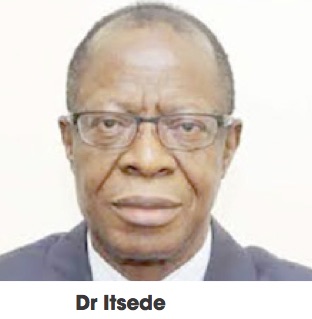
From Walter Ukaegbu, Abuja
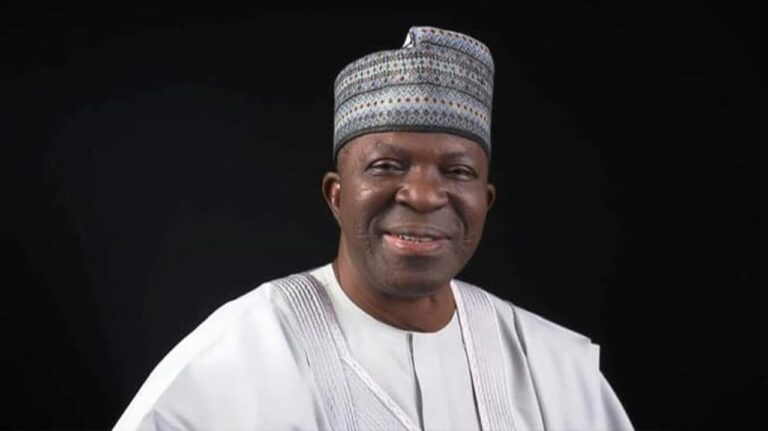
Dr. Chris Osiomha Itsede is an economic expert with decades of experience in drafting and negotiations of treaties of the African Economic Community (now AU). He was a member of the Central Working Group, constituted by the Federal Government to draft the NDP 2021-2025, NA 205.
In this interview, he urged the Tinubu led administration to move away from reactive economic policy management to proactive policy framework to develop the economy.
Dr Itsede, who is also the Executive Chairman of Polar-Afrique, spoke on the Niger crisis and economic benefit AfCFTA among other issues.
How would you assess the Naira rising exchange rate?
As an economist, I know that the market signals prices and allocation of resources. I don’t see anything wrong with the exchange rate. Exchange rate is a commodity to the person who is buying foriegn currency from other countries. It is the cost and what actually determines the exchange rate of a country is their productivity that places value on the currency of a country. The current exchange rate shows the exact productivity level of Nigeria.
Exchange rate is not something that a prime minister could just announce that it should be this particular amount, it does not work that way at the actual market place. How people view your currency is a reflection of the demand and supply of your economy.
What can government do to boost value of the Naira?
If we truly want to boost the value of the Naira, we must reduce our dependency on foreign products. We must all patronise made in Nigeria goods and we should also be producing for exports. If we focus more on exports, the unemployment rate in Nigeria will also reduce because when you produce for exports, you are indirectly addressing unemployment as a lot of persons will be out of the labour market and that will also reduce poverty.
Do you see the Tinubu administration addressing nation’s economic challenges
The National Economic Policy has a clear direction for the present administration which was handled over to the president by the previous administration. This document took about 600 persons within and out side the country to produce. Economic reforms are not things that are done in a hurry.
The function of the new minister of information and National Orientation has to be at the forefront in changing the values of Nigerians about their love for imported goods and services. It is so sad that Nigerians import toothpick from other parts of the world. Nigerians need to be told that what they are doing is injurious to the nation’s economy. There is urgent need for Nigeria to have pride in made in Nigerian products. The job before the minister is a huge one. The media must also key into this to educate Nigerians on the need to change our orientation. We all need to reform our way of doing things by being more patriotic.
Your reaction to on going agitation in some quarters for reversal of subsidy removal
The president should not reverse the policy rather, there should be a replan between policy discussion and the impact. As we all know, the subsidy regime was an organised fraud. It came up after the Middle East war in 1967 because of the increase in petroleum products by OPEC.
Subsidy became the biggest drainpipe that a few individuals were benefiting from. I will advise the president to get thinkers that will research on the best way to mitigate the impact of the subsidy removal. To reserve the policy means succumbing to the black mail of the economic sabotage who are blackmailing the government.
There are reform going on vehicle registration which aims to ascertain the number of registered vehicles in Nigeria. For instance, when you register a car in Zamfara and you are being asked to stop for checks in Abuja, the road safety official stopping you already have your data based on the information given at the point of registering the vehicle. This will also address security challenges in the country. Although, these reforms are going on silently but we are gradually getting it right.
NNPC has taken $3billon to stabilise the Naira. Is that the responsibility of NNPC or CBN
In developed countries, monetary policies and exchange rate policy are the exclusive responsibility of Central Bank. I don’t understand how a supposedly private organisation like the NNPC will come to say they want to stabilise the Naria. That is the responsibility of the CBN. But the question is for how long, I mean how do they intend to sustain it. Are they going to give it to commercial banks? Or what magic do they intend to perform?
What is your take on FG’s constant borrowing?
We didn’t have a problem with borrowing until the last administration and the 10th senate that took borrowing to an irresponsible level. They were taking advantage of the nation’s borrowing leeway to push Nigeria into debts.
How far can the N5 billon released to states as palliative go?
Some of us are still waiting to see the kind of policy this administration want to introduce as palliative. To me that policy is unrealistic because the states are not the same in size, and the level of poverty in each state is not the same. Early this year we saw a report on multidimensional ratio of poverty. What are the mechanisms that the states intend to use in disbursing the money.
Are you satisfied with president’s appointees or is it just job for the boys?
In as much as anyone can be appointed into a political office, there are some core ministers and agencies in an economy that must be managed by technocrats and experts. It will be inappropriate for the ministry of finance to be maned by just anybody. Like the central banks all over the world are being managed by economists. Not necessarily by an accountant or banker but economist. Even in developing countries that is the standard. Although, there are special advisers to guide the minister but what happens when he or she goes for an international meeting of conference of ministers globally?
Besides, the civil service is not as robust as it use to be beginning from 1976 after it was destroyed by the military. The Nigeria civil service was rugged and seasoned that was why Nigeria was able to fight the civil war for three years without borrowing a Dollar. The Military were being advised by the civil servant with pragmatic polices. But today, the civil service have been weakened like every other institution in the country. It also require attention or reform as soon as the government settle in. This is why I earlier said reforms are a gradual process that requires time. Each government will come and do its bit and before you know it much has been achieved.
What advice do you have for President Tinubu to reset the economy
Fortunately, the Tinubu administration has its job cut out for it in the National Development Plan 2021-2025, and the perspective plan Nigeria Agenda 2050 that were both developed and launched in the twilight of the previous administration.
This government can hit the ground running by effectively implementing the robust policies and programs articulated in the plans. Of course, it would be at liberty to tweak and fine-tune some policy and programs areas to align them with emerging realities.
I will advise the president that he should commit to National Development Planning to get Nigeria working again. The last administration started it.
We missed it we stop planning for our economy. It was during the reboust economic planning that we had the Iron rod in Ajaokuta, industries and refineries were programmed and executed all over the country. It was economic planning that made us to stop importing paper. Economic planning makes you discipline to be proactive not to be reactive.
How can Nigeria reap the dividends of African Continental Free Trade Area (AfCFTA)?
Like in every game of sport, countries may benefit from AfCFTA to the extent of their preparation to effectively play on the continental unified economic space that is under construction. As Africa’s largest economy, Nigeria can leverage the continental trade bloc to further unlock its economy through the massive trade and investment opportunities outlined in the various sectorial protocols being signed under AfCFTA. To get its handle squarely on on AfCFTA, the Tinubu administration should urgently constitute a committee of experts from MDAs, organized private sector, consultants, CSOs, and academia to articulate a Country Strategy and actionable recommendations for engagement with AfCFTA.
What would be the economic and social fallouts for Nigeria from an ECOWAS military intervention in Niger?
Immeasurable! Make no mistake about it. For Nigeria, there will be enormous short and long term economic and social consequences of a military invasion of Niger Republic by ECOWAS. War would cause a dislocation to the centuries old cultural, social, and economic integration of Nigeria and Niger which predate colonial rule and ECOWAS itself. For instance, the Nigeria-Niger treaties of 1964 and 1980 on managing the water and others resources of the River Niger are in peril. What is more, the intercontinental gas pipeline Nigeria plans to use in the shipment of gas to Europe via Algeria would transverse thousands of kilometers through Nigerien territory. Meanwhile, the poor and vulnerable in both countries are reeling from even the limited sanctions imposed on Niger in the wake of the coup.
A shooting war would entail stupendous costs to economic activities in both countries, set in motion hundreds of thousands of refugees fleeing from the conflict areas, and exacerbating the extant humanitarian quagmire on the borders of both countries. My advice to the Authority of Heads of State and Government of ECOWAS is to explore diplomacy to resolve the Nigerien matter. Do NOT resort to armed intervention. It is better to jaw-jaw than to war-war. By the way, virtually all wars end up being settled on the round table peace conference. Therefore, go to the peace table and talk things out. No war, please, don’t fight.