Follow Us on Google

Laide Raheem, Abeokuta
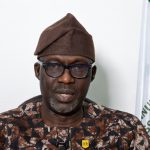
Dr. Isaiah Kolawole Oyeyinka is the Rector of Gateway (ICT) Polytechnic, Saapade, Ogun State. In this interview with The Education Report, he speaks on the challenges confronting education in Nigeria, especially funding, the disparity between BSc and HND holders, his sojourn in the polytechnic among other issues.
Excerpts:
Our education system is bedevilled with challenges, one of them is funding. What can be done to address this?
Well, the issue of funding is not only limited to the education sector. It is a big issue in Nigeria today. We have grown to a level that it looks as if our resources are not supporting our sectors adequately, so what happens in education happens in road infrastructure, it happens everywhere, in every sector. My opinion about this matter is that education administrators should use their ingenuity in running their schools. If you don’t think outside the box, then you may not make any headway in the education sector of today. The question I want to ask is that how do institutions in other parts of the world make it without government’s intervention? One thing that is known and constant is that education is not cheap and somebody must pay for education, so it now depends on who wants to pay for education.
The parents? The government? Students themselves or is it the society? Somebody must pay for education and so we will need to sit down as a nation, as a people and determine what to do to address this issue. What I will advise individuals, colleagues in education administration is that we should put forward ingenuity, there are a lot of things we can do with the minimal resources we have. We should also try and minimise waste, we should also be very prudent in managing the educational sector. But we need to sit down as a nation and determine what we want to do. For example, in the First Republic, it was the government in the Western region that paid for education, so it was free from primary to university, to PhD level. You did not need to pay, the government taxed some people and used proceeds from the Cocoa to fund education. The money they made from the agriculture was judiciously used to fund education and the region recorded achievements in education. What are we doing in our own generation now? Who is going to finance education? Is it individuals? Is it the government? Or do we want to agree on some other ways of financing education? It is like the Federal Government is doing its own, the state governments are also doing their own. In fact, some states are not even adequately financing education. There must be a good formula for financing education, particularly technological education which is very costly, and somebody must pay for it.
Students prefer to seek admissions into universities instead of polytechnics, what is your take on this?
That is a national and generational problem. It is something that started a long time ago and it needs a lot of efforts to stem it. The fact is that the concept of society is on degree and to get that degree, you must go to university. But when you have HND, you are discriminated against. If the discrimination is not removed then that trend will be difficult to reverse. If graduates come out of the polytechnics with good skills, definitely, that situation will be reversed very soon. Nigeria system is not encouraging but the Federal Government has restated their commitment to ensuring that the dichotomy between HND and BSc is removed, but many private organisations have not bought into that. Until that dichotomy is removed, nobody will see why they should go to the polytechnic instead of the university. But elsewhere in the world, students prefer going to the polytechnic instead of the university. Until we achieve that, the Nigerian dream of going technological may not be achieved.
What is the magic wane for the rapid transformation of the poly?
The polytechnic was established in 2006 and I took over the mantle of leadership in 2014. When I came on board, the infrastructure I met on ground was nothing to write home about, but with sheer determination, we had a vision of bringing up to a first-class polytechnic in Nigeria. Not only that, when I resumed, we also didn’t have many students; we had around 1,000 students on campus both for the HND and ND courses. And it was bad that a lot of salary arrears were owed, unpaid allowances and so many things were not working, while the environment was not conducive for learning. It was just through a sheer determination that we moved the school to a level that would be acceptable for a higher institution. We started working and thank God for giving us hardworking and cooperative staff. They keyed into the vision and you know when there is a vision, there is always a zeal to run it.
You recently inaugurated a Software Application Development Centre, has the institution recorded any major feat in this area?
Charity begins at home, about 90 per cent of all the software we are using on campus were developed internally. We have students management system, that is the students portal developed internally. We have the students’ examination system, an online examination system developed internally, this software takes care of about 80 per cent of our examination process. We also have a lot of software that was developed by the school. There is a particular communication software that we use to publish news for the polytechnic community. It is a mobile app that we developed, we developed the biometric software we are using for students attendance. So the case of impersonation had been reduced to zero on campus because of the biometric software we deployed for examination and lectures. All of these are developed internally. Also, we train some of our students on software and mobile app development, we registered them at the centre. We are even going to employ some of them because they are very good. The centre is just one year old and we are committed to developing more software from the centre.
Since you assumed office as rector, what major feats have you recorded?
I may not be able to itemise all the achievements but they are visible. And I don’t also believe in blowing my trumpet. But let me just tell you one or two of them. We have upgraded the infrastructure and a lot of structures have been added and they are world-class standard. We have also been able to increase the number of students from a very small number to 7,000. We have also improved on our programmes. I met about seven ND and four HND programmes. Today, we have 30 programmes. Included in these achievements, is the acquisition of workshop and laboratory equipment. These things are costly but we have been able to acquire a number of them and we are still going to acquire more. We have also tried to upgrade the staff – their skills, their attitude, we organised training for them internally, nationally and internationally. This is because if you build infrastructure and you don’t build people, it won’t work. In addition, we have also created a conducive environment for learning for students. Cultism and violent activities in the polytechnic are zero, we have an atmosphere of peace. We have built the school in such a way that the issue of money for-grade or sex-for-mark cannot happen on campus so we have tried to create a normal environment where learning can thrive.
What are the challenges confronting the school?
The challenges we have is the challenges of growth. I cannot add more students to the population if I don’t have accreditations from the NBTE. And I cannot have more accreditations from the NBTE if I don’t add to our infrastructure and the staff, and it is difficult to improve on our staff and infrastructure if I don’t have money. Those things are connected. We have asked the governor to assist us in infrastructural development and he has promised to do so.