Follow Us on Google
By Oluseye Ojo
Nigeria is believed to have been endowed with one of Africa’s largest inland waterway networks. It is a vast natural asset that comprises thousands of kilometres of rivers, creeks, lakes, lagoons and reservoirs stretching across the country.
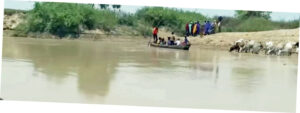
These waterways, from the River Niger and River Benue to the intricate waterways of the Niger Delta and numerous inland channels, as gathered, possess enormous potential to revolutionise transportation, facilitate trade, boost tourism, support agriculture and fisheries, reduce pressure on the nation’s overburdened road network, and stimulate economic growth.
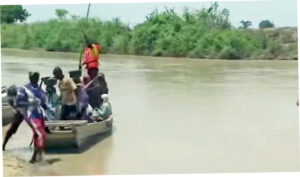
Investigation revealed that if properly developed, regulated and maintained, the inland waterway system could become a safer, cheaper and more environmentally sustainable means of moving people and goods, while unlocking significant investment and employment opportunities across Nigeria.
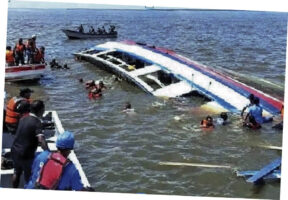
For millions of Nigerians living in riverine communities, boats are not luxury vessels.
They are school buses, ambulances, taxis and market vehicles, providing the only practical means of accessing education, healthcare, commerce and neighbouring communities.
The sector, despite the immense potential, seemed to have been unable to deliver its full economic and social benefits. It has been fraught with tragedies at intervals.
Available information showed that behind every voyage that ended in tragedy were breadwinners who never returned home, children left orphaned, women suddenly widowed and communities forced into repeated mourning.
19 months of tragedies
Within the past 19 months, hundreds of Nigerians boarded boats in search of life. Some travelled to markets, schools, farms, hospitals, weddings and even funerals. But many never returned.
Between January 2025 and July 2026, at least 235 Nigerians perished in 10 major boat mishaps across eight states.
From the River Niger in Niger and Kogi states to the waterways of Kwara, Sokoto, Jigawa, Benue, Lagos and Yobe, journeys that should have lasted minutes ended in catastrophe.
They left behind grieving families, orphaned children and communities struggling to come to terms with avoidable losses.
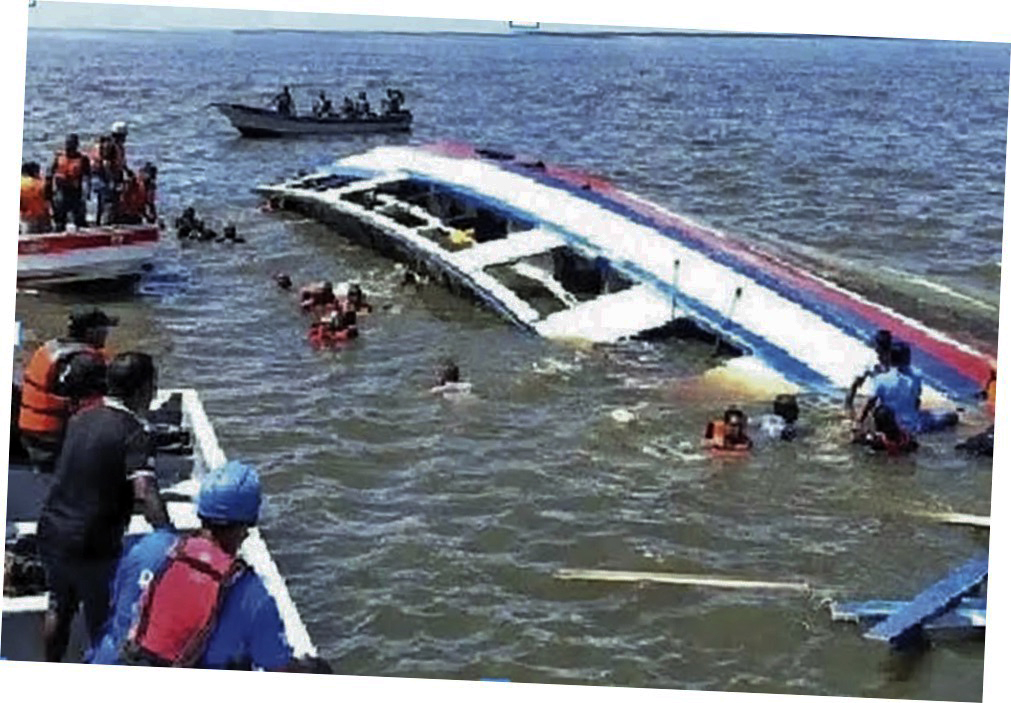
Perhaps no tragedy captured the magnitude of the crisis more vividly than the September 2, 2025 disaster on the River Niger in Niger State, where an overloaded wooden boat carrying mourners to a burial ceremony struck a submerged tree stump and capsized.
By the end of the rescue operation, at least 60 people had drowned, making it one of the country’s worst inland waterway disasters in recent years.
Yet the tragedy was not an isolated catastrophe. It was the most visible symbol of a national emergency that has continued to unfold with alarming regularity.
An investigation by Saturday Sun, based on verified official reports and credible media accounts, showed that the 235 fatalities represent only the major, nationally documented incidents recorded within the past 18 to 19 months.
Safety experts believe the actual death toll is likely much higher, as numerous accidents in remote riverine communities might not have been officially documented or received only scant public attention.
The findings raised questions about preventable factors, such as overloading, failure to enforce the compulsory use of life jackets, ageing boats, untrained operators, night travel and weak regulatory oversight have continued to claim lives despite repeated government promises to make Nigeria’s inland waterways safer.
Between January 2025 and July 2026, official reports also confirmed at least 106 survivors or rescued passengers. The total number of survivors is believed to be much higher because several accident reports did not state how many people were rescued.
Rivers turned into death traps
The first major tragedy during the review period occurred in May 2025 at Gbajibo in Kaiama Local Government Area of Kwara State.
A passenger boat conveying traders to a weekly market capsized, killing 27 people.
Investigations linked the accident to severe overloading and the absence of life jackets. It was the third major boat disaster recorded in the area within two years.
Barely two months later, disaster struck again in Shiroro Local Government Area of Niger State. On July 27, 2025, a passenger boat carrying 39 passengers to Zumba Market overturned. Twenty-six passengers were rescued, but 13 others drowned despite frantic rescue efforts by local divers and emergency responders.
On the same day, another tragedy occurred hundreds of kilometres away in Taura Local Government Area of Jigawa State, where a canoe carrying 17 passengers from Digawa to Zangon Maje village capsized.
Nine people, most of them young girls, lost their lives.
The National Emergency Management Agency (NEMA) later visited the affected community and intensified public enlightenment on water transportation safety.
A trader, Salihu Mudassir, who survived the Kwara boat accident in May 2025, recalled that the warning signs were ignored.
“Before we boarded, it had already started raining. Some people suggested that we wait for the rain to stop, while others insisted that we should go ahead because they wanted to return home. Eventually, we decided to board the boat despite the weather.
“As we set off, the water started acting strangely. It became rough and unstable. After a while, water began entering the boat, and it felt like we were about to sink,” he said.
Mudassir said he survived by clinging to the boat after it capsized.
One tragedy after another
The wave of disasters continued in August 2025 when a boat conveying traders to Goronyo Market in Sokoto State capsized amid strong river currents.
Emergency responders reportedly faced enormous challenges because there was no passenger manifest, making it difficult to determine the actual number of passengers onboard. About 25 people lost their lives.
Barely weeks later came the catastrophe that shocked the nation.
On September 2, 2025, an overloaded wooden boat carrying more than 100 passengers to a burial ceremony struck a submerged tree stump and capsized on the River Niger in Niger State. Most of the victims were women and children.
Despite desperate rescue efforts involving local divers, emergency officials and volunteers, at least 60 people died.
The incident triggered nationwide outrage and renewed calls for stricter enforcement of inland waterway safety regulations.
The tragedies did not end there. In September 2025, another wooden passenger boat conveying traders and market women across the River Niger in Ibaji Local Government Area of Kogi State overturned, killing at least 26 people.
The Kogi State Government subsequently promised to strengthen collaboration with federal agencies to improve water transport safety.
Even Lagos was not spared
Although Lagos has one of Nigeria’s most organised water transport systems, it also experienced tragedy.
On December 30, 2025, a passenger boat travelling through the Igbologun water channel capsized during a night journey. Six passengers died, while four others were rescued.
The accident raised concerns over the dangers of night travel and poor visibility on inland waterways.
Furthermore, the new year (2026) brought no respite. On January 3, 2026, a canoe carrying 52 passengers capsized on the Yobe River near Garbi in Nguru Local Government Area of Yobe State.
Investigations attributed the accident to overloading and the structural failure of the ageing canoe. Twenty-nine passengers lost their lives.
Barely two weeks later, another commuter boat capsized around the Buruku and Logo/Ukum river crossings in Benue State. Eleven people died.
Residents have repeatedly complained about the dangerous crossings and the absence of safer transportation alternatives.
11 die in Jigawa boat accident
The latest major incident within the review period occurred on July 20, 2026, in the Ringim Local Government Area of Jigawa State. A boat carrying about 30 passengers overturned.
Other News
Rescue teams confirmed 11 deaths, Reports from journalists that visited the scene of the accident showed that the boat was supposed to carry about eight to 10 people,. But on the fateful day, it carried about 30.
As gathered, the particular boat involved in the accident floated on the river, after it emptied people on board into the water.
Latest information revealed that people about 40 communities around the area rely heavily on using canoes to cross the river, a journey which should be about five minutes.
The particular boat involved in the accident after one or two days, has also returned to ferrying people across the river.
Locals recounted that the incident was not the first one in the community. The previous mishaps, they stated, had involved one person, two persons, three persons, but not a major one like the latest incident.
The Jigawa State governor, Umar Namadi, in the aftermath of the Malamawar Yandutse boat tragedy, pledged immediate government intervention to prevent a recurrence. After attending the funeral prayers for the victims at the Malamawar Yandutse Juma’at Mosque, the governor directed the immediate construction of a road bridge across the river to replace the community’s reliance on canoes.
He described the bridge as the only permanent solution to the recurring tragedies. He also conveyed the condolences of the Jigawa State Government to the bereaved families and prayed for the peaceful repose of the victims.
In addition, Namadi assured residents that his administration would strengthen the enforcement of safety measures on inland waterways, while work on the bridge progressed. He stressed that the government was determined to ensure such a tragedy never occurred again.
18 Adamawa travellers die in Cameroon boat mishap
At least 18 Nigerians from Adamawa State died in a boat accident in the Republic of Cameroon after a vessel travelling from Garoua to Yola capsized during a storm.
The tragedy occurred late on Monday night when the boat, carrying more than 50 passengers, encountered a violent storm around midnight and overturned, according to eyewitnesses.
The boat was reportedly transporting passengers as well as rods and other building materials destined for Dasin community in Fufore Local Government Area of Adamawa State.
Although initial reports put the death toll at about 30, local authorities later confirmed that about 20 people had died. However, 18 of the victims were identified as Nigerians from Adamawa State.
Same mistakes
Although the accidents occurred in different locations, official investigations repeatedly identified similar causes. Overloading remains the single biggest factor.
In many riverine communities, it was was gathered that commercial operators routinely exceed the carrying capacity of their boats in a bid to maximise profit.
The widespread disregard for life jackets has also been identified as a major concern.
It was also argued that despite sustained campaigns promoting the slogan, ‘No Life Jacket, No Travel’, compliance remains poor, while enforcement is inconsistent.
Another critical weakness is the failure to maintain passenger manifests. As gathered, without accurate records of passengers before departure, rescue agencies often struggle to determine how many people are missing after accidents occur.
Investigations have also identified ageing wooden boats, inadequate maintenance, submerged tree stumps, untrained operators, excessive speed, adverse weather conditions and night travel without navigational aids as recurring causes of the disasters.
Beyond awareness campaigns
The Federal Government, concerned by the increasing fatalities, inaugurated a Special Committee on the Prevention of Boat Mishaps in February 2025 to review existing safety measures and recommend practical solutions.
Similarly, National Emergency Management Agency (NEMA), the National Inland Waterways Authority (NIWA), state emergency management agencies and other stakeholders have intensified public enlightenment campaigns in vulnerable riverine communities.
Their interventions have focused on promoting life jacket usage, safer loading practices and compliance with water transport regulations.
Experts, however, insisted that awareness campaigns alone cannot solve the problem.
They argued that Nigeria urgently requires compulsory boat registration, periodic vessel inspections, licensing and retraining of operators, stricter enforcement against overloading, improved search-and-rescue capability, mandatory passenger manifests and sustained investment in safer inland water transport infrastructure.
They also advocated stiff penalties for operators who violate safety regulations, stressing that weak enforcement has emboldened many to continue dangerous practices with little fear of consequences.
Boat operators blame weak enforcement, poor safety culture
Boat operators and their associations have repeatedly argued that most inland waterway disasters are preventable. They blamed weak enforcement of safety regulations, inadequate safety equipment and the economic realities facing operators.
National President, Association of Tourist Boat Operators and Water Transporters of Nigeria (ATBOWATON), Gani Shekoni Balogun, following a series of deadly boat accidents across the country, has repeatedly urged the governments to move beyond announcing the distribution of life jackets to ensuring they actually reach operators and are worn by passengers.
He maintained that sustained enforcement and public safety education are just as important as providing safety equipment.
Similarly, the National Public Relations Officer of the Waterfront Boat Owners and Transporters Association of Nigeria (WABOTAN), Raymond Gold, said in an interview a while ago that many rural jetties operate without effective regulatory oversight.
He identified overloading, poor maintenance of boats, inadequate monitoring and widespread disregard for safety rules as recurring problems, particularly in remote communities where water transport remains the only means of movement.
Investigations by the Nigeria Safety Investigation Bureau (NSIB) and the National Inland Waterways Authority (NIWA) into several major boat mishaps in Kwara, Niger and Adamawa states between 2024 and 2026 also revealed recurring operational challenges.
Operators interviewed during the investigations cited submerged tree stumps and other underwater obstructions capable of damaging boat engines, passengers’ refusal to wear life jackets despite repeated warnings, and rising fuel and maintenance costs, which they said often encourage operators to carry more passengers and cargo than recommended in an effort to remain profitable.
Maritime regulators join forces
In what appears to be a renewed push to stem the tide of fatal boat accidents, the National Inland Waterways Authority (NIWA) and the Nigeria Safety Investigation Bureau (NSIB) have strengthened their partnership to improve safety on the nation’s inland waterways.
At a meeting held on July 21, 2026, in Lokoja, the two agencies agreed to deepen collaboration in accident investigation, information sharing, joint enforcement operations and the development of preventive measures aimed at reducing the frequency of boat mishaps.
NIWA’s Acting Managing Director, Malam Umar Yusuf Girei, stressed that stronger inter-agency cooperation was essential to safeguarding lives and property on Nigeria’s waterways.
Also, the NSIB Director-General, Capt. Alex Badeh Jr. said the partnership would help improve safety standards and support more effectively.
It was further gathered that NIWA has deployed water safety marshals to major loading jetties and passenger terminals across the country.
The partnership between NIWA and NSIB is expected to ensure the conduct of independent, and forensic investigations into all future marine accidents, ensuring that root causes like submerged obstructions or mechanical failures are addressed systematically.
FG adopts blueprint to end boat mishaps
The Federal Government’s determination to tackle the recurring boat disasters on Nigeria’s inland waterways gathered momentum after the submission of the report of the 16-member Special Committee on the Prevention of Boat Mishaps, a panel set up by the Minister of Marine and Blue Economy, Adegboyega Oyetola, in February 2025 to investigate the root causes of the persistent tragedies and recommend lasting solutions.
The committee, chaired by the then Managing Director of the National Inland Waterways Authority (NIWA), Bola Oyebamiji, who is now the governorship candidate of the All Progressives Congress (APC) for the August 15, 2026, gubernatorial poll, submitted its report to the minister in Abuja on August 1, 2025.
The report was submitted after the committee had conducted an extensive review of commercial boat operations, regulatory gaps, vessel standards and safety compliance across the country’s inland waterways.
Oyetola, while receiving the report, described the recurring loss of lives on the nation’s waterways as an unacceptable tragedy and pledged that the Federal Government would immediately begin implementing both policy and institutional reforms based on the committee’s findings.
“The safety of our citizens on water is not just a policy responsibility; it is a moral duty. Every life lost in a boat mishap is one too many,” the minister said.
He added that the report would serve as the foundation for immediate and long-term reforms.
The committee submitted 64 recommendations, identifying 17 as immediate priorities. They include the establishment of a Coastal Guard to strengthen enforcement on inland waterways, the introduction of a National Boat Design Policy to standardise commercial vessels, compulsory certification and periodic safety training for commercial boat operators, increased funding for NIWA to enhance safety oversight, and the establishment of search-and-rescue stations at strategic locations across the country’s waterways.
Oyetola also disclosed that the Federal Government had commenced the nationwide distribution of certified life jackets to riverine and coastal communities and urged state governments to work closely with federal agencies in enforcing the ban on night sailing, preventing overloading and ensuring strict compliance with other safety regulations.
Aftermath of committee report
It was further gathered that despite the raft of initiatives introduced by the Federal Government to improve safety on Nigeria’s inland waterways, the statistics of victims have continued to mount. Fatal boat mishaps have remained a recurring tragedy, exposing persistent lapses in safety compliance, weak enforcement of regulations and the continued disregard for basic precautions, such as the use of life jackets, adherence to passenger limits and the ban on night sailing.