Follow Us on Google
By Henry Akubuiro
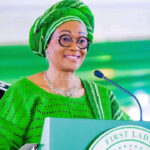
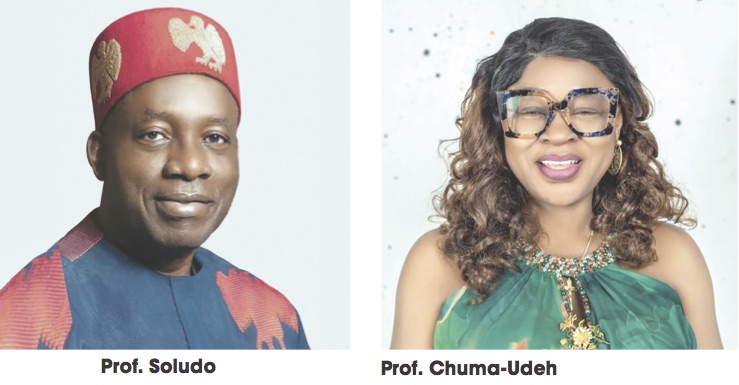
Visionary and multitalented: These words aptly describe the Anambra State Commissioner for Education, Prof. Ngozi Chuma-Udeh, a professor of English (Comparative Literature Stress), a novelist, a poet, a dramatist, an editor, a humanitarian, and a girl-child activist. She has been the state Commissioner for Education since April, 2022. Daily Sun chatted with her recently on some relevant issues on education and literature.. The commissioner responded to questions on the significance of the Achebe Prize for Literature sponsored by Anambra State Government, her groundbreaking “Be-side Construct” inaugural lecturer at COOU, Igbariam, her drive for better education in the state and book promotion.
The Governor Chukwuma Soludo administration has continued funding the Chinua Achebe Prize for Literature, started by the former governor, Chief Willie Obiano. How important is an award like the Achebe Prize for Literature administered by ANA?
The Chinua Achebe Prize for Literature is far more than an award; it is a cultural instrument for national renewal. It preserves intellectual tradition, inspires young writers, and reinforces the role of literature as a moral and intellectual compass in society. For a state like Anambra, which gave Nigeria Chinua Achebe, the award affirms our identity as a cradle of ideas, culture, and critical thought.
You were one of the writers honoured by ANA at the last convention in Abuja, what do you make of this recognition?
The recognition by ANA was deeply humbling and symbolic. I see it not as a personal accolade alone, but as a validation of the enduring relationship between intellectual work and public service. It strengthens my resolve to continue promoting reading, writing, and critical thinking, especially among young people in public schools.
You recently presented your inaugural lecture on “Be-Side Construct: Transcending the Quandaries of Equity to Dynamic Equipoise” at Nnamdi Odumegwu Ojukwu University, Igbariam. Looking back in retrospect, how would you situate that intellectual intervention?
The inaugural lecture was a deliberate intellectual intervention aimed at reimagining how we conceptualise gender, power, and human relationships, particularly within African societies. At its core, the presentation introduced what I termed the “Be-side Construct”, a theoretical framework that moves beyond adversarial gender paradigms to advocate dynamic equipoise, a model of balance where men and women are seen not as rivals but as complementary human partners. The kernel of the lecture was that sustainable social progress does not lie in gender wars or role reversals, but in restoring harmony, mutual respect, and shared responsibility, grounded in African philosophies of communal personhood.
You come from a literary background. How do we rev up the reading culture in Anambra and Nigeria?
Reviving reading culture requires deliberate structural intervention. We are strengthening school libraries, introducing book clubs in public schools, supporting literary festivals, and integrating reading hours into the basic education curriculum. At the national level, partnerships with publishers, writers’ associations, and digital platforms will make books more accessible and affordable.
Anambra has produced some of the greatest literary figures in Nigeria. How does today’s generation of writers measure up?
Today’s Anambra writers are incredibly talented, globally connected, and technologically savvy. While the earlier generation laid the foundations of excellence, the present generation is expanding the boundaries of form, voice, and audience. The task of government is to provide platforms and institutional support so that this talent can be nurtured sustainably.
Alarm has been raised across Nigeria that substandard books are being recommended for schoolchildren because of favouritism. How do we address this?
The Education Ministry in Anambra has strengthened its textbook review and approval process, making it evidence-based and transparent. Independent subject experts, teachers, and external reviewers now participate in book evaluation, while conflicts of interest are clearly declared. We are also building a digital registry of approved textbooks to eliminate discretion and favoritism.
Other News
Eyebrows have been raised on Anambra’s systemic decline. What led to the 33rd education ranking, and what steps are being taken to change the narrative?
First, it is important to clarify that the West African Examinations Council (WAEC) does not publish or circulate official state-by-state rankings. Any claims suggesting that Anambra State was ranked 33rd are, therefore, not based on official WAEC data. The Anambra State Government relies only on authenticated performance reports received directly from WAEC.
Our verified results show a steady improvement in student performance, particularly under the Free Education initiative, which significantly increased enrollment while improving learning outcomes. Beyond examinations, the state has focused on teacher recruitment, digital transformation of classrooms, and improved monitoring systems to ensure quality learning across all public schools.
Critics said it was harsh to shut down Great Mind Academy, Awka. What was the justification?
The decision was guided purely by concern for child safety and public health. The learning environment failed to meet minimum standards required for conducive and safe education. While the Ministry supports private sector participation in education, the welfare of children remains non-negotiable, and regulatory standards apply to all institutions equally.
Governor Soludo has won a second term in office. How have your ministry justified the confidence reposed in you?
The Ministry has justified that confidence through measurable outcomes: expanded access through free education, improved teacher strength, digital transformation of schools, enhanced WAEC performance between 2022 and 2024, and improved accountability systems. The focus has always been results, not rhetoric.
Are there specific things you set out to achieve in the last term that you now hope to execute?
Yes. The second term will deepen reforms already started. Priority areas include full smart school coverage, stronger TVET infrastructure, improved teacher welfare, expanded digital learning platforms, and stronger global partnerships for educational innovation.
Braindrain has continued to haunt Nigerian universities. How can this be stemmed?
Addressing brain drain requires improving working conditions, investing in research infrastructure, and restoring respect for academic labour. Creating attractive research grants, industry-academia partnerships, and diaspora engagement frameworks can convert brain drain into brain circulation.
You must be pretty busy as a commissioner now. Do you have time to write fiction? Are we expecting a new work soon?
Writing remains a personal discipline and form of reflection for me, even within the demands of public office. While governance currently takes priority, I remain committed to creative work, and I am hopeful that readers will, in time, see new works that reflect my intellectual journey and lived experiences